
Traditional Wedding Guest Outfit: The Right Dirndl for the Big Day
|
Time to read 7 min

|
Time to read 7 min
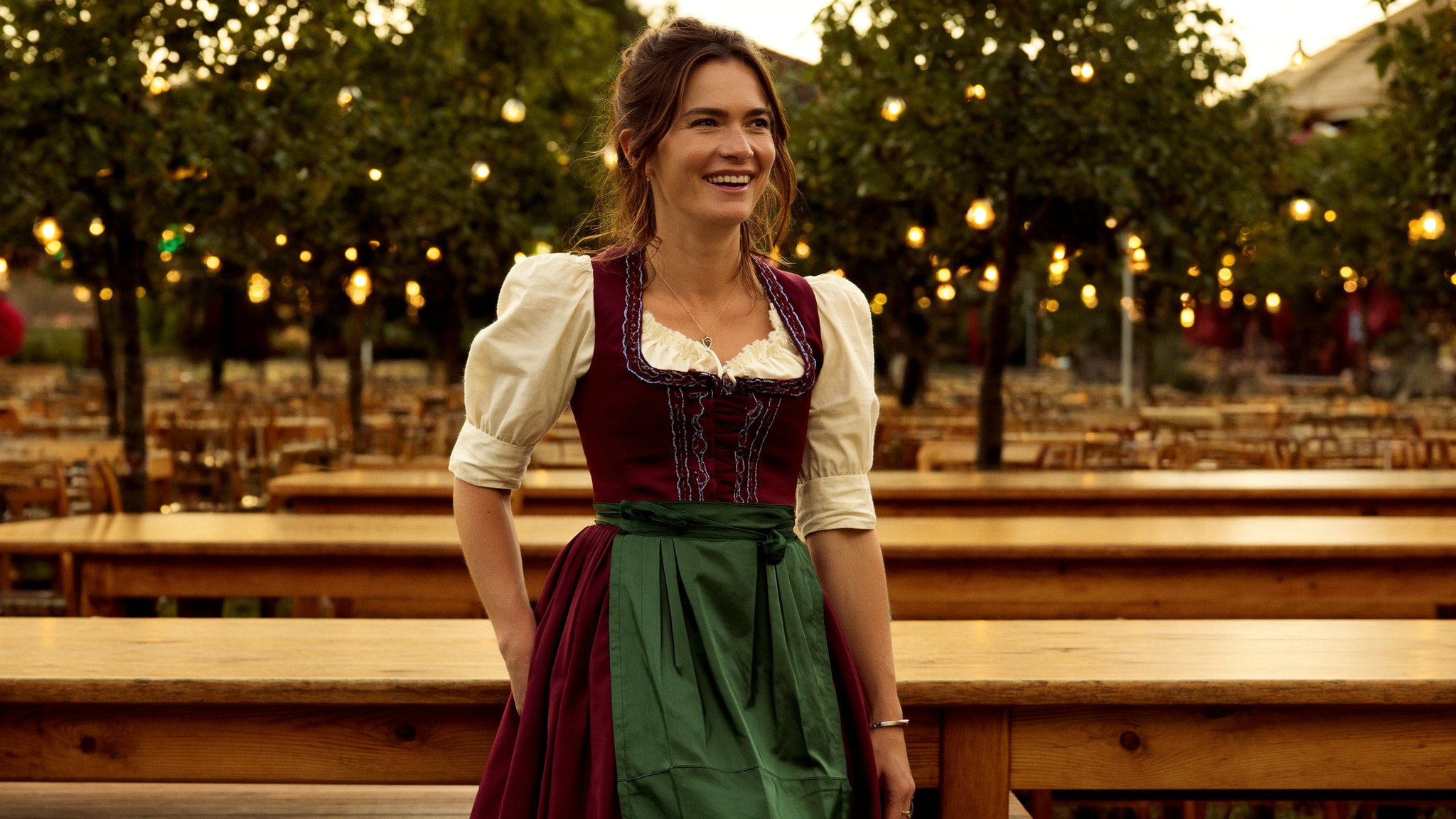
As a guest at a traditional Bavarian wedding, one question comes up quickly: what do you wear? The answer is simpler than you might think. A festive Dirndl in the right length, the right color, and with the right details will always hit the mark.
Why you can trust us:
✓ We have been experts in traditional Tracht fashion and Dirndl for over 5 years
✓ We have already dressed more than 10,000 Oktoberfest visitors
✓ We follow the latest Tracht trends and know the newest collections
Want to learn more? Visit our store
A traditional Bavarian wedding is not Oktoberfest. As a guest, your Dirndl can be more formal than at a folk festival — the length should be more than mini, and certain colors are reserved for the bride.
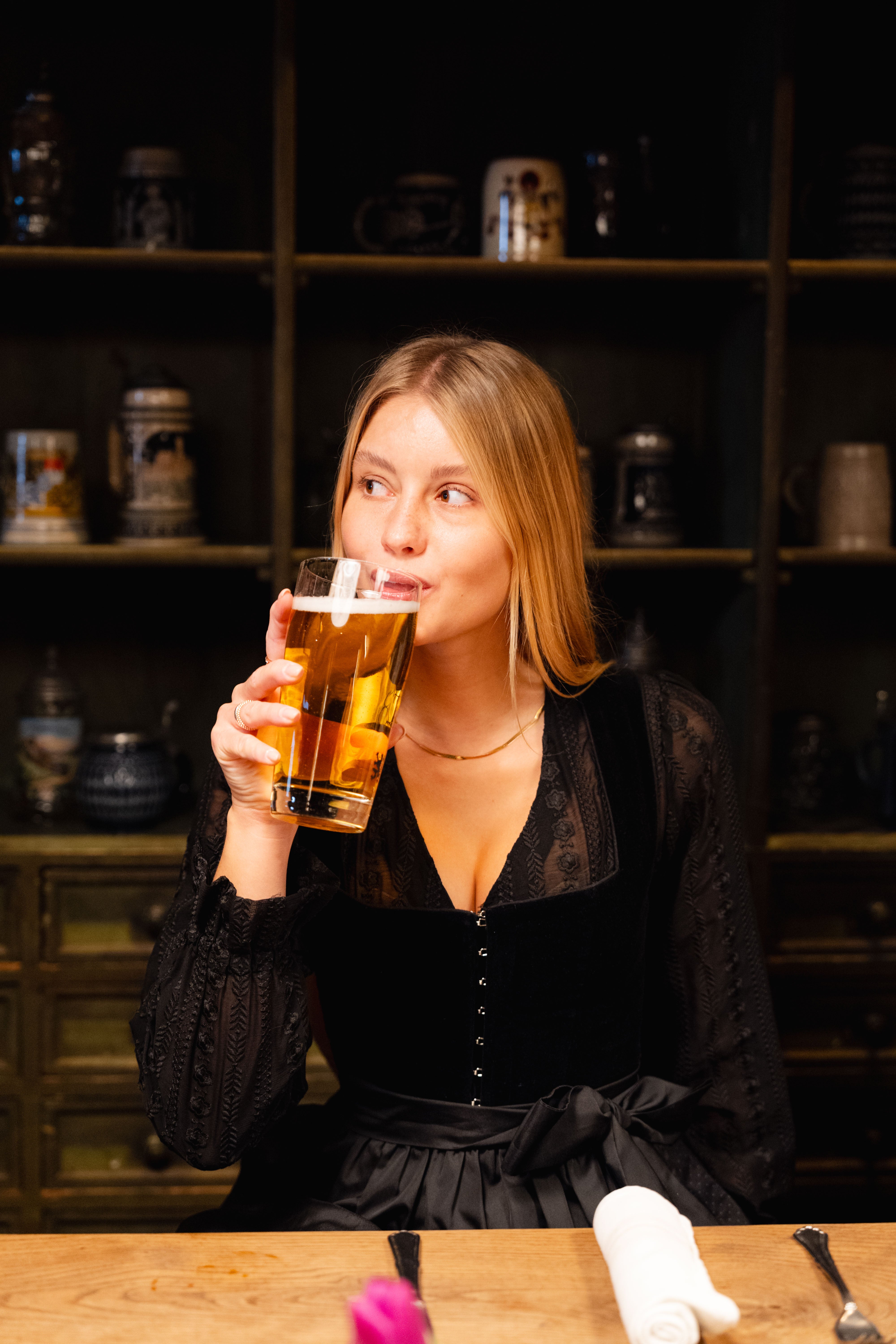
The golden rule: as a guest, you show respect for the occasion. That means no party Dirndl, no cheap alternatives, and no Dirndl you've already worn three times at the Wiesn. Formal occasions call for formal attire, even in Tracht.
What that means in practice:
If you're unsure whether your outfit is appropriate: if it works at Oktoberfest but doesn't feel particularly formal, it's too casual for a wedding.

For a traditional Bavarian wedding, you want a formal Dirndl that clearly sets itself apart from everyday styles. Here's what matters:
Fabric: Silk, satin, jacquard, or a high-quality cotton blend. These materials drape more elegantly and are suited to formal occasions. Linen is better suited to relaxed summer parties, not church weddings.
Details: Embroidery, lace accents, piping, or ornate buttons elevate a wedding Dirndl above the standard. The more artisan detail, the more formal the overall look.
Fit: Your Dirndl should fit well without needing any last-minute adjustments. Try it on shortly before the event and make sure the blouse fits properly and the bodice lacing is tied correctly.
If you don't yet have a suitable Dirndl: the selection of formal Dirndl on dirndl.com is extensive. Midi styles in bordeaux, dark green, and midnight blue are particularly popular.

The most important color rule at weddings applies in Tracht too: white, ecru, and cream are reserved for the bride. Showing up as a guest in a white or cream-colored Dirndl is a faux pas you'll want to avoid.
The same goes for very pale pastels such as soft pink or light yellow if they read as creamy. When in doubt, opt for a richer, more saturated color.
Great colors for wedding guests:
What to avoid: garish colors such as neon orange, loud red, or mint green. They draw too much attention and look out of place at a formal celebration.
Length matters more at a wedding than at a folk festival. Short Dirndl are possible for guests at a traditional wedding, but not ideal — especially if the ceremony takes place in a church.
Midi (60 to 85 cm): The best compromise. More formal than short, yet easier to move in than maxi. Works equally well for civil ceremonies, alpine hut celebrations, and relaxed wedding parties. The most popular length for wedding guests.
Maxi / floor-length: Very formal, particularly suited to church ceremonies and elegant venues. It looks more elaborate and is a great choice if you are the maid of honor or if the setting is especially formal.
Mini (up to 55 cm): Only appropriate at very casual weddings — for example, at an alpine hut or a garden-party-style reception. Not the top choice for church ceremonies or formal receptions.
Rule of thumb: when in doubt, always go one length longer. A midi Dirndl that feels slightly overdressed looks far better than a mini Dirndl that feels too casual.
The details determine whether a Dirndl looks truly festive. Three points are especially important at a wedding:
Apron: For a wedding, an apron made from silk, satin, or lace is far more suitable than a simple cotton apron. A lace apron over a plainer Dirndl can elevate the entire outfit. Color: either matched to the Dirndl or deliberately contrasting for a modern look.
Dirndl blouse: The Dirndl blouse shapes the character of the whole outfit. For weddings, a high-quality blouse with lace or embroidery is recommended. Higher necklines look more formal and are particularly well-suited to church ceremonies. More décolleté styles work well for the reception and evening celebrations.
Jewelry: Understated jewelry enhances a formal Dirndl without overwhelming it. Pearl earrings, a delicate chain, or a classic Dirndl necklace are ideal companions. Avoid over-the-top costume jewelry or statement pieces that upstage the Dirndl itself.
Shoes: Tracht shoes or elegant heels at a height you can comfortably wear for several hours. If the wedding takes place on a meadow or at an alpine hut: opt for low heels or flat Tracht shoes.
Bag: A small clutch or Tracht-style bag. No backpacks, no large tote bags.

Can I wear a white Dirndl as a guest?
No. White, ecru, and light cream are reserved for the bride. Arriving as a guest in white is a classic wedding faux pas — even in Tracht.
Does it have to be a long Dirndl?
Not necessarily. A midi Dirndl (70 to 85 cm) is the best choice for most weddings. More important than the length is that the Dirndl looks festive and well put-together.
What should you wear to a church ceremony?
For a church wedding, a midi or maxi Dirndl is recommended. Your shoulders don't need to be covered, but the overall look should be more conservative than at a folk festival. A Trachtenjanker (traditional jacket) or a light stole can help.
Can you buy a Dirndl set that already includes the blouse and apron?
Yes, many Dirndl sets come with a matching apron and blouse, which makes putting together a complete look much easier. Important: make sure the blouse is made from a quality material and suits the formal occasion.
What should a male guest wear?
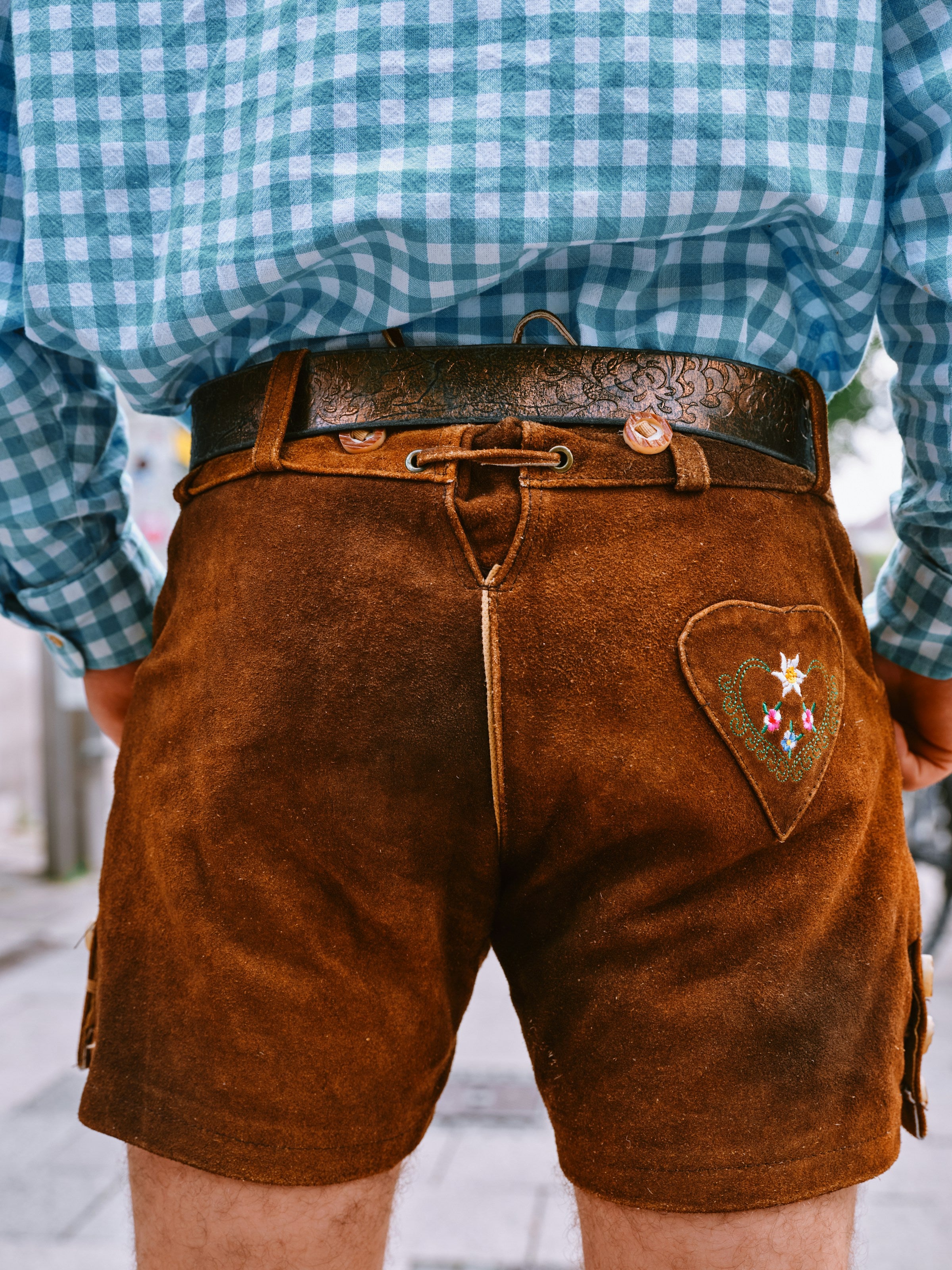
At a traditional wedding, a male guest wears Lederhosen with a Trachtenhemd (traditional shirt) and Haferlschuhe (traditional shoes). A Trachtenjanker pairs well with knee-length Lederhosen for more formal occasions. More on this: Men's outfit for traditional occasions.
Does the apron have to match the blouse?
Not a perfect match, but they should coordinate. Apron and blouse should not clash. A neutral apron in white, ecru (provided the Dirndl is not white), or a color drawn from the Dirndl almost always works.
If you're looking for a new Dirndl that's easy to care for and beautifully made, feel free to browse our store
Discover Formal Dirndl
As a guest at a traditional Bavarian wedding, you wear a formal Dirndl in midi or maxi length. Important: no white, no ecru, and no cream, as these colors are reserved for the bride. Bordeaux, dark green, midnight blue, and dusty rose are classic choices for guests.
No. White, ecru, and light cream belong to the bride. Showing up as a guest in these colors is a wedding faux pas — even in Tracht. When in doubt, go for a richer, more saturated shade.
For a church wedding, a midi Dirndl (70 to 85 cm) or a long Dirndl is recommended. A mini Dirndl is too casual for a church ceremony. If you are the maid of honor, a floor-length Dirndl is also a wonderful choice.
No. A well-kept, high-quality Dirndl is perfectly fine. What matters is that it looks festive, fits well, and doesn't read as "Oktoberfest". If needed: have it freshly cleaned and check that everything is complete (apron, blouse, bodice buttons).
A male guest wears Lederhosen with a Trachtenhemd, suspenders, and Haferlschuhe. A Trachtenjanker pairs well with knee-length Lederhosen for more formal occasions. No costumes, no plastic Oktoberfest sets.
Discover Matching Tracht

Stay up to date
Sign up and be the first to find out about new collections, exclusive offers and styling tips for your perfect traditional outfit.


