
Dirndl Colors: Meaning and Which Color Suits You
|
Time to read 10 min

|
Time to read 10 min
Which Dirndl color suits me? The short answer: the color that matches the contrast between your skin, hair and eyes, and the occasion. Blonde hair looks great in pastels and dark green, brown hair in burgundy, olive green and navy, dark hair in rich, bold shades. A dirndl color has no fixed meaning, most of it is color symbolism and taste. This guide shows you both and sums it up in a table at the top.
Dirndl colors at a glance
| Color | Meaning or effect | Suits (style recommendation) |
|---|---|---|
| Green | The color of hope in traditional color symbolism; in a dirndl it looks classic and close to nature | almost every type, especially strawberry blonde and brown hair (dark green, olive green) |
| Red, burgundy | The color of love in color symbolism; looks bold and festive | brown and dark hair; for red hair, burgundy rather than pure red |
| Blue | The color of constancy in color symbolism; light blue looks fresh, navy looks festive | blonde to dark hair; light blue for a fair complexion, navy for all types |
| White, cream | The color of innocence and fidelity in color symbolism; looks simple and delicate | summer occasions; better avoided as a wedding guest |
| Black | looks elegant and lets the apron and jewelry stand out | all types, especially with a colorful apron |
| Pink, hot pink | looks romantic (pink) to eye-catching (hot pink) | blonde hair, fresh complexion |
| Turquoise | looks fresh and modern, and is gaining strongly in our sales | contrast to black or white; suits many types |
Color symbolism means the general European interpretation of colors since the Middle Ages, not a fixed dirndl rule. What really gets bought is shown by our orders: black is in 34% of the dirndls sold, blue and green in 25% each, pink in 21%, turquoise in 19%, red in 17% (source: Dirndl.com orders, 6 August to 4 November 2026, multicolored pieces count several times, more in the article Dirndl Trends 2027).
Why you can trust us:
✓ Traditional fashion is our core business
✓ From August to early November 2026 alone, around 8,200 dirndls were ordered from us
✓ We follow the latest traditional fashion trends and know the newest collections
Want to know more? Visit our store
The answer in three sentences: Choose a color that matches the contrast between your skin, hair and eyes. Light types wear pastels and dark green, medium types warm shades like burgundy and olive green, dark types rich colors. After that, the occasion decides: muted for a wedding, colorful at the Wiesn.
These are style recommendations from our styling experience, not fixed rules. Here are the details for each type:
Light type (blonde hair, fair skin, blue or green eyes): You can wear almost any color. Pastels like light blue, rosé, mint and lavender look especially good on you. Bold colors like dark green or burgundy create beautiful contrasts. Avoid very pale colors that give your complexion too little contrast.
Medium type (brown or dark blonde hair, medium skin, brown or green eyes): You are the most versatile type. Warm shades like terracotta, ochre, olive green and burgundy suit you especially well. Bold red or navy also go well with your type. Light pastels can easily look washed out.
Dark type (dark hair, olive or dark skin, dark eyes): You can wear intense colors without them overpowering you. Vivid green, bright red, deep burgundy and rich blue look especially stunning on you. Black with a colorful apron is a dream combination too. Light pastels can easily get lost.
Strawberry blonde type (red or copper hair, fair to medium skin, often green or hazel eyes): Earth tones, browns, green and burgundy suit you especially well. Avoid orange and bold red, which compete too much with your hair color. A deep forest green or an elegant navy is ideal.
You can find more on this topic in our detailed Dirndl Figure Guide and the Color Type Guide.
There is no fixed, handed-down meaning of colors in a dirndl. The dirndl was originally a maid's dress and became a fashionable dress with summer-retreat guests from around 1870 to 1880. Since then, material, color and cut have followed fashion (source: Austria-Forum, AEIOU). What colors express today therefore mostly goes back to general color symbolism and a sense of style. Here are the common interpretations:
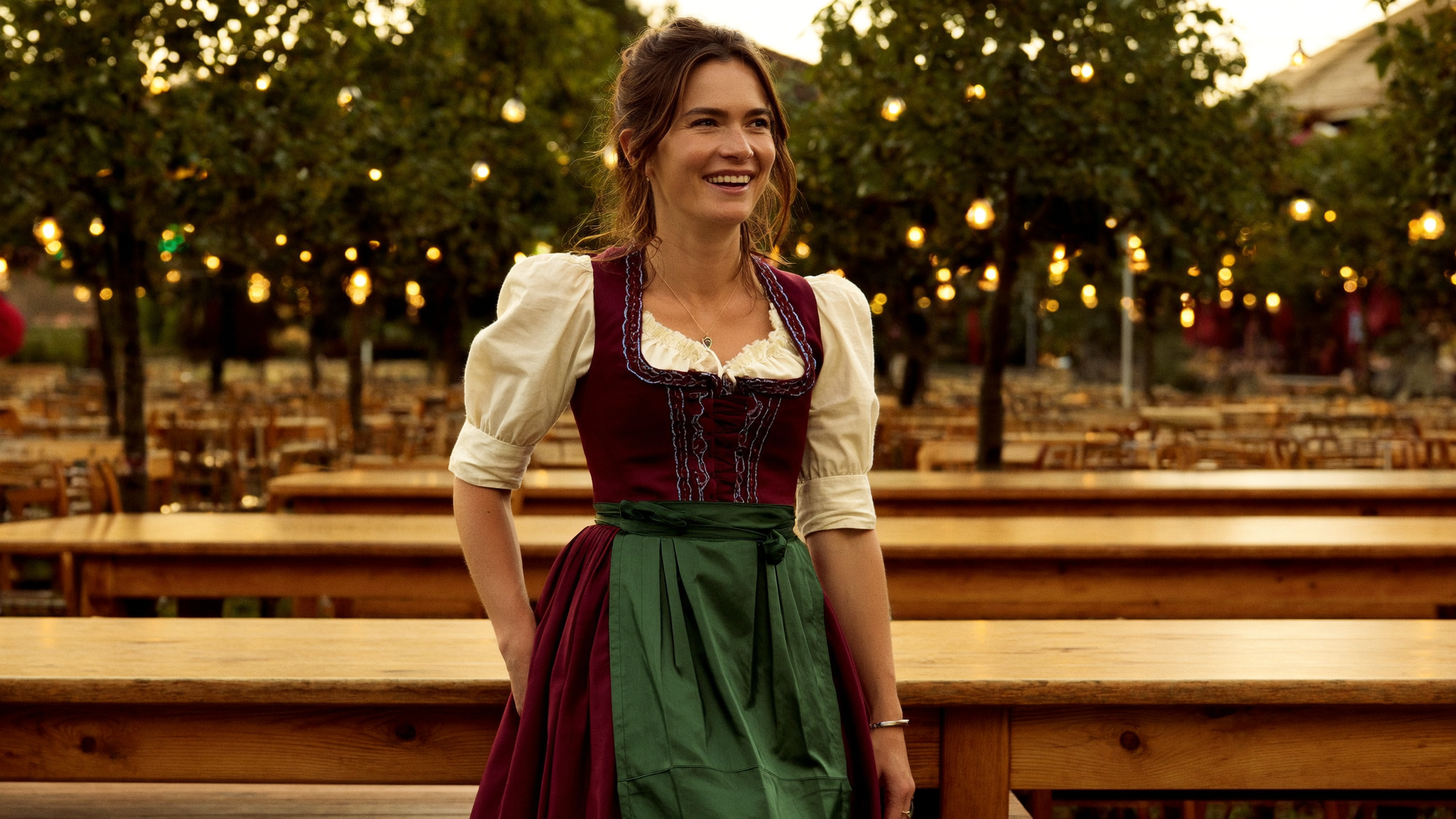
Green is considered a classic traditional color and is often linked with nature, the Alps and home. That is a widespread notion, not a documented rule. What is documented is that winter dirndls used to be made of warming flannel in loden green and navy (source: oktoberfest.de, City of Munich). A green dirndl is timeless and suits any folk festival. Dark greens like fir green or forest green look especially refined, lighter greens like apple or mint look fresh and modern. In medieval color symbolism, green stands for hope and new beginnings.
Red and burgundy have been considered colors of love in European color symbolism since the Middle Ages (source: Graz University Library). In a dirndl they look festive and confident. A red dirndl is a real eye-catcher and suits dark hair colors especially well. Burgundy is the more elegant variant, less showy than pure red, but still expressive.
Blue stands for constancy in medieval color symbolism (same source). It is not handed down as a dirndl tradition of its own. Light blue looks fresh and spring-like, navy is elegant and more festive. Blue dirndls work well with white or silver blouses and accessories.
White and natural shades stand for innocence and fidelity in color symbolism (same source). White dirndls are popular at weddings, but also look fresh at the Oktoberfest. Natural colors like beige or cream combine easily and are timeless.
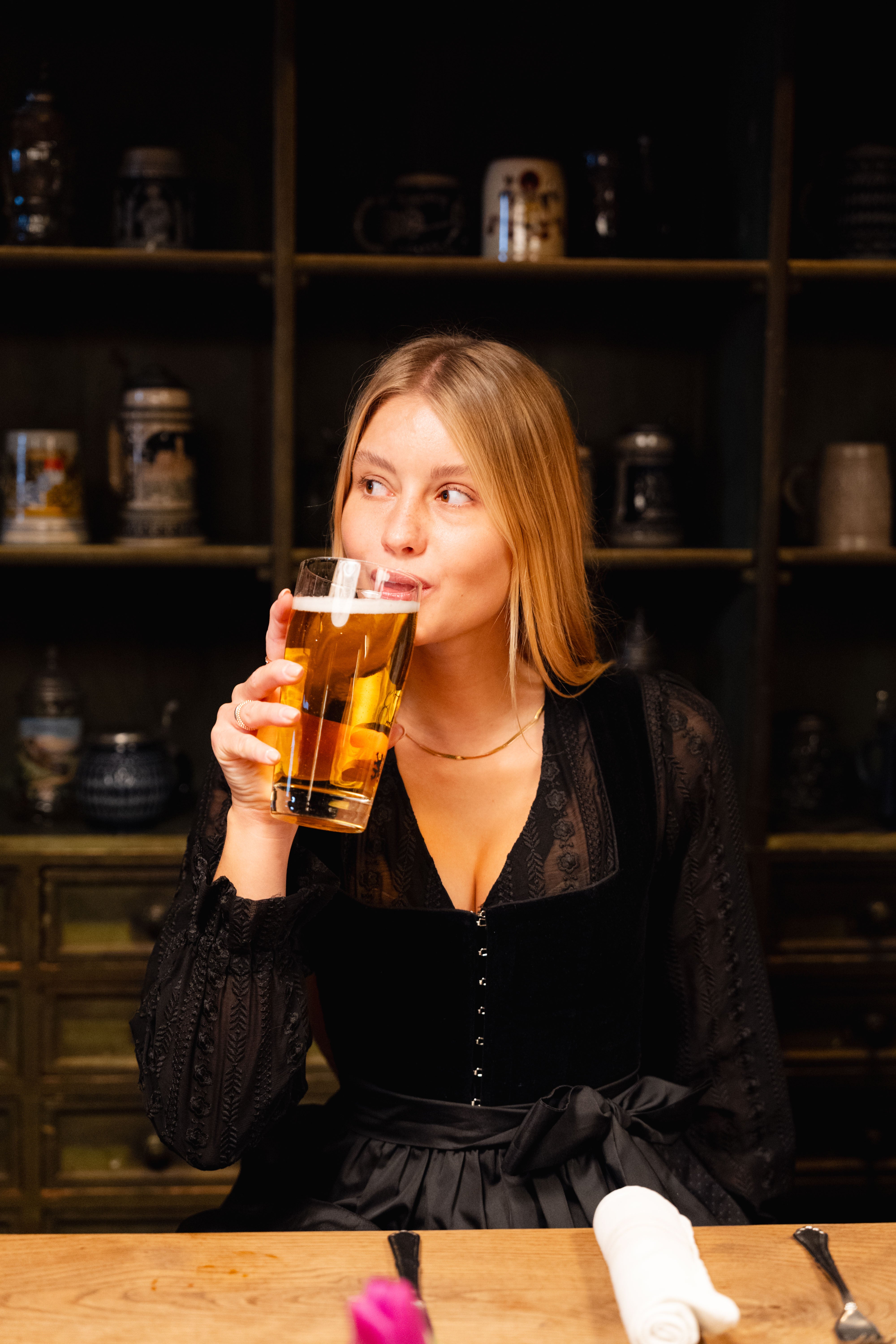
Black looks elegant and lets the apron and jewelry stand out. That is a matter of style, not a handed-down meaning. A black dirndl with a colorful apron is a classic that suits almost any occasion. Black looks especially good at festive occasions like traditional weddings.
And the bow? People often say a bow on the left means “single” and on the right “taken”. That is not historically documented: traditional costume experts date this code to the 20th century, and one district heritage officer even to the 1980s (source: Abendzeitung München). You are still welcome to use it as a flirting signal.

Besides the classic shades, many new colors have established themselves in traditional fashion in recent years. The traditional fashion 2026 trends show: anything goes, as long as it is combined well.
Pink and hot pink are strongly represented in modern traditional fashion: 21% of the dirndls sold by us contain pink (source: Dirndl.com orders, 6 August to 4 November 2026). From soft dusty rose to bright hot pink, everything is represented. Pink dirndls look romantic and feminine, hot pink is bold and eye-catching. Both shades suit blonde hair and a fresh complexion.
Lilac and purple are more of a niche topic: purple is in 5% of the dirndls sold (source: Dirndl.com orders, 6 August to 4 November 2026). In return, they look refined, modern and stand out from the crowd. Lavender shades combine wonderfully with silver accessories and a charivari.
Blue and turquoise are gaining the most with us: blue rose from 17 to 25%, turquoise from 8 to 19% of the dirndls sold compared with the same period last year (source: Dirndl.com orders). Turquoise looks especially good together with black or white. The full analysis is in the article Dirndl Trends 2027.
Brown and earth tones are a niche with us: around 4% of the dirndls sold contain brown (source: Dirndl.com orders, 6 August to 4 November 2026). Terracotta and rust brown suit warm skin types and look especially atmospheric at autumn folk festivals.
Patterned dirndls often combine several colors in one piece: floral patterns, checks, stripes. The rule here: one dominant shade sets the overall impression. Make sure the blouse and apron pick up the main shade rather than compete with each other.

A color alone does not make a coherent outfit. Only the combination of dirndl, apron and blouse creates the complete look. The rule: contrasts create tension, harmonies look elegant.
Complementary colors sit opposite each other on the color wheel and create strong contrasts. A green dirndl with a red apron, a blue dirndl with an orange apron: that looks striking and bold. For festive occasions it can be too much, at the Oktoberfest it is a real head-turner.
Tonal combinations use different shades of the same color. A dark green dirndl with a light green or mint apron looks harmonious and elegant. This variant is never wrong and always coherent.
Neutral aprons in black, white, beige or cream suit almost any dirndl. They calm the overall look and let the dirndl itself take center stage. White is the classic and works with almost any dirndl color.
The blouse should ideally be neutral, meaning white, cream or light gray. That way it does not compete with the color of the dirndl. Only with very subtle dirndl colors can the blouse be a bit more colorful. More in our Dirndl Blouse Guide.
Accessories complete the look: The traditional jewelry should match the dirndl color. With warm shades (red, green, brown) gold works better, with cool shades (blue, purple, pink) silver is more elegant. A black dirndl goes with both.
With so many options, mistakes happen too. Here are the most common ones you should avoid:
Too many colors at once: A dirndl, apron, blouse, jewelry and flower wreath in five different colors looks overloaded. Rule of thumb: three colors at most in the whole outfit, one of them neutral.
Ignoring the apron: The apron is a full part of the outfit, not an accessory. A mismatched apron can ruin the most beautiful dirndl. Plan the apron in from the start when you buy the dirndl.
Relying on photos: Colors look different on a monitor or smartphone than in real life. If possible, judge the dirndl in real light, or at least check the return conditions when buying online.
Ignoring your own color type: Just because a color is trendy does not mean it suits you. Invest in a color that goes with your natural color type rather than blindly following a trend.
Forgetting the occasion: A bright pink works wonderfully at the Oktoberfest, but may look too casual at a formal traditional wedding. When buying, always think about where you will mainly wear the dirndl.
Finding the right Dirndl color is not rocket science, but a few simple rules help. Go by your color type, think about the occasion and do not forget the apron. Whether classic green, elegant burgundy or modern pink, the most beautiful dirndl is the one you feel good in and that suits you.
If you are looking for a new dirndl in your color, feel free to drop by our store
Discover dirndls by color
No. The dirndl was originally a maid's dress and became fashionable from around 1870. There is no handed-down color meaning. What people link with green, red, blue or white today comes from general color symbolism, for example red for love and blue for constancy, or simply from style.
Black is the most frequently bought dirndl color with us: 34% of the dirndls sold contain black. Blue and green follow with 25% each, pink with 21%, turquoise with 19% and red with 17% (source: Dirndl.com orders, 6 August to 4 November 2026, multicolored pieces count several times). Blue and turquoise are gaining the most.
Blonde hair goes well with pastels like light blue, rosé, mint and lavender. Bold colors like dark green or burgundy also create beautiful contrasts. Important: the color should suit your skin and eyes, not just your hair color.
Brown hair suits warm shades like terracotta, burgundy, olive green and navy. Bold red also looks very good on brown hair. Light pastels can look a bit washed out. Your skin tone matters too: with a fair complexion it can be a bit cooler (navy, bottle green), with a warm complexion terracotta and olive green suit.
White, cream and black always suit a green dirndl as neutral options. For contrast, red or burgundy works well. Tonal combinations with light green or mint look elegant and harmonious.
Yes, absolutely. A black dirndl is fully accepted at the Oktoberfest and looks very elegant. With a colorful apron in red, green or pink, the look becomes festive and expressive.
For wedding guests, more subtle colors like dark green, burgundy, blue or black are ideal. White is the bride's color and should be avoided by guests. More tips in the article Traditional Wedding Guest Outfit.
Discover matching traditional wear

Stay up to date
Sign up and be the first to find out about new collections, exclusive offers and styling tips for your perfect traditional outfit.

