
Lederhosen Buying Guide: Size Chart, Lengths & What Really Matters
|
Time to read 7 min

|
Time to read 7 min
Buying Lederhosen sounds simpler than it is. Which length, which leather, which brand — and above all: which size? This guide isn't a generic overview; it's a genuine decision-making tool with a size chart, a length comparison, and concrete buying tips that will save you from costly mistakes.
Why you can trust us:
✓ We have been experts in traditional Bavarian fashion and Dirndl for over 5 years
✓ We have already dressed more than 10,000 Oktoberfest visitors
✓ We follow the latest Tracht trends and know the newest collections
Want to find out more? Visit our store
The first decision when buying Lederhosen is the length. Both styles are classic, but they suit different occasions and body types.
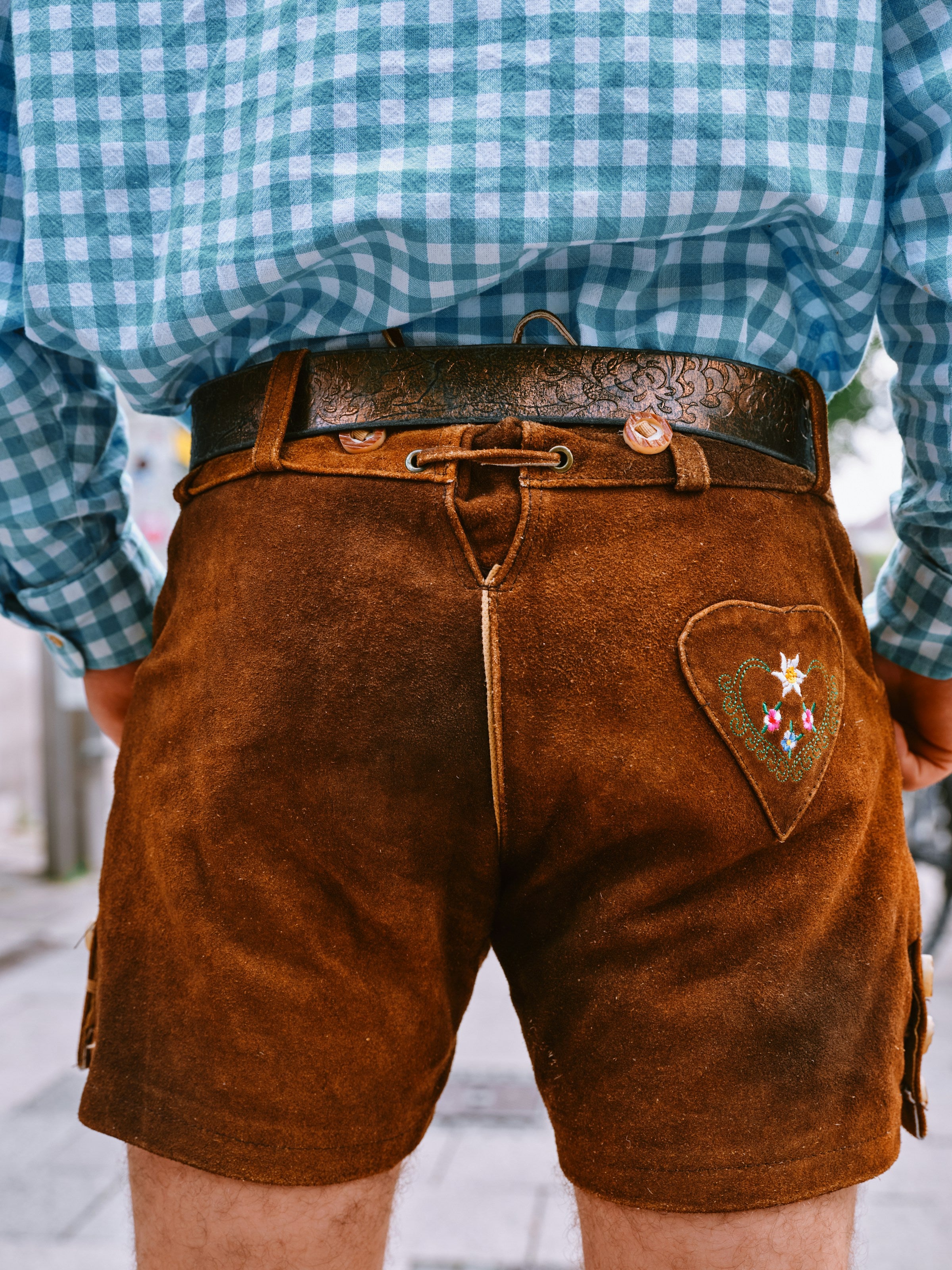
Short Lederhosen (Bundhose): End at mid-thigh. By far the most popular style, especially at Oktoberfest and other folk festivals. They are more breathable, lighter, and have a sportier feel. Short Lederhosen are available for men and women, in cuts ranging from slim to wide. For a first purchase and for summer events, the short style is the safer choice.
Knee-length Lederhosen (Kniebundhose): End just below the knee with a buttoned or lace-up waistband. They are more traditional, more elegant, and more versatile, since they are comfortable even in cooler temperatures. Knee-length Lederhosen are particularly well-suited for formal traditional occasions such as weddings or shooting festivals (Schützenfeste). They are classically worn with Wadeln (Tracht socks) peeking out below the knee.
What suits which occasion:
For the complete outfit breakdown, read our Oktoberfest Outfit Men's Guide, which explains what else belongs with the Lederhosen.

Your Lederhosen size corresponds to your waist circumference in centimetres — not your regular trouser size. This is the most important difference to understand. A man who normally wears trousers in size 32 may need Lederhosen in size 48, 50, or 52 depending on the cut.
How to measure: Wrap a flexible tape measure around your waist at the point where the waistband should sit — typically just above the navel. The tape should lie snugly against your body without digging in. That measurement in centimetres is your Lederhosen size.
| Size | Waist Circumference | EU Trouser Size (approx.) | Best For |
|---|---|---|---|
| 44 | 72–76 cm | W28–W30 | Very slim build |
| 46 | 76–80 cm | W30–W31 | Slim build |
| 48 | 80–84 cm | W32–W33 | Average build |
| 50 | 84–88 cm | W33–W34 | Average to athletic build |
| 52 | 88–92 cm | W34–W36 | Athletic build |
| 54 | 92–96 cm | W36–W38 | Athletic build |
| 56 | 96–100 cm | W38–W40 | Larger build |
| 58 | 100–104 cm | W40–W41 | Larger build |
Important when buying: Leather breaks in. A new pair of Lederhosen may feel a little snug at first. After two or three wears, they will have moulded to your body. It's therefore better to size down rather than up — if they are too large, there is no easy fix.
For full details on how to take your measurements and what to do if you fall between two sizes, our Lederhosen Size Measuring Guide walks you through it step by step.

The price of a pair of Lederhosen says a lot about the material quality. Here is what you can expect at each price point.
Under €100: Almost always faux leather or very thin split leather. Fine for a one-off festival visit, but not for regular wear. Faux leather makes you sweat, smells of plastic, and loses its shape after just a few uses. Telltale sign: a perfectly uniform, flawless surface with no visible pores.
€100 to €200: Genuine cowhide, solid craftsmanship. This is the entry level for real Tracht wearers. The leather is firmer than buckskin but breaks in over time. Embroidery is stitched, not printed. A good choice for two to three wears per year.
€200 to €400: High-quality cowhide or buckskin (Wildbockleder). This is where you find the classic Bavarian Lederhose: soft, breathable leather, dense hand-stitched embroidery, antler buttons, double seams. With proper care, these Lederhosen last ten to twenty years.
Over €400: Premium buckskin or deerskin, often partially handcrafted. The leather feels soft from day one and only improves with every wear. For collectors and those who live Tracht as a lifestyle.
30-second quality check:
Every model in our Lederhosen collection is made from genuine leather, with detailed material information on each product page.
Lederhosen alone don't make an outfit. To pull the whole look together, you need the right accompanying pieces.
Tracht shirt (Trachtenhemd): The most important companion piece. White always works; red-and-white check is the Oktoberfest classic paired with light-brown Lederhosen; blue-and-white suits darker brown. The shirt must always be tucked in. Our Men's Tracht Shirt Guide covers all the details.
Shoes: Haferl shoes are the traditional choice — sturdy leather low-shoes with a distinctive side seam. Tracht boots or rustic lace-up shoes also work well. No trainers or sneakers.
Braces (Hosenträger): Leather braces in a matching tone complete the look. Many Lederhosen come with braces included. If not, look for leather braces made from the same material.
Socks (Wadeln): Knee-high woollen Tracht socks belong with the Kniebundhose — classically in natural white or grey. With short Lederhosen, either short Tracht socks or bare legs work equally well.
Belt: For Lederhosen without braces, or as an additional accessory: a leather Tracht belt, often featuring a traditional buckle.
You'll find the complete outfit put together — including price recommendations — in the Folk Festival Tracht Guide.

Buying Lederhosen online has its advantages: a wider selection, better prices, and convenient delivery. But there are a few pitfalls you should avoid.
Always measure — never order by guesswork. Your regular trouser size tells you very little about your Lederhosen size. Measure your waist circumference with a tape measure and compare it against the retailer's size chart. Most shops provide size charts specific to each model.
Check the returns policy. Lederhosen have to fit. If you're buying a model or brand for the first time, make sure the shop offers a straightforward returns process. Keep the tags on, try them on carefully, and don't wash them.
Read the reviews. Other buyers often mention whether a model runs small or large, how the leather feels, and what the embroidery quality is like. This saves you from nasty surprises.
Mind the delivery time. In the run-up to Oktoberfest, popular sizes sell out fast. Order at least two to three weeks before the event so you have time to return them and reorder if needed.
Check the material description. Genuine leather (cowhide, buckskin, deerskin) must be specified in the product description. If it only says "leather" with no further detail, ask — or shop elsewhere.
For the right care routine after your purchase, read our Lederhosen Care & Sizing Guide. A well-maintained pair of genuine leather Lederhosen is an investment that lasts for decades.
If you're looking for a new Dirndl that's easy to care for and high quality, feel free to stop by our store
Discover Lederhosen
With a waist circumference of 88 cm, size 50 to 52 will generally fit. Since leather breaks in, you can go for size 50 if you prefer a snugger fit, or size 52 for a little more room. Always check the manufacturer's size chart, as cuts can vary between models.
For Oktoberfest and folk festivals, short Lederhosen are the right choice. They are more breathable, more practical, and never out of place at any event. Knee-length Lederhosen are more traditional and better suited for formal occasions such as weddings. For a first purchase, we recommend the short style.
A solid pair of genuine cowhide Lederhosen starts at around €120. For high-quality buckskin with hand-stitched embroidery, you should budget €200 to €350. Under €100 you will almost always get faux leather.
Genuine leather has small surface irregularities, visible pores, and a characteristic natural smell. Faux leather smells of plastic and has an overly uniform, flawless surface. The material description in the product listing should also specify "cowhide", "buckskin", or similar.
Yes, genuine Lederhosen made from cowhide or buckskin become softer over time and mould to your body shape. New Lederhosen often feel quite stiff and firm at first. After two or three wears, they will sit noticeably more comfortably. That's why it's perfectly fine for a new pair to feel a little snug.
Discover Matching Tracht

Stay up to date
Sign up and be the first to find out about new collections, exclusive offers and styling tips for your perfect traditional outfit.


