
Hochzeitsdirndl: The Festive Dirndl for Your Trachten Wedding
|
Time to read 13 min

|
Time to read 13 min
Are you planning a Trachten wedding and looking for the perfect Hochzeitsdirndl? Whether you want to marry as a bride in a festive Dirndl or make an elegant impression as a guest, we will show you what matters when choosing one. From the right colour to fine fabrics and the perfect length, here you will find all the answers for your big day.
Why you can trust us:
✓ We have been experts in Trachten fashion and Dirndl for over 5 years
✓ We have already dressed more than 10,000 Oktoberfest visitors
✓ We follow the latest Trachten trends and know the newest collections
Want to learn more? Visit our store
Table of contents:
A Hochzeitsdirndl differs clearly from a classic Oktoberfest Dirndl. It has a more festive cut, is made from finer materials and relies on more subtle, more elegant details. While you can reach for bold colours and rustic fabrics at the Oktoberfest, a wedding calls for a Dirndl that radiates refinement and style.
The most important features of a festive Dirndl are high-quality craftsmanship, fine fabrics such as silk, velvet or fine cotton and understated yet effective details. Lace, embroidery and delicate trims give the Dirndl a special touch without ever looking overloaded. The goal is a harmonious overall impression that suits the celebratory atmosphere of a wedding.
When choosing a festive Dirndl, the occasion and your role play a decisive part. As the bride, you choose a Hochzeitsdirndl that lets you shine and makes you the centre of attention. As a guest, you make sure to look festive but not too conspicuous. In both cases the cut should be timelessly elegant and flatter your figure.
A festive Dirndl is an investment that pays off. Unlike a Trachten outfit for the funfair, you can also wear it for other special occasions, be it a christening, an anniversary or a formal reception. Its timeless elegance makes it a versatile companion for many years.
If you are unsure which cut and which length suit your figure, our Dirndl figure guide will help you further. There you will learn how to match the Dirndl perfectly to your body type.
If you want to marry as a bride in a Hochzeitsdirndl, you have complete freedom. You are allowed to stand out, to shine and to deliberately choose the most beautiful and finest fabrics. White, cream and soft pastel tones are the classic colours for the bride and symbolise purity and celebration.
A white Dirndl or a model in champagne, rosé or soft light blue puts you in the spotlight as the bride without ever appearing too dominant. Combine the Dirndl with a fine apron in silk or lace that either stays tone on tone or sets a gentle contrast. Delicate silver or gold embroidery gives the outfit extra sparkle.
When it comes to length, the rule for the bride is midi or maxi. A Hochzeitsdirndl that reaches just above the knee or to the calf looks celebratory and elegant. A long Dirndl in maxi length is the most festive option and recalls a classic bridal gown, only in Trachten style. The length should be chosen so that it suits your figure and allows you to appear confident and dignified.

Accessories play a special role with the bridal Dirndl. A fresh flower crown in your hair, a delicate Trachten necklace or a filigree charivari add stylish accents. The blouse is decisive too: choose a fine Dirndlbluse in lace or silk that underlines the festive character. You can learn more in our guide to Dirndlblusen: types, long sleeves and lace.
The bow of the apron is traditionally tied in the centre for the bride, a sign that she is still unmarried. After the ceremony you can deliberately move the bow to the left to show that you are now married. Our guide on the apron bow shows you how to tie it correctly.
As a guest at a Trachten wedding it is important to look festive without stealing the show from the bride. That means: choose a festive Dirndl in a colour that is elegant but does not compete directly with the bride. Avoid white, cream and very light pastel tones, as these are reserved for the bride.
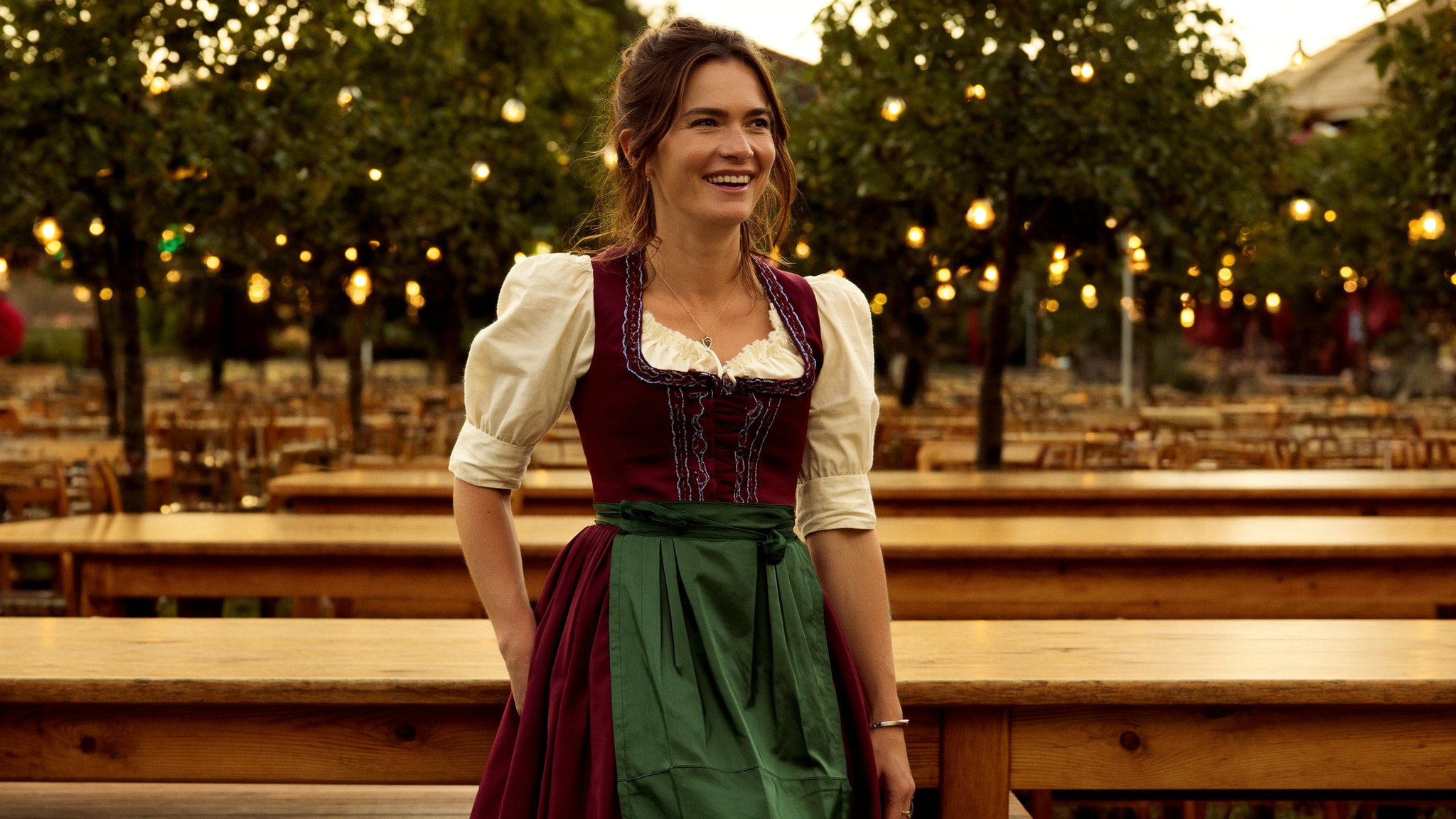
Instead, muted, refined colours such as burgundy, emerald green, petrol, navy blue or anthracite are a safe choice. Warm berry tones, a deep rosé or a rich plum purple also look festive and respectful. If you are unsure which colour suits you, our Dirndl colour guide will help you further.
The same applies to the cut as for the bride: a festive Dirndl should fit well, flatter the figure and be made from fine materials. Midi length is the classic choice for wedding guests because it looks elegant and appropriate. A long Dirndl is also possible, especially for evening weddings or very formal occasions.
Details such as lace, subtle embroidery or a high-quality silk apron make the difference. Make sure the Dirndl does not look too playful or too casual. A festive Dirndl may well be a little plainer than an Oktoberfest Dirndl, as the elegance lies in restraint.
One important tip: ask in advance whether the bride has particular colour preferences or whether there is a colour scheme for the wedding. That way you stay on the safe side and show respect for the couple. You will find more tips on the guest outfit in our article on the Trachten wedding guest outfit.
The choice of colour is decisive for a Hochzeitsdirndl. As the bride you have the full range of light, soft tones that underline your role as the centre of the celebration. White is the most classic choice and symbolises purity, innocence and the start of a new chapter in life.
Cream and champagne are a slightly softer alternative to pure white. These tones look warm and elegant and flatter many skin tones. They are particularly lovely for weddings in the warm season or for celebrations outdoors. A Dirndl in cream pairs wonderfully with gold or silver accessories.
Pastel tones such as rosé, light blue, mint or lilac are also suitable for the bride, especially if you prefer a romantic, playful touch. These colours radiate freshness and lightness and go perfectly with spring and summer weddings. Make sure the tone does not become too bold but stays within the soft range.
If you go for an unusual colour, combine it with classic elements such as a white Dirndlbluse or an apron in white or cream. That keeps the outfit balanced and stops it looking too colourful. You can read in detail about the colour psychology and meaning behind the individual Dirndl colours in our Dirndl colour guide.
As a guest you should deliberately avoid these light tones and instead go for bold, refined colours that look festive without competing with the bride. A good rule of thumb: if you are unsure, choose a colour you would also wear with a classic wedding outfit, only in Trachten style.
The fabric makes a decisive difference with a festive Hochzeitsdirndl. While an Oktoberfest Dirndl can also be made from robust linen or dense cotton, weddings call for finer materials that radiate elegance and quality.
Silk is the finest choice for a Hochzeitsdirndl. It shimmers subtly, drapes beautifully and feels pleasant on the skin. Silk is particularly suited to aprons and details such as trims or bows. A Dirndl with a silk apron instantly looks more festive and more refined. That said, silk is delicate and needs special care.
Velvet is the perfect choice for autumn and winter weddings. The material looks luxurious, keeps you warm and has a rich, deep appearance. A Dirndl with a velvet bodice or a velvet apron radiates dignity and festivity. Velvet in colours such as burgundy, fir green or midnight blue is especially striking.
Fine cotton and high-quality linen are also suitable, especially for summer weddings. Make sure the fabric is densely woven and finely finished. A light, flowing material feels more comfortable on a hot day than heavy fabrics and still lets you make a festive impression.
Lace and embroidery add extra accents and give the Dirndl a special touch. A finely embroidered apron or a bodice with lace inserts looks refined and romantic. You can find out which fabrics suit which occasion in our detailed guide to Dirndl fabrics and materials.
The length of the Hochzeitsdirndl has a major influence on how festive and elegant the outfit looks. For a wedding, short Dirndl that end just above the knee are rather unsuitable. They look too casual and fit a funfair better than a celebratory occasion.
The midi length, which reaches just above the knee or to the calf, is the classic choice for the Hochzeitsdirndl. It is elegant, timeless and flatters most figures. Midi Dirndl look festive without being too formal and at the same time give you freedom of movement when dancing and celebrating.
The maxi length, in which the Dirndl reaches to the ankle or even to the floor, is the most festive option. A long Dirndl recalls a classic evening gown and is an especially beautiful choice for the bride. It visually lengthens the silhouette, looks dignified and is perfect for elegant, formal weddings.

If you are unsure which length suits your figure, the rule of thumb is: taller women can wear maxi length very well, as it does not compress their proportions. Shorter women often look more harmonious in midi length, as it does not visually shorten the legs. You can learn more in our Dirndl length guide.
When choosing the length, also consider the venue and the season. For a summer wedding in a beer garden, midi is often more practical, while a winter wedding in a festive venue calls for a long Dirndl. The most important thing is that you feel comfortable in the length you choose and can move with confidence.
The right accessories and details turn a beautiful Hochzeitsdirndl into a perfect outfit. Start with the Dirndlbluse: it should be refined, well-fitting and colour-coordinated. A white or cream blouse in lace or fine cotton is the classic choice and goes with any festive Dirndl.
Long-sleeved blouses look especially elegant and are ideal for autumn and winter weddings. A blouse with lace inserts or fine details such as ruffles or pearl buttons adds extra accents. Make sure the blouse fits well and does not pull, particularly around the bust. You can find more on this in our guide to Dirndlblusen: types, long sleeves and lace.
The apron is the central element that emphasises the waist and sets colour accents. For a wedding, choose an apron in a fine material such as silk, velvet or fine cotton with a lace border. The colour should either match the Dirndl tone on tone or set a subtle contrast. An apron that is too conspicuous or too patterned can quickly look busy.
When it comes to jewellery, less is more. A filigree Trachten necklace, a charivari or simple silver jewellery looks elegant and underlines the Trachten character without overloading the look. For the bride it may be a little more eye-catching: a delicate flower crown in the hair or a pearl necklace sets festive accents.
The shoes should be comfortable and stylish. Classic pumps in nude, silver or gold go with almost any Hochzeitsdirndl. Flat ballerinas or elegantly decorated Trachten shoes are also a good choice, especially if you are on your feet all day. Make sure the shoes are well broken in so that you can enjoy the celebration.
The season has a major influence on which Hochzeitsdirndl is the right choice. In spring and summer, light, airy fabrics such as fine cotton, linen or silk are ideal. Light colours such as rosé, light blue, mint or champagne look fresh and suit the warm season.
For a summer wedding outdoors or in a beer garden, a midi Dirndl in light tones is the best choice. Make sure the fabric is not too heavy and that you feel comfortable even at higher temperatures. A short-sleeved or sleeveless Dirndlbluse provides extra airiness.
In autumn and winter, warmer fabrics such as velvet, dense cotton or wool are called for. Colours such as burgundy, fir green, navy blue or anthracite look refined and suit the cooler season. A Dirndl with a long-sleeved blouse or an elegant Trachten jacket makes sure you do not get cold.
For a winter wedding you can also go for a long Dirndl in maxi length, which keeps you extra warm and looks particularly festive. Combine it with warm tights in a skin tone or matching the Dirndl and with closed shoes.
One important tip: even if the wedding takes place indoors, think about the journey there and possible photo shoots outdoors. A matching jacket, a bolero or an elegant scarf are part of the outfit in autumn and winter. That way you are prepared for every situation and still stay stylish.
There are a few pitfalls to avoid with the Hochzeitsdirndl too. The most common mistake is the wrong choice of colour as a guest. Never wear white, cream or very light pastel tones if you are not the bride. These colours are traditionally reserved for the bride and it is considered disrespectful to wear them as a guest.
Another mistake is a Dirndl that is too casual or too playful. A Hochzeitsdirndl should be festive and elegant, not look like an Oktoberfest outfit. Avoid colours that are too garish, patterns that are too large or fabrics that are too rustic. Too much fuss such as overloaded embroidery or too many accessories also quickly looks busy.
The wrong length is also a common mistake. A Dirndl that is too short looks inappropriate at a wedding. Choose at least midi length, or better still a long Dirndl if it is a very formal occasion. The fit is decisive too: a Dirndl that is too tight or too loose does not flatter the figure and diminishes the festive impression.
An often overlooked mistake is the lack of coordination with the couple. Ask in advance whether there is a colour scheme or whether certain colours or styles are preferred. That way you avoid awkward surprises and show respect for the bride's wishes.
The wrong shoes can ruin the outfit too. Avoid shoes that are too sporty, sneakers or heels that are too high and wobbly. Instead choose elegant, comfortable shoes that suit the festive character of the Dirndl and let you appear confident. With the right preparation and a well-considered outfit, you will look great at the wedding.
If you are looking for a new Dirndl that is easy to care for and high in quality, do drop by our store
Our festive Hochzeitsdirndl
As the bride you wear a festive Hochzeitsdirndl in white, cream or a soft pastel tone. Choose fine fabrics such as silk or velvet, a delicate Dirndlbluse in lace and an elegant apron. Midi or maxi length are the classic lengths for the bride. Accessories such as a flower crown or delicate Trachten jewellery complete the outfit.
As a guest you should avoid white, cream and very light pastel tones, as these are reserved for the bride. Instead choose refined, bold colours such as burgundy, fir green, petrol, navy blue or berry tones. These look festive and respectful without competing with the bride.
For a wedding, midi length (to just above the knee or to the calf) or maxi length (to the ankle) are the right lengths. Short Dirndl that end just above the knee look too casual and are not suitable for a wedding. The bride can opt for a long Dirndl, which looks particularly festive and elegant.
Fine fabrics such as silk, velvet, fine cotton or high-quality linen are suitable for a Hochzeitsdirndl. Silk looks especially elegant and is ideal for aprons. Velvet is perfect for autumn and winter weddings. Make sure the fabric is finely finished and has a festive appearance.
Yes, a festive Hochzeitsdirndl is an investment that pays off. You can wear it for many festive occasions, such as christenings, anniversaries, receptions or other celebrations. Its timeless elegance and fine materials make it a versatile companion for many years.
Discover matching Trachten

Stay up to date
Sign up and be the first to find out about new collections, exclusive offers and styling tips for your perfect traditional outfit.


