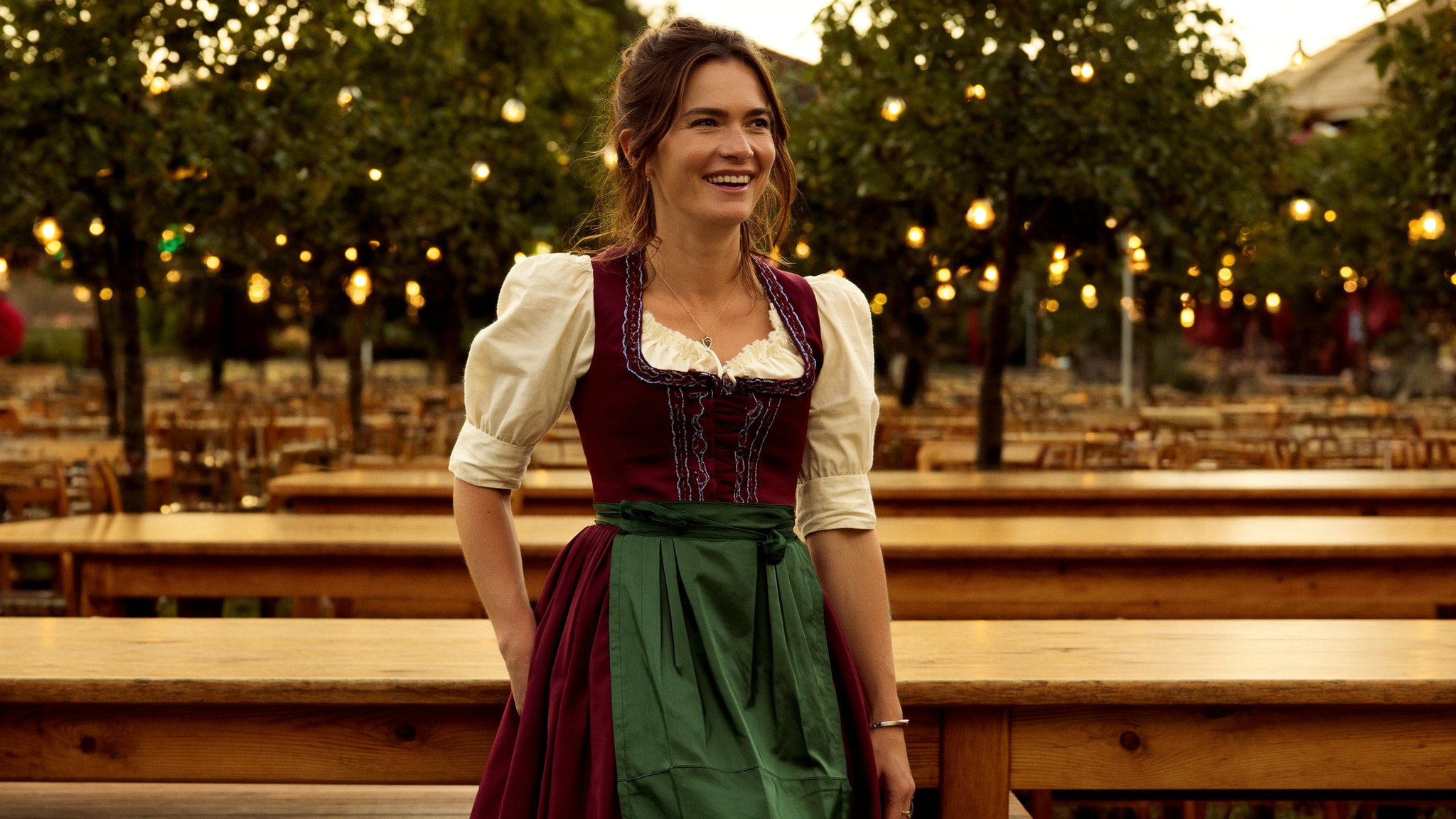


Dirndl Sizes for Women: Size Chart, Bust and Waist Measurement
|
Time to read 16 min

|
Time to read 16 min
A Dirndl is not bought like an ordinary skirt or dress. The sizing works differently, because the Mieder is the decisive component and not the hips. Anyone buying a Dirndl for the first time, or trying a new brand, quickly faces the question: which size is right for me?
Why you can trust us:
✓ We have been experts in Trachten fashion and Dirndl for over 5 years
✓ We have already dressed more than 10,000 Wiesn visitors
✓ We follow the latest Trachten trends and know the newest collections
Want to learn more? Visit our store
The biggest particularity of a Dirndl is the Mieder. It is firmly constructed, often reinforced with boning, and encloses the upper body like a corset. This makes the fit around the bust far more critical than with a normal dress, where the fabric falls more loosely and leaves more room.
In concrete terms: the bust measurement is the most important measuring point when buying a Dirndl. Not the confection size you usually wear, but the bust circumference at the fullest part of the chest. This value, the so-called bust size, determines the Mieder size. In addition, the waist measurement should match the waistband of the skirt. If the Mieder is too tight, it cuts in, you can barely breathe and the lacing tears. If it is too loose, there is no supporting effect and the Dirndl sits sloppily.
Many manufacturers use EU confection sizes such as 34, 36, 38 up to 52 or larger. Others use international sizes like XS, S, M, L, XL. Still others state the Mieder directly in centimetres, for example "Mieder 88" for a bust of 88 cm. There is no uniform standard. That is why it is essential to check the size chart of the respective manufacturer. What is a 38 at brand A can be a 40 at brand B.
The skirt, on the other hand, is usually cut wider and can be adjusted a little more flexibly through the waistband. Even so, the size should fit here too, especially if you prefer a closely cut Dirndl or a slim cut. Most Dirndl, however, are designed to have a little more tolerance in the skirt than in the Mieder.
So if you have so far chosen your dress size by hip circumference or by "what usually fits you", forget that with a Dirndl. Measuring the Mieder is a must, everything else is guesswork. And guesswork leads to wrong purchases, uncomfortable evenings at the Oktoberfest or expensive returns.
Many women wear a different size in a Dirndl than in their everyday clothing. That is completely normal. A Dirndl is a traditional, structured garment and follows its own rules. But if you know your measurements and use the right charts, you are guaranteed to find the perfect fit.
Browse through our Dirndl collection to get an overview of the various cuts and sizes. Each product has its own size chart right on the product page.

The following size chart shows typical Dirndl sizes for women in relation to bust circumference (Mieder bust width) and waistband for the skirt. In addition to the bust measurement, you should always know your waist measurement, because Dirndl cuts fit more closely at the waist than normal dresses. These values are reference figures and can vary depending on the manufacturer. Always check the product-specific size chart before you order.
| Confection size | Mieder bust width | Waistband (skirt) |
|---|---|---|
| 34 | 80,84 cm | 68 cm |
| 36 | 84,88 cm | 72 cm |
| 38 | 88,92 cm | 76 cm |
| 40 | 92,96 cm | 80 cm |
| 42 | 96,100 cm | 84 cm |
| 44 | 100,104 cm | 88 cm |
| 46 | 104,108 cm | 92 cm |
| 48 | 108,112 cm | 96 cm |
| 50 | 112,116 cm | 100 cm |
| 52 | 116,120 cm | 104 cm |
Important: This table serves as general guidance. Different cuts (e.g. fitted vs. loose) or materials (cotton vs. silk) can strongly influence the fit. Some Dirndl are deliberately cut tighter or wider to create a particular style.
Measure your bust (at the fullest part of the chest, wearing a well-fitting bra) with a flexible tape measure. Make sure the tape lies snugly but not constricting. Do not wear thick clothing underneath while measuring, otherwise the result will be distorted.
If your measured value falls between two sizes, always choose the larger size. The Mieder can be tightened with the lacing, but not widened. Better to have some room than to be laced too tightly.
The waistband of the skirt is less critical, as the skirt usually falls a little wider and is additionally concealed by the apron. Still, the waistband should not sit too tight, otherwise it pinches or creases. With very fitted cuts, the waistband can be more decisive, especially if you have a noticeably narrower waist than hips.
At many online shops you will find an interactive size chart or a sizing tool on the product page that suggests the right size based on your measurements. Use these aids, they are often very precise and take the particularities of each model into account.

The Mieder is the heart of every Dirndl. It should support, shape and create a beautiful silhouette. At the same time, it must not constrict, press or hinder breathing. Finding the right fit is crucial for wearing comfort and the overall look.
This is how the Mieder should fit:
Typical problems and what they mean:
The Mieder slides up: This indicates that it is too wide on the upper body or that the cut does not suit your figure. Try a smaller size or a model with a different cut.
The lacing does not close: The Mieder is too small. Choose the next size, even if the waistband may then sit a little looser. You can compensate for that with tighter lacing.
The neckline stands away: The Mieder is either too large or the cut does not suit your bust shape. Some Dirndl are designed for a fuller bust, others for a flatter one. Check the product description or ask the manufacturer.
It pinches under the arms: This can be due to a Mieder that is too tight, but also to a cut that does not match your shoulder width. Some Dirndl have narrower straps, others wider ones. Try out different models.
If you buy a Dirndl online, be sure to read the reviews. Other buyers often describe how the Mieder fits, whether it runs small or large and which figure it suits best. This can save you a lot of frustration and returns.
A well-fitting Mieder is comfortable to wear all day long. You can move, dance, eat and drink without anything pressing or slipping. If you feel you constantly have to tug at the Dirndl, the fit is not right. So take your time when trying it on and test different positions: sitting, standing, raising your arms, taking a deep breath. That way you quickly notice whether the Mieder really fits. Then browse our Dirndl collection and find the model that suits you.
You will find more information on the perfect Dirndl fit in our fit guide.
Before you use a Dirndl size chart, you need to know your own body measurements. For women, three values are decisive:
1. Bust circumference: Measure the bust at the fullest part of the chest, that is over the nipples. The tape should lie horizontally and not cut in. This value is the bust size and directly determines the Mieder size of your Dirndl.
2. Waist circumference: Measure the waist at the narrowest point between the ribcage and hips, that is your waist. This value determines the waistband of the skirt. Since many Dirndl skirts have an elastic band or a lacing, there is often more room here than with the Mieder.
3. Hips: Measure the hips at the widest point, usually 15 to 20 cm below the waist. Important above all for close-fitting models without an elastic band.
With these three values you can read any size chart correctly. If you fall between two confection sizes, always choose the larger one for the Mieder and have the skirt adjusted by a tailor if needed. The Mieder can only be adjusted to a limited degree, whereas the skirt is easy to alter.

The length of the Dirndl has nothing to do with the confection size, but it is still an important decision when buying. Dirndl come in various skirt lengths, each serving a different style and occasion.
Mini Dirndl (under 55 cm): Ends at around mid-thigh. Perfect for parties, festivals or young, cheeky looks. Very popular at the Oktoberfest, especially among younger visitors. Important: even with a mini Dirndl the Mieder must fit perfectly, the skirt length does not change the size choice.
Midi Dirndl (60 to 85 cm): The classic and most versatile length. The skirt ends between the knee and mid-calf. Midi Dirndl are elegant, traditional and suit almost any occasion. They cover the legs a little more than mini Dirndl and often look more sophisticated and refined. Ideal for weddings, folk festivals or a first visit to the Oktoberfest.
Maxi Dirndl or long Dirndl (from 90 cm): The skirt reaches down to the ankles. Very traditional, festive and often seen at historical events or special occasions. Maxi Dirndl lengthen the silhouette and look particularly refined. They are less common than mini or midi, but the perfect choice for special moments.
The length does not affect the size chart, but it can change the proportions of your figure. Shorter women sometimes look more compressed in a maxi Dirndl, while taller women emphasise very long legs in a mini Dirndl. In the end it is a matter of taste and of the occasion.
Many manufacturers offer the same model in various lengths. So you can buy your favourite Dirndl in 50 cm, 70 cm and 90 cm and vary it depending on the event. That is practical and saves you the search for a completely new model.
If you are unsure which length suits you, take a look at our detailed Dirndl lengths guide. There we explain the differences in even more detail and show you which length suits which occasion and figure type.
Dirndl are no longer available only up to size 44. Many manufacturers now offer a wide selection of Dirndl in large sizes, often up to size 58 or even beyond. The days when women with curvier figures had to make do with ill-fitting standard Dirndl are over.
What to look out for with large sizes:
At dirndl.com you will find a dedicated collection for large-size Dirndl. There, all models are designed specially for curvier figures and the size charts are adjusted accordingly. You will find classic, modern and trendy Dirndl in sizes that really fit.
Many customers report that in large sizes they often have to order one number bigger than they wear in normal clothing. This is because the Mieder fits much more closely than a normal top. If you waver between two sizes, always choose the larger one, especially if you have a fuller bust.
Another tip: pay attention to the material composition. Fabrics with a little elastane or stretch content adapt better and are more comfortable to wear. Pure cotton or linen can be very firm and inflexible, which can become uncomfortable especially in larger sizes.
If you are unsure which model suits your figure, use the shop's customer service. Many online retailers offer personal advice by email or phone and can specifically recommend models that match your measurements.
When buying a first Dirndl or switching to a new brand, the same mistakes happen again and again. Here are the most common pitfalls and how to avoid them:
1. Taking your normal confection size as the benchmark
Many women order their Dirndl in the size they usually wear for dresses. This often leads to wrong purchases because Dirndl sizes work differently. Always measure your measurements and compare them with the manufacturer's size chart.
2. Choosing the smaller of two sizes
Out of fear that the Dirndl will look too wide, many opt for the smaller size. But the Mieder can be adjusted through lacing. Too small is problematic, too large can be corrected. When in doubt, always choose the larger size.
3. Not reading the size chart
Sounds trivial, but it happens constantly. Every brand has its own size chart, and the differences can be considerable. A size 38 Dirndl at brand A can correspond to a 40 at brand B. Always measure and compare.
4. Trying the Dirndl on without a bra
The Mieder is constructed to be worn with a well-fitting bra. If you try it on without a bra, the Mieder sits differently and the fit is off. When trying on, wear the bra you also want to wear with the Dirndl later.
5. Only trying it on while standing
A Dirndl also has to be comfortable when sitting, dancing and eating. Try out different movements: sitting down, raising your arms, taking a deep breath. If the Mieder pinches or slips during this, the size does not fit.
6. Confusing the skirt length with the size
The length of the Dirndl (mini, midi, maxi) has nothing to do with the confection size. You can buy a size 38 Dirndl with a 50 cm or 90 cm skirt length. Both are separate specifications. Make sure you choose the right size AND the matching length.
7. Buying online without checking the return policy
Buying a Dirndl online is convenient, but the fit is hard to predict. Make sure the shop has a generous return policy in case the Dirndl does not fit. Keep all labels and try the Dirndl on carefully so that you can send it back if needed.
8. Ignoring the reviews
Other customers often have valuable tips about the fit. Read through the reviews, especially when several buyers write that the Dirndl runs small or large. That can make your decision easier.
9. Ordering too late
Before big events like the Oktoberfest, many Dirndl sell out quickly, especially in popular sizes. Order in good time so that you have enough time for the fitting, a possible return and a re-order. Two to three weeks lead time is ideal.
10. Not having the Dirndl cleaned before wearing it for the first time
Many Dirndl smell a little musty or chemical after storage or transport. Air the Dirndl or have it professionally cleaned before wearing it for the first time. This improves not only the smell but also the fit, as some fabrics settle a little after the first cleaning. You will find tips on correct storage in our Dirndl storage guide.
If you avoid these mistakes, nothing stands in the way of a perfectly fitting Dirndl. Take your time, measure carefully and compare the charts. A well-fitting Dirndl is an investment that pays off, you will enjoy wearing it for years. Also take a look at our guide to the right Dirndl look, which explains how to put together the perfect outfit for every occasion.
If you are looking for a new Dirndl that is easy to care for and high quality, feel free to visit our store
Discover a Dirndl in your size
Always the larger size. The Mieder can be tightened with the lacing, but it cannot be widened. Better to have some room than to be laced too tightly.
Measure your bust at the fullest part of the chest with a flexible tape measure. For the waistband, measure your hip circumference at the widest point. The tape should lie snugly but not constrict. Wear a well-fitting bra while measuring.
The Mieder can be adjusted with the lacing, but only up to a certain point. If the Dirndl is more than two sizes too large, it becomes difficult to achieve a good fit. The fabric creases, the Mieder slips and the silhouette is no longer right.
No. Every manufacturer has its own size chart. What is a 38 at brand A can be a 40 at brand B. Always check the product-specific size chart before you order. Do not rely on your usual confection size.
Yes, many manufacturers offer Dirndl in large sizes, often up to size 60 and larger. dirndl.com has a dedicated collection for large sizes, in which all models are designed specially for curvy figures. The size charts are adjusted accordingly.
Measure the bust at the fullest part of the chest, horizontally over the nipples. The tape should lie snugly but not cut in. This value (bust size) is the most important figure for the Mieder size of your Dirndl. Then compare it with the manufacturer's size chart.
The waist is measured at the narrowest point between the ribcage and hips. With a Dirndl, the waist measurement determines the waistband of the skirt. Since many Dirndl skirts have an elastic band or lacing, there is usually more room here than with the Mieder. If you fall between two sizes, choose the larger one for the Mieder.
Dirndl sizes for women are based above all on the bust circumference, not on a combined confection size. The Mieder fits like a corset and leaves little room, so the exact bust measurement is decisive. Many manufacturers state the bust and waist measurement in their size chart, which you should compare with your own measurements.
Discover matching Trachten

Stay up to date
Sign up and be the first to find out about new collections, exclusive offers and styling tips for your perfect traditional outfit.


