

Buying Lederhosen: Leather Types, Quality & Fit at a Glance
|
Time to read 9 min

|
Time to read 9 min
Lederhosen are not disposable. Invest in a quality pair once and you'll wear them for ten, twenty, or even thirty years. That's exactly why it pays to look closely before you buy: the right leather, the right cut, the right quality. This guide explains everything you need to know before buying Lederhosen.
Why you can trust us:
✓ We are experts in traditional Tracht fashion and Dirndl with over 5 years of experience
✓ We have already dressed over 10,000 Oktoberfest visitors
✓ We follow the latest Tracht trends and know the newest collections
Want to find out more? Visit our store
Table of Contents:
Before you worry about leather type and quality, there's one fundamental question to answer: short or knee-length? Both styles have their place and suit different occasions and body types.
Short Lederhosen (also called Bundhose): The hem falls above the knee, often at mid-thigh. This is the most popular style at Oktoberfest — lighter, more breathable, and ideal for warm days. Short Lederhosen have a more relaxed, youthful feel. They're the go-to for the beer tent and work just as well at summer festivals. The downside: on cooler autumn days, you may want extra socks or leg warmers to stay comfortable.
Knee-length Lederhosen (Kniebundhose): This cut ends just below the knee and features a band there that can be buttoned or laced. The Kniebundhose is more traditional, more elegant, and more versatile. It's a better fit for formal Tracht occasions such as weddings or church fairs, and is more comfortable in cooler temperatures too. Many experienced Tracht wearers prefer the Kniebundhose because it creates a more complete look and shows off the Wadeln (traditional Tracht socks) to their best advantage.
Women's styles: Alongside the classic men's designs, there is a wide range of women's Lederhosen — from short leather shorts to the classic Kniebundhose. Women's models are more fitted at the waist and often feature finer embroidery. For a Dirndl-inspired outfit, leather shorts with colourful embroidery are a great choice.
If you're unsure, short Lederhosen are the safer bet for a first pair. They're more versatile for everyday wear and festivals alike. The Kniebundhose is worth it as a second investment once you find yourself attending traditional events more regularly.
For a full overview of suitable outfits, check out our Men's Oktoberfest Outfit Guide.

The type of leather is the single most important quality factor in any pair of Lederhosen. It determines the feel, durability, care requirements, and of course the price. There are four key leather types you should know about.
Wildbock leather (wild buck): The highest-quality and most sought-after leather for traditional Lederhosen. Wildbock is a soft, natural deer leather sourced from wild animals. It's breathable, feels wonderful against the skin, and becomes softer and more comfortable with wear over time. Wildbock leather is more expensive, but well worth the investment for a long-lasting, authentic pair of Lederhosen. Our Lederhosen collection includes several Wildbock models.
Cowhide (Rindsleder): Sturdy, hard-wearing cowhide is the more affordable alternative to Wildbock. It's firmer and less supple, but extremely robust. Cowhide is a great choice for first-time buyers or anyone looking for a more budget-friendly option. It feels stiffer at first, but softens and moulds to your body over time.
Deer leather (Hirschleder): The premium option — even softer than Wildbock. Deer leather is rare and expensive, but exceptionally comfortable to wear. Perfect for special occasions and true connoisseurs who want nothing but the best.
Faux leather (synthetic): A budget entry option for under €80. Faux leather looks like real leather from a distance, but the difference is immediately obvious when worn: it doesn't breathe, causes sweating, and wears out far more quickly. Fine for the occasional festival visit, but not a real investment. If you plan to wear Tracht regularly, genuine leather is by far the better choice.
How to spot genuine leather: Real leather never has a perfectly uniform surface. Small irregularities, fine pores, and a characteristic leather scent are all good signs. Faux leather smells of plastic and has an overly even, consistent grain. When in doubt, check the product page or ask the retailer.

You can identify a high-quality pair of Lederhosen by several key details. These features help you distinguish good craftsmanship from poor quality, regardless of price.
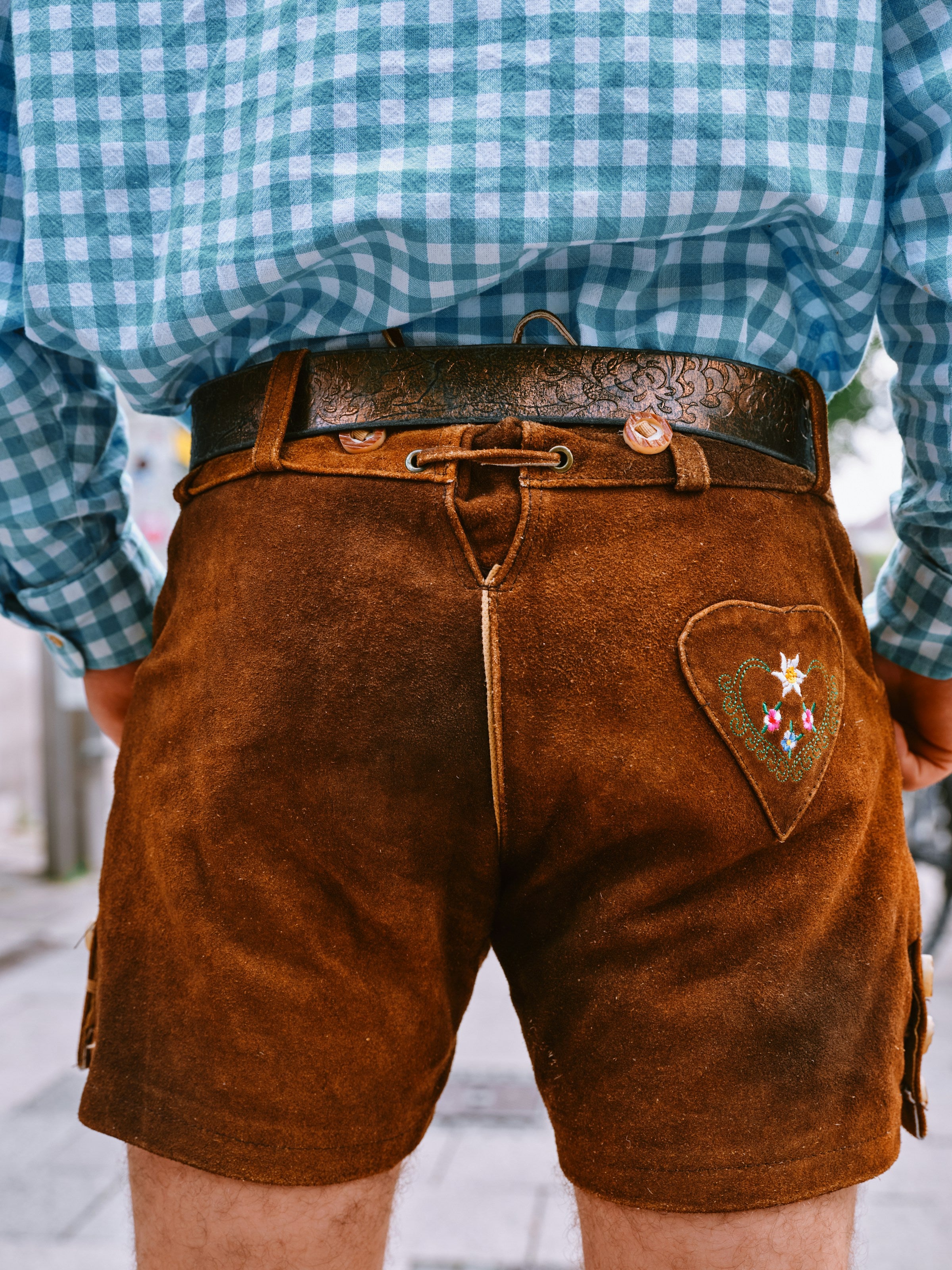
Embroidery: Traditional Bavarian embroidery on the bib (Latz), legs, and braces is a hallmark of craft quality. High-quality embroidery is dense, even, and has clean, defined lines. On cheaper Lederhosen, embroidery is often sparse, uneven, or even printed rather than stitched.
Seams: Double stitching at the waistband, crotch, and hem is a must on quality Lederhosen. Check the inner seams — they should be clean and even. Loose threads or uneven spacing are a bad sign.
Buttons and fastenings: Traditional Lederhosen feature horn buttons or engraved metal buttons. Cheap plastic buttons break easily and look unprofessional. The bib fastening (Latz closure) should also be solid and functional.
Braces (Hosenträger): Many Lederhosen come with matching leather braces. Make sure the braces are made from the same leather and that the buckles are well constructed. Cheap faux-leather braces are easy to spot.
Price categories at a glance:
| Price Category | Price Range | Leather | Best For |
|---|---|---|---|
| Budget | €60–120 | Faux leather or thin cowhide | One-off visit, not for regular wear |
| Mid-range | €120–250 | Genuine cowhide or mixed leather | Occasional festival visits, solid quality |
| Premium | €250–500 | Wildbock, deer leather | Regular wear, decades of durability |
| Made-to-measure | €500+ | Choice of leather, handcrafted | Collectors, traditional Tracht families |
For most buyers, the mid-range (€120–250) offers the best value for money. You get genuine leather, solid craftsmanship, and a pair of Lederhosen that will last for years. If you know you'll be wearing Tracht regularly, investing in a premium model is well worth it.
Lederhosen that don't fit properly are a wasted investment. The right fit is crucial — both for wearing comfort and for the overall look of your outfit.
The waistband: The waistband should sit firmly without digging in. You should be able to slip two fingers comfortably underneath, but the trousers shouldn't slip down. Lederhosen soften and adapt slightly over time, so it's better to buy a little snugger rather than too loose.
The length: Short Lederhosen typically end at mid-thigh. Knee-length Lederhosen (Kniebundhose) sit just below the knee. The knee band should hold firm without pinching. Traditionally, Kniebundhosen are worn with Wadeln (Tracht socks) that show above the top of the boot.
The crotch: A crotch that's too tight is uncomfortable and restricts every movement. When trying them on, test this: sit down, stand up, lift your legs. The crotch should allow freedom of movement without being too roomy.
The bib (Latz): The bib should lie flat and open and close smoothly. If the bib sticks out or pulls tight, the trousers are too small.
For a step-by-step guide to finding your exact size, see our Lederhosen sizing guide, which also includes a measurement chart with all the key body measurements you'll need.
Important: New Lederhosen often feel stiffer and snugger than you'd like at first. This is completely normal. Genuine leather breaks in with wear and moulds to your body shape. After two or three outings, they'll feel like a second skin.

Lederhosen alone don't make an outfit. It's only with the right accompanying pieces that a cohesive Tracht look comes together.
Trachtenhemd (Tracht shirt): The Trachtenhemd is the most important companion piece. White shirts go with any Lederhosen; checked shirts in red-and-white or blue-and-white are the classic Bavarian choice. The shirt is always tucked in. Our Trachtenhemd guide covers everything you need to know about making the right choice.
Shoes: Traditionally, Haferl shoes are worn with Lederhosen. These are sturdy, low leather shoes with a characteristic side seam. For short Lederhosen, Tracht boots or rustic lace-up shoes also work well. Trainers or sneakers look out of place.
Wadeln (Tracht socks): Knee-length Lederhosen (Kniebundhose) call for Wadeln — knee-high woollen Tracht socks. They should complement the colour of your Lederhosen and shirt. Classic options are natural white or grey. With short Lederhosen, wear shorter Tracht socks or leave the legs bare.
Janker or waistcoat: A Trachtenjanker (loden jacket) or a Tracht waistcoat completes the look, especially in cooler weather. The Janker should match the Lederhosen in colour and style.
Accessories: A Charivari (decorative Tracht ornament worn on the braces), a leather wallet, and a Tracht belt are optional but authentic finishing touches.
For all the details on the perfect festival outfit, including styling tips and combinations, read our Volksfest Tracht guide.
A good pair of Lederhosen will last a lifetime if you care for them properly. The most important rules:
Never machine wash. Genuine leather must never go in the washing machine. The combination of water and heat destroys the leather structure and the seams. Small stains can be removed with a damp cloth and leather soap.
Air them out after wearing. Hang your Lederhosen on a hanger after each use — never fold them. Let them air-dry naturally, away from direct sunlight and heat sources such as radiators.
Condition with leather grease or leather wax. Once a year, particularly before the season begins, treat your Lederhosen with a suitable leather conditioner. This keeps the leather supple and protects against cracking. Be sure to use the right product for suede or smooth leather, as applicable.
Store them correctly. During the off-season, keep your Lederhosen in a linen bag or garment cover. Never use plastic bags — leather needs to breathe. Cool, dry, and away from light is ideal. For more tips on storing Tracht clothing properly, see our Dirndl and Tracht storage guide.
The break-in process: New Lederhosen are often stiff. This is not a defect — it's completely normal. With each wear, the leather softens and conforms to your figure. Don't try to speed up this process with heat or moisture; simply wear them regularly.
A well-cared-for pair of Lederhosen made from genuine leather is an investment for generations. Many traditional Bavarian families own Lederhosen that have been passed down from grandfather to father to son.
If you're looking for a new Dirndl that's easy to care for and beautifully made, feel free to browse our store
Discover Lederhosen
Wildbock leather is the highest-quality material: soft, breathable, and long-lasting. It's more expensive, but the best investment for regular wear. Cowhide is a solid, more affordable alternative. Faux leather should only be considered for very occasional use.
For a good-quality pair of genuine leather Lederhosen, budget between €120 and €250. Premium Wildbock models cost €250–500 and will last for decades. Below €100, you're generally looking at faux leather or very thin cowhide.
Short Lederhosen (Bundhose) end above the knee — more airy and by far the most popular style. The Kniebundhose ends just below the knee, is more traditional, and more versatile for formal occasions. Both are equally suitable for Oktoberfest.
Genuine Lederhosen must never go in the washing machine. Treat stains with a damp cloth and leather soap. Air out your Lederhosen after wearing and condition them with leather care product once a year.
Measure your waist circumference with a tape measure and compare it against the manufacturer's size chart. When in doubt, go for the smaller size — leather stretches and gives with wear. Our detailed Lederhosen sizing guide walks you through the process step by step.
Discover Matching Tracht

Stay up to date
Sign up and be the first to find out about new collections, exclusive offers and styling tips for your perfect traditional outfit.


