

Your First Oktoberfest: The Complete Beginner's Guide to the Wiesn
|
Time to read 12 min

|
Time to read 12 min
Heading to Oktoberfest for the very first time and not quite sure what to expect? We will show you how to prepare properly, which outfit works, what to keep in mind and how to make sure your first day at the Wiesn is a guaranteed success.
Why you can trust us:
✓ We have been experts in traditional Tracht fashion and Dirndl for over 5 years
✓ We have already dressed more than 10,000 Wiesn visitors
✓ We follow the latest Tracht trends and know the newest collections
Want to learn more? Visit our store
Table of contents:
The Oktoberfest is the largest folk festival in the world and a once in a lifetime experience for many. When you go to the Wiesn for the first time, the sheer size, the crowds and the hustle and bustle can feel overwhelming at first. But do not worry: with the right preparation, your first visit will become an unforgettable day.
The Oktoberfest takes place every autumn in Munich on the Theresienwiese and lasts around 16 to 18 days. More than six million visitors from all over the world pour into the city to enjoy traditional Bavarian music, beer and food in the huge festival tents. The atmosphere is unique: a mix of tradition, festive spirit and the Bavarian way of life.
What surprises many first time visitors: it is not only about drinking beer. The Wiesn is a genuine folk festival with rides, stalls, shows and a clear Tracht etiquette that most visitors follow. Anyone who arrives in Tracht shows respect and becomes part of the whole. That is why it pays to invest in a proper Oktoberfest Dirndl.
The key facts for your first visit: the festival opens in the morning, and the tents start to fill up around midday. On weekends and public holidays it gets especially busy. Without a reservation it becomes hard to find a spot inside a tent. If you have never been before, set aside at least half a day to explore the grounds and soak up the atmosphere.
Our guide Oktoberfest 2026: Dates, Duration, Prices & Guide gives you all the essential information on dates, opening hours and costs. That way you are perfectly prepared and avoid the typical beginner mistakes.
Probably the most important question for a first Wiesn visit: what should I wear? The clear answer: Tracht. Anyone going to the Oktoberfest traditionally wears a Dirndl or a Lederhose. It is not only expected, it is simply part of the experience.
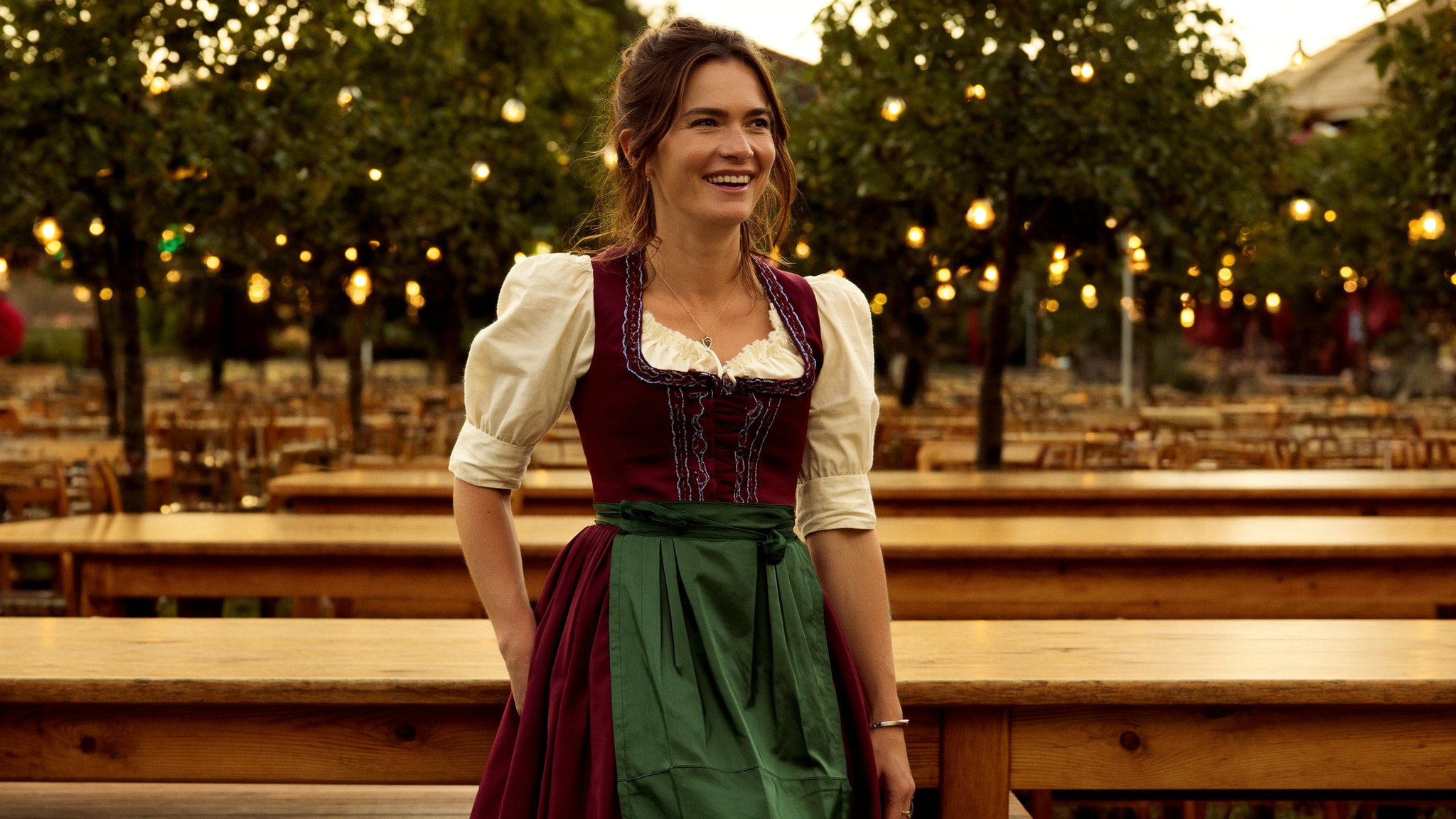
A Dirndl consists of a fitted bodice, a blouse with a neckline, a skirt and an apron. This combination has been the epitome of Bavarian Tracht fashion for centuries and suits practically every woman, regardless of figure or age. The Dirndl flatters the silhouette, accentuates the waist and looks festive and authentic at the same time.
If you do not have a Dirndl yet, you can choose between different lengths, colours and styles. Beginners are best served with a classic Oktoberfest Dirndl in a medium length (midi) that reaches just over the knee or down to the calf. This length is comfortable, practical and works for any occasion at the Wiesn.

One important tip for newcomers: invest in quality. A well made Dirndl fits better, lasts longer and feels far more pleasant than a cheap last minute outfit. You will spend the whole day in it, so it should sit comfortably and make you feel good.
Our collection Oktoberfest Outfits offers you a wide selection of complete sets with Dirndl, blouse and apron. That way you are perfectly equipped without having to hunt around for individual pieces. If you are unsure which Dirndl suits you, our Dirndl figure guide helps you choose.
If you are a woman heading to the Wiesn for the first time, the Dirndl is the classic and most popular choice. It looks feminine, traditional and fits the festival tent atmosphere perfectly. That said, a Lederhose with a checked shirt is also an option for women and has been on trend for several years now.
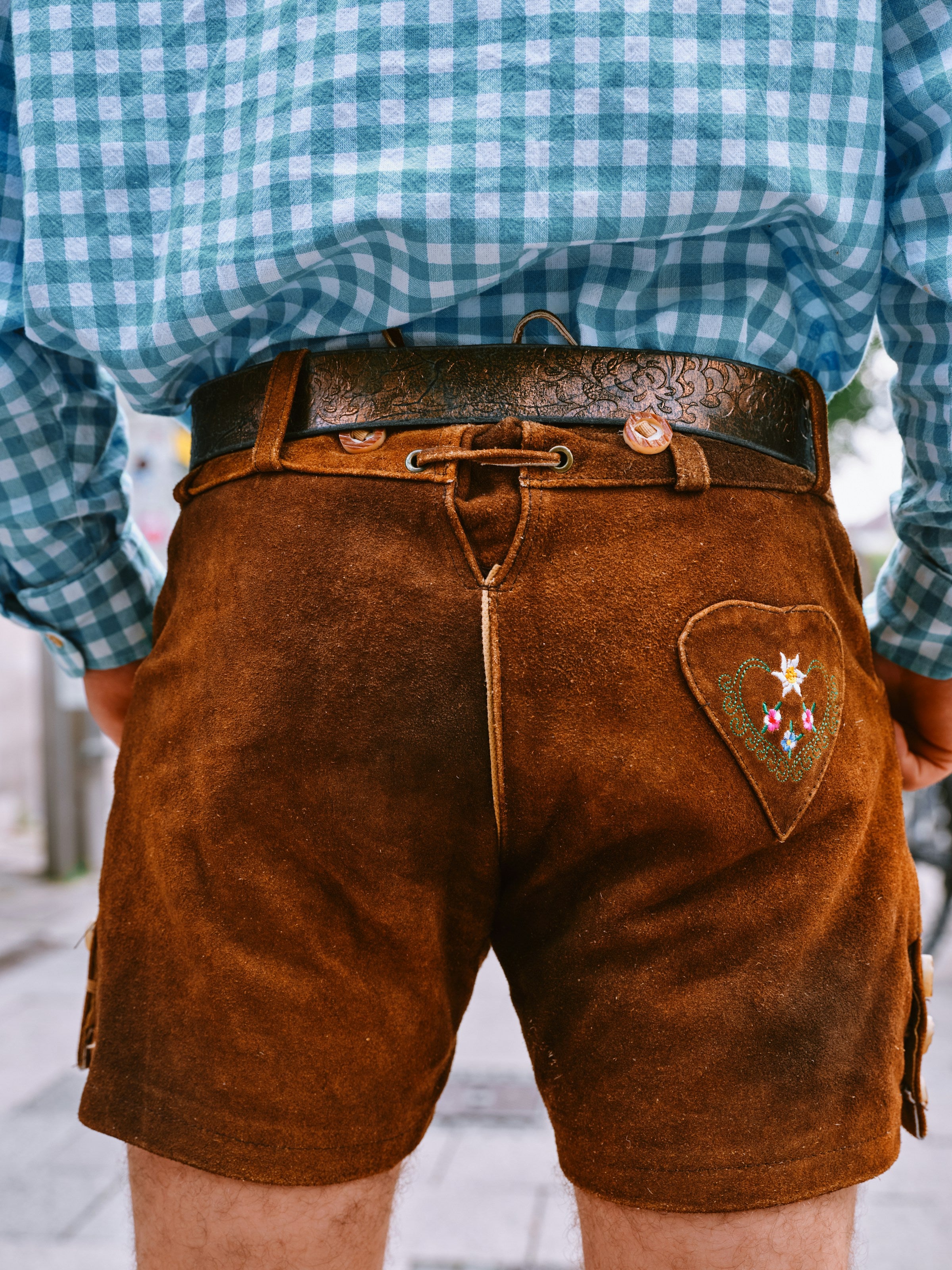
For men, the Lederhose is the counterpart to the Dirndl: a short or knee length Lederhose combined with a checked shirt, braces and sturdy shoes. The same rule applies here: better to invest in quality than in cheap alternatives. Real leather lasts for years, looks better and is far more comfortable to wear.
Both options are welcome at the Wiesn, both are traditional and both show respect for the event. The only thing that matters is that you feel comfortable in your outfit and can wear it all day long. Anyone choosing a Dirndl should make sure the bodice fits well and the blouse is not too tight.
A tip for couples or groups of friends: Tracht always goes together. Whether Dirndl, Lederhose or a mix, the overall look feels harmonious and authentic. Many groups coordinate the colours of their outfits, but that is not a must.
You will find more inspiration for the perfect Wiesn outfit for women and helpful styling tips in our detailed guide. For men we have also put together a dedicated guide on the Oktoberfest outfit for men.
The Oktoberfest has its own rules and a clear code of conduct that you should know as a beginner. Most of these rules are unwritten, yet they are quietly expected by locals from Munich and by experienced Wiesn visitors.
Rule number 1: wear Tracht. Anyone who turns up in jeans and a T-shirt stands out and is not taken seriously. The Oktoberfest is a Tracht event, and joining in shows respect.
Rule number 2: do not stand on the benches. In many tents people dance on the benches, but it is all about the right moment. Beginners should first look around and watch how things go. If the mood is right and the tent staff have no objection, it is fine. Until then: keep your feet on the ground.
Rule number 3: say "Prost" and keep eye contact. When you clink glasses with someone, look them in the eyes. That is part of Bavarian drinking culture and shows respect. A quick "Prost!" without a glance comes across as rude.
Other important points: do not take Maß steins with you (theft is punished severely), avoid excessive alcohol (security will throw you out), and respect the tent staff. The servers carry heavy Maß steins all day long, so be friendly and patient.
You will learn more about how to behave at the festival in our detailed folk festival & Tracht etiquette guide. There we also cover the topic of the Dirndl bow: tied on the left, right or in the middle, each position carries a meaning.
You do not need much for your first Wiesn visit, but there are a few things you should definitely have with you. A well packed bag saves you stress and makes the day far more enjoyable.
Money and cash: in the tents you often pay in cash only. Bring enough cash, count on 12 to 15 euros per Maß of beer, 12 to 18 euros for half a roast chicken and similar amounts for other dishes. A reservation usually does not cost anything extra, but a tip is customary.
ID card: mandatory. Checks can happen at any time at the entrances and inside the tents. Without ID you will not get in.
Phone and power bank: you will want to take photos and stay reachable, especially when you are out with a group. A small power bank is worth its weight in gold when your battery starts running low.
Small bag: a small shoulder bag or Tracht bag is ideal. It should be big enough for your phone, wallet and keys, but not get in the way. Backpacks are impractical and are often not allowed into the tents.
Jacket or shawl: the Wiesn takes place in autumn, and evenings can get chilly. A shoulder shawl, a light jacket or a Tracht jacket are practical and match your outfit. They also give you better protection in the rain.
Our complete Oktoberfest packing list shows you exactly what you need and what you can safely leave at home. That way you are perfectly prepared.
Getting to the Oktoberfest is easy if you keep a few basic things in mind. The festival grounds are centrally located in Munich on the Theresienwiese and are easy to reach by public transport. The nearest underground stations are Theresienwiese (U4/U5) and Goetheplatz (U3/U6).
Allow plenty of time. On weekends and public holidays the Wiesn is extremely busy, the trains are packed and the tents are overcrowded. If you come without a reservation, try to go in the morning or during the week. From midday onwards it becomes difficult to find a seat.
The typical flow of the day: arrive in the morning, explore the grounds, maybe try a few rides, then head into a tent. With a reservation you have a fixed spot at a set time, without one you look for a free table. Many tents stop letting people in once they are full, so be there early.
Once you have found a table, sit down, order your drink and enjoy the atmosphere. The mood in the tents is unique: live music, singing, dancing and an exuberant party spirit. Go with it, sing along, raise your glass and have fun.
A practical tip: agree on a meeting point with your group. Mobile reception is often poor in the big tents, and you easily lose each other in the crowd. A fixed spot where you can meet up in an emergency saves a lot of nerves.
For the trip home: use public transport. The underground runs until late at night, and taxis are usually hopelessly overrun in the evening. Alternatively: walk into the city centre and continue your journey from there.
People going to the Wiesn for the first time often make the same mistakes. We will show you the most common ones and how to avoid them, so your first visit is a complete success.
Mistake 1: arriving too late without a reservation. The tents are full from midday, on weekends even earlier. Without a reservation you should be there by 10 or 11 a.m. at the latest. Anyone arriving in the afternoon has hardly any chance of getting a seat.
Mistake 2: wearing uncomfortable shoes. You will be walking, standing and dancing all day. New, unworn shoes are a guarantee for blisters. Wear comfortable, broken in shoes, ideally flat ballerinas or pumps with a small heel. No high heels.
Mistake 3: eating too little. Alcohol on an empty stomach is not a good idea. Order something to eat before you start drinking. Half a roast chicken, a pretzel or a portion of Obazda are perfect and part of the Wiesn experience.
Mistake 4: buying cheap Tracht. A poorly fitting Dirndl or a thin faux leather Lederhose not only look odd, they are also uncomfortable. Better to invest in a good first Dirndl that you can wear for several years.
Mistake 5: not bringing any cash. Card payment is not possible everywhere. Cash machines at the Wiesn are often overrun. Bring enough cash, count on at least 60 to 100 euros per person for half a day.
Mistake 6: tying the apron the wrong way. The position of the bow carries a meaning: left means single, right means married, in the middle means virgin or waitress. Many beginners do not know this. Tie the bow deliberately to avoid misunderstandings.
To finish, here are a few proven tips that will make your first Wiesn day truly unforgettable.
Go with friends. The Wiesn is most fun in a group. Celebrating, singing, dancing and clinking glasses together is what it is all about. On your own it can quickly feel lonely, especially when the tents are packed.
Try the classics. Order a Maß, eat half a roast chicken, try Obazda and pretzels. It is part of the Wiesn and tastes better here than anywhere else. Even if you do not drink beer, there are alternatives such as Radler, Spezi or alcohol free beer.
Be open and friendly. The Wiesn is a place where connections form quickly. You sit close together, clink glasses and chat. Be open, smile, be friendly. That is the Bavarian way of life, and it is exactly what makes the Oktoberfest so special.

Take photos, but enjoy the moment. Of course you want to capture memories. But do not forget to put your phone away now and then and simply enjoy the atmosphere. The best moments often happen exactly when the camera is off.
Respect the tradition. The Oktoberfest is more than just a huge folk festival. It is part of Bavarian culture and has a long history. Anyone who respects that comes across as authentic and is seen as part of the whole.
With these tips, the right Dirndl and a positive attitude, your first Wiesn visit will become an experience you will never forget. Prost and have fun!
If you are looking for a new Dirndl that is easy to care for and high in quality, feel free to drop by our store
Our Oktoberfest Dirndl for Beginners
For your first Oktoberfest you should wear Tracht: a Dirndl with a blouse and apron for women, a Lederhose with a checked shirt for men. It is not only tradition, it shows respect for the event and is simply part of the whole thing.
A reservation is not mandatory, but highly recommended, especially on weekends and public holidays. Without one you should arrive early, ideally in the morning, to still find a seat in a tent. In the afternoon it becomes difficult.
Count on at least 60 to 100 euros per person for half a day. A Maß of beer costs 12 to 15 euros, half a roast chicken 12 to 18 euros. Most tents take cash only, and card payment is not possible everywhere.
Wear comfortable, broken in shoes, ideally flat ballerinas or pumps with a small heel. You will be walking, standing and possibly dancing all day. New or uncomfortable shoes quickly lead to blisters. No high heels.
Wear Tracht, do not stand on the benches without permission, keep eye contact when clinking glasses, respect the tent staff and do not take any Maß steins with you. Be friendly, drink responsibly and enjoy the atmosphere.
Discover Matching Tracht

Stay up to date
Sign up and be the first to find out about new collections, exclusive offers and styling tips for your perfect traditional outfit.


