

Edelweiss meaning - The flower of eternity
|
Time to read 7 min

|
Time to read 7 min
Everyone has heard of the so-called Edelweiss in connection with traditional clothing and its associated culture. But what is it all about? We'll answer the most important questions and give you valuable tips on the meaning of Edelweiss.
In short: Edelweiss is Bavaria's iconic alpine flower, a symbol of courage, loyalty and eternal love. It is protected by law and cannot be picked, but lives on as a beloved motif in Tracht jewelry and embroidery.
Why you can trust us:
✓ We've been experts in traditional clothing and Dirndl for over 5 years
✓ We've already dressed over 10,000 Wiesn visitors
✓ We keep an eye on current traditional clothing trends and know the latest collections
Want to learn more? Visit our store
Table of Contents:
There's no denying that the Edelweiss flower holds great significance. The star-shaped bloom of the Edelweiss is so unique and striking that it has secured a firm place in traditional clothing over the years.
It once grew widely throughout the Alps. Due to its nature and its ability to always retain its shape and color completely, it was called the "immortal of the Alps" by the locals.
The Edelweiss is an evergreen perennial plant. Its blooming season is from July to September, and it is adorned with up to 15 white bracts. The fuzzy white hairs protect the plant from intense UV radiation in the mountains and from the cold.
The Edelweiss continues to be a symbol of courage, bravery, and love. In the past, picking Edelweiss was considered a test of courage because it primarily grew in inaccessible locations. Young men often had to undertake dangerous climbs up steep rock faces to bring an Edelweiss to their beloved.
The Edelweiss as a good luck charm has now become a national symbol in many parts of Europe! In Austria and Switzerland, you can find it on coins, in coats of arms, and as emblems of various organizations.
Indeed, there are even several legends that tell specifically about the Edelweiss. These romantic stories have contributed to the Edelweiss being considered a symbol of true love to this day.
It is said that the Edelweiss is a star that fell from the sky. The white star-shaped bloom actually resembles a star, and legend has it that wherever a star fell to earth, an Edelweiss began to grow.
This romantic notion makes the Edelweiss something very special – it's a piece of heaven blooming on earth.
Another legend says that the Edelweiss was born from many tears. A disappointed ice maiden, upon learning of her hunter's infidelity, threw herself into the depths of a glacier crevasse. Wherever her tears fell, an Edelweiss grew.
To this day, it is told that one should give an Edelweiss to a loved one to express sincere love. Thus, the Edelweiss not only stands for love itself but also for the willingness to make sacrifices and efforts to prove that love.
However, it is best for nature to refrain from actually picking Edelweiss. These flowers are very rare and are protected, so that could cause a lot of trouble!
Due to intensive picking in the past, the Edelweiss has declined significantly in many regions of the Alps. In some areas, it has even disappeared completely. Therefore, picking Edelweiss is now forbidden in most Alpine countries.
Alternatively, you can plant the small white flowers in your garden. The cuttings usually come from the Himalayas and are specially bred for gardens. This way, you can enjoy the beauty of the Edelweiss without harming nature.
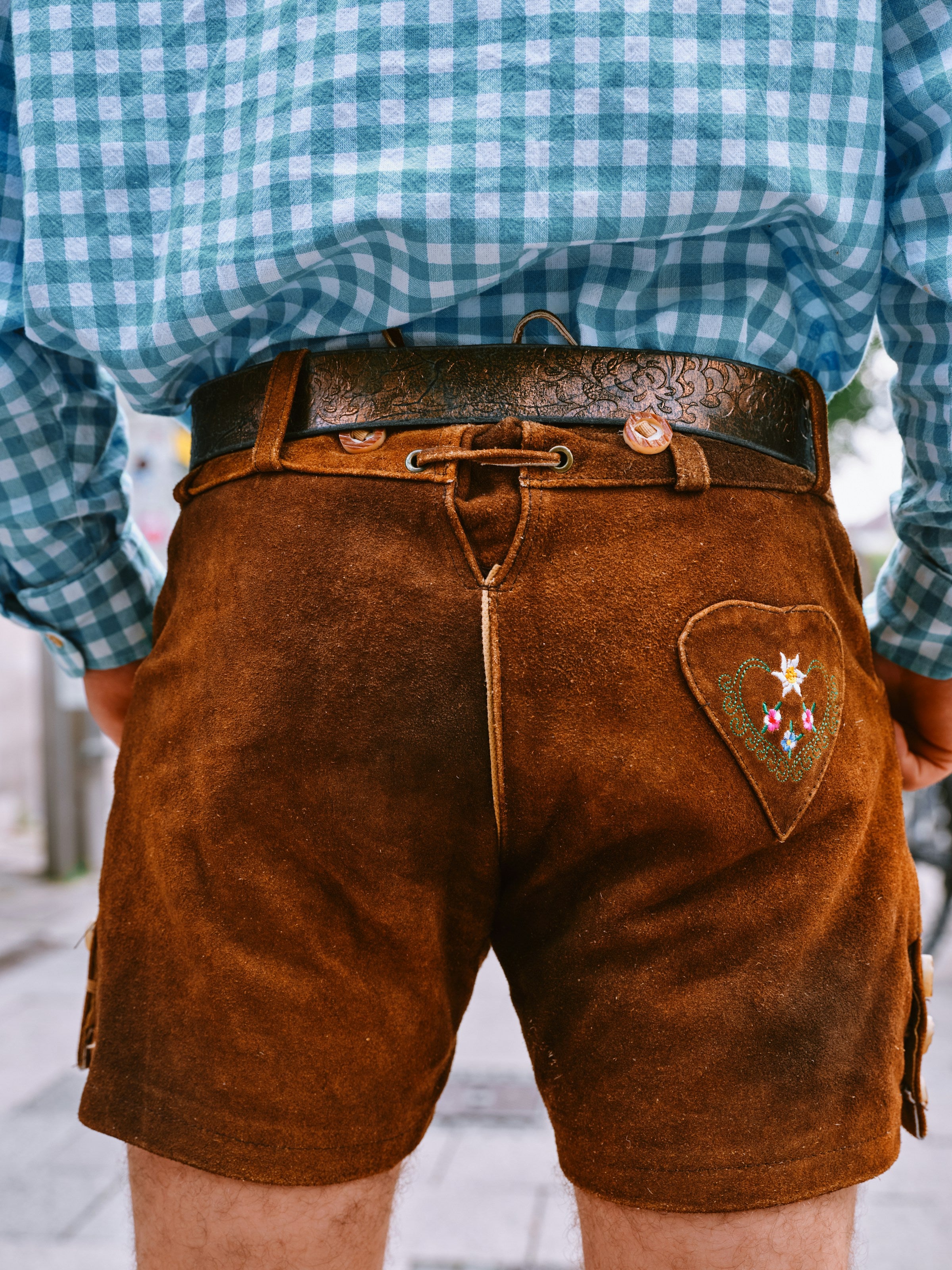
As mentioned, you'll find the Edelweiss primarily in Tracht fashion. It expresses belonging to the beautiful Alpine region and is a timeless symbol that never goes out of style.
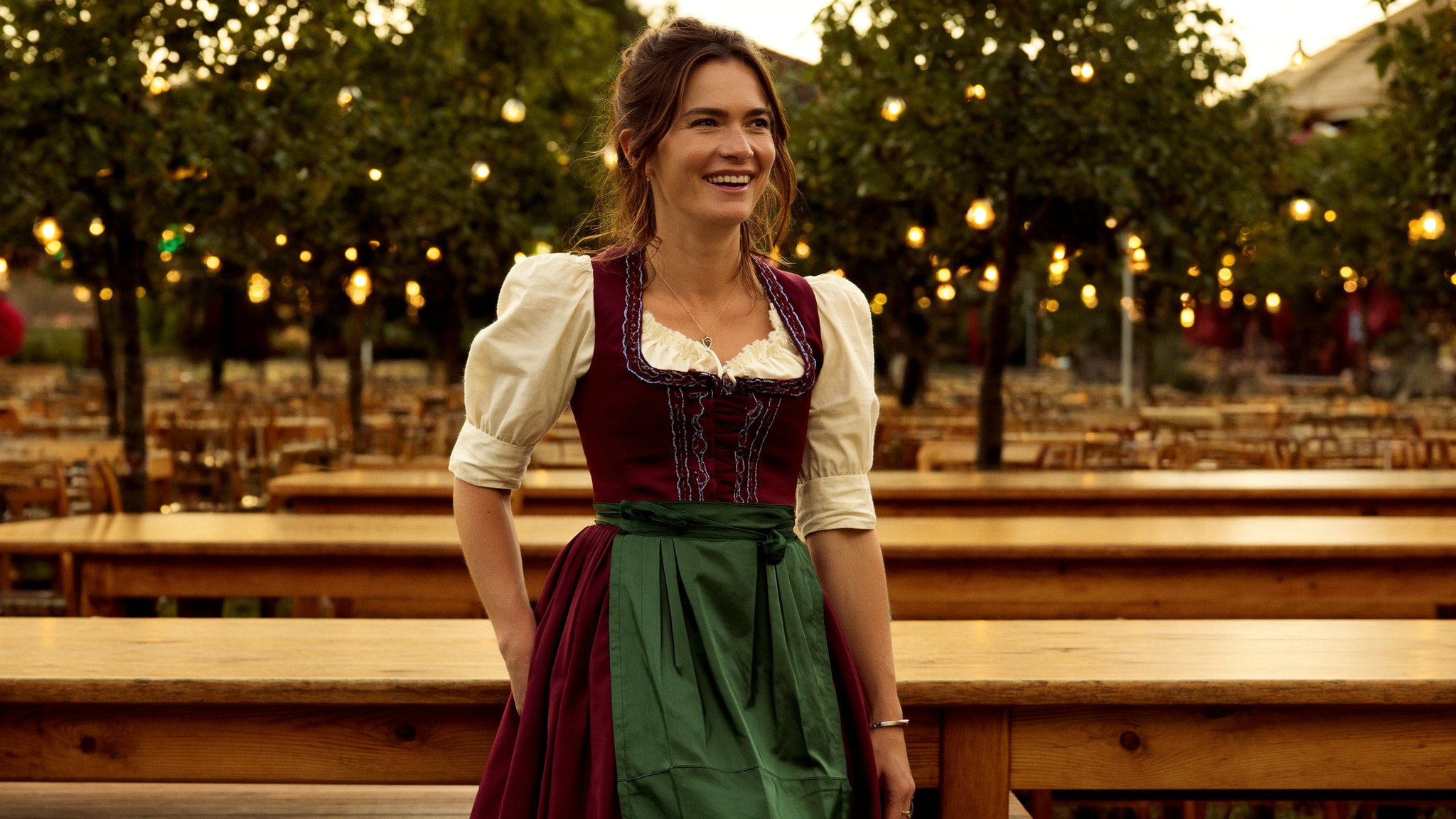
We've selected some Dirndl for you where the Edelweiss has been incorporated with great attention to detail. Whether as embroidery on the bodice, as a print on the apron, or as a subtle detail on the blouse – the Edelweiss lends every Dirndl an authentic alpine charm.
We have the perfect Edelweiss accessories for your Tracht outfit. Whether it's a Dirndl, Tracht blouses, or accessories like scarves, these accessories combine wonderfully with everything.
The most popular Edelweiss accessories:
Whether as a print motif, pin, or pendant, Edelweiss accessories come in all sorts of variations. They are the perfect way to incorporate the meaning and symbolism of the Edelweiss into your outfit without having to pick real flowers.
The edelweiss meaning extends far beyond the individual flower. In Bavaria it features in the state coat of arms and appears on the Bavarian euro coin. Soldiers wore edelweiss on their hats as a sign of belonging to the mountain troops, a tradition dating back to the 19th century.
In Austria the edelweiss appeared on the old Schilling coin and today graces the Austrian 2-cent piece. The Austrian mountain infantry wore it as a badge, as did the Swiss mountain infantry. In Switzerland the edelweiss is immortalised on coins and serves as the country's unofficial national symbol.
All three countries share this symbolism: the edelweiss stands for alpine homeland, permanence and the unyielding character of mountain peoples. No wonder that the edelweiss meaning remains omnipresent in traditional costume and is passed down from generation to generation.
The most famous edelweiss song is undoubtedly the piece of the same name from the 1959 musical "The Sound of Music", filmed in 1965 with Julie Andrews and Christopher Plummer. The melody became synonymous worldwide with Austrian patriotism and alpine romance. Ironically, it is not an Austrian folk tune but a composition by American songwriters Rodgers and Hammerstein.
In Bavarian and Austrian folk music the edelweiss appears in countless love songs, always as a symbol of faithful and steadfast devotion. At traditional costume events an edelweiss song is a fixture of the programme.
Botanically the edelweiss is called Leontopodium alpinum, meaning "lion's foot of the Alps". The plant belongs to the daisy family and is more closely related to chamomile and yarrow than you might think.
The edelweiss blooms from July to September at altitudes between 1,700 and 3,400 metres. It prefers limestone soils on sunny rocky slopes and scree. The typical white "star" is not made up of petals but of woolly bracts surrounding the actual tiny flowers in the centre.
The white felt protects the plant from intense UV radiation and insulates against the cold. The edelweiss is thus perfectly adapted to its extreme habitat, which underscores the edelweiss meaning as a symbol of endurance and strength.
The Edelweiss is far more than just a beautiful flower – it is a symbol with deep meaning and a rich history. The most important points summarized briefly:
The Edelweiss stands for courage, bravery, and true love
The star-shaped bloom is called the immortal of the Alps
The Edelweiss is a protected species and may not be picked
In traditional fashion, the Edelweiss is a timeless symbol
Edelweiss accessories are available as jewelry, embroidery, and prints
If you're looking for Dirndl with Edelweiss, feel free to visit our store
Secure your dream Dirndl now
The Edelweiss is a symbol of courage, bravery, and true love. In alpine tradition, picking an Edelweiss was considered a test of courage because it grows in inaccessible places. Anyone who brought an Edelweiss to their beloved proved their love and courage.
The Edelweiss retains its shape and color perfectly even after being picked. It doesn't wilt like other flowers but dries and remains beautiful. That's why the locals called it the Immortal of the Alps.
There are several legends. One says that the Edelweiss is a star that fell from heaven. Another tells of an ice maiden who, heartbroken, threw herself into a glacier crevasse and whose tears turned into Edelweiss.
No, the Edelweiss is protected in most Alpine countries and may not be picked. Due to intensive picking in the past, the plant has become very rare. Anyone who picks Edelweiss risks hefty fines.
There are several legends. One says that the Edelweiss is a star that fell from heaven. Another tells of an ice maiden who, heartbroken, threw herself into a glacier crevasse and whose tears turned into Edelweiss.
Discover Matching Tracht

Stay up to date
Sign up and be the first to find out about new collections, exclusive offers and styling tips for your perfect traditional outfit.


