
Vintage Dirndl — Retro Tracht Fashion in 50s to 70s Style
|
Time to read 6 min

|
Time to read 6 min
Who doesn't know it: the allure of days gone by and reminiscing about the good old days. And this plays a big role in fashion too. Trends come and go, and years later, old fashion trends are rediscovered. This is also true for traditional clothing. Because it goes back to the roots, towards vintage Dirndl and retro models.
Why you can trust us:
✓ We have been experts in traditional clothing and Dirndl for over 5 years
✓ We have already dressed over 10,000 Wiesn visitors
✓ We observe current traditional clothing trends and know the latest collections
Want to learn more? Visit our store
Table of Contents:
From which era do vintage Dirndl originate?
The trends of the 20s to 70s, we all know: not all that glitters is gold, and not every past trend is an eye-catcher from today's perspective. Just like with wine, there are good and bad vintages.
We focus exclusively on the good vintages and trends worth repeating for our vintage Dirndl.
What characterizes sought-after vintage traditional clothing?
So what characterizes the highly sought-after vintage traditional clothing? Which colors, patterns, and cuts are used? Fundamentally, it naturally depends on the respective era from which the Dirndl or traditional clothing originates or is intended to imitate.
This brief overview shows which styles were modern at which time, when high necklines were in vogue, and when daring cuts were popular:
Fashion of the Decades:
Every era had its own characteristic features that are also reflected in traditional clothing. The color types played a role back then in choosing the perfect Dirndl.
A flared A-line shape is indicative of the 60s. This is often combined with a high-necked bodice today. A rather modest neckline, subtlety, and restraint are elements of the 50s.
The appeal of traditional clothing for women today also lies more in simplicity and elegance. This is the exact opposite of modern Dirndl which often play with striking details.
Typical features of modern vintage Dirndl:
This combination of old and new elements is what makes vintage Dirndl so appealing.
High-necked vintage Dirndl fit wonderfully and accentuate the figure. A short stand-up collar is the icing on the cake. A high-necked Dirndl still reveals a little through a narrow V-neckline décolletage .
The significance of the high-necked cut:
Although the high-necked cut was once strongly associated with stuffiness and the dutiful, well-behaved housewife at home, it has a completely different effect today.
Today's woman proves true class and strength with a high-necked, simple vintage Tracht. She doesn't need a deep neckline to convince with her charms. She is not an ordinary, unstylish girl, but a woman with character and dignity.
Advantages of high-necked Dirndl:
The high-necked Dirndl is perfect for women who value elegant restraint.
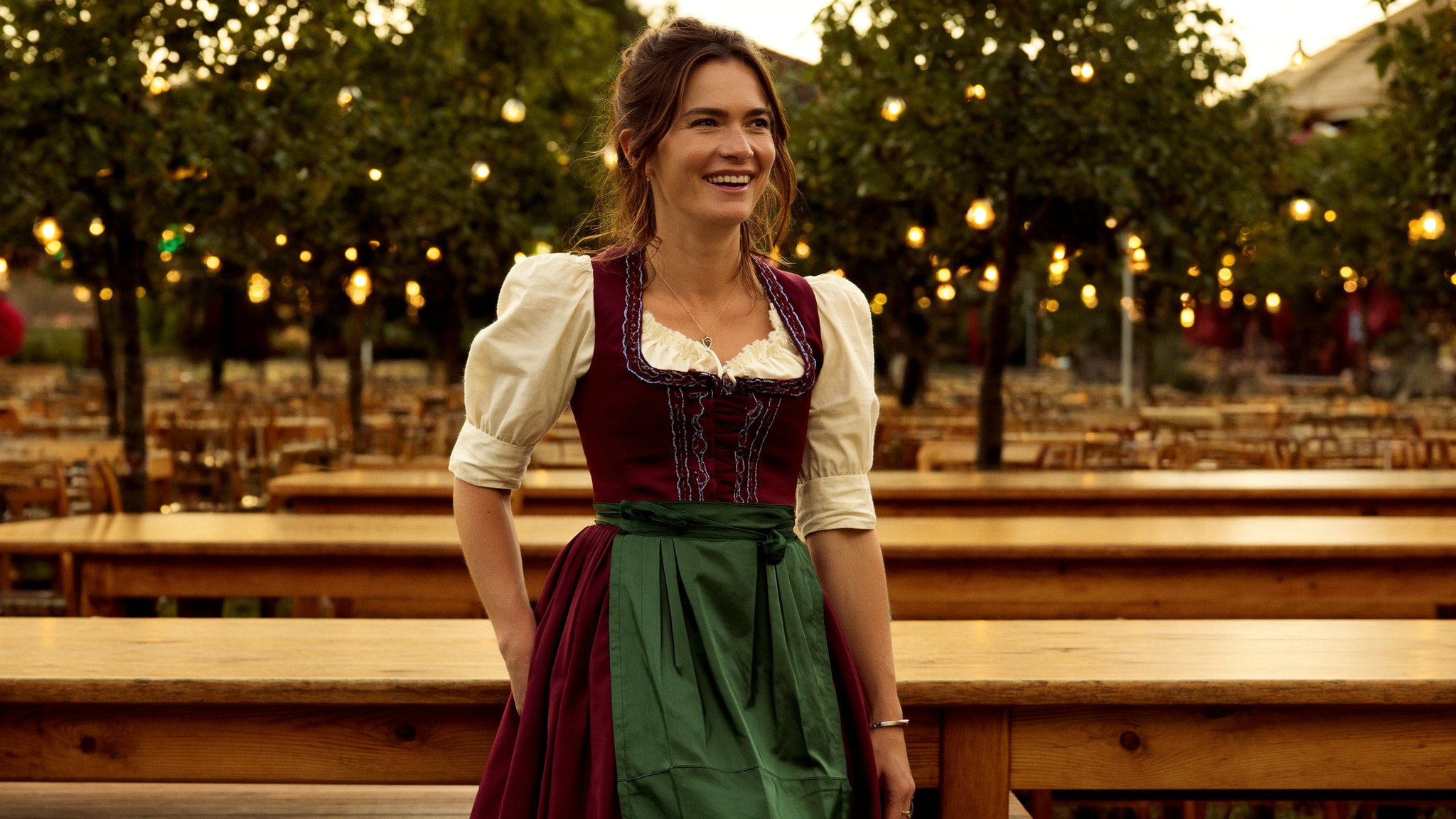
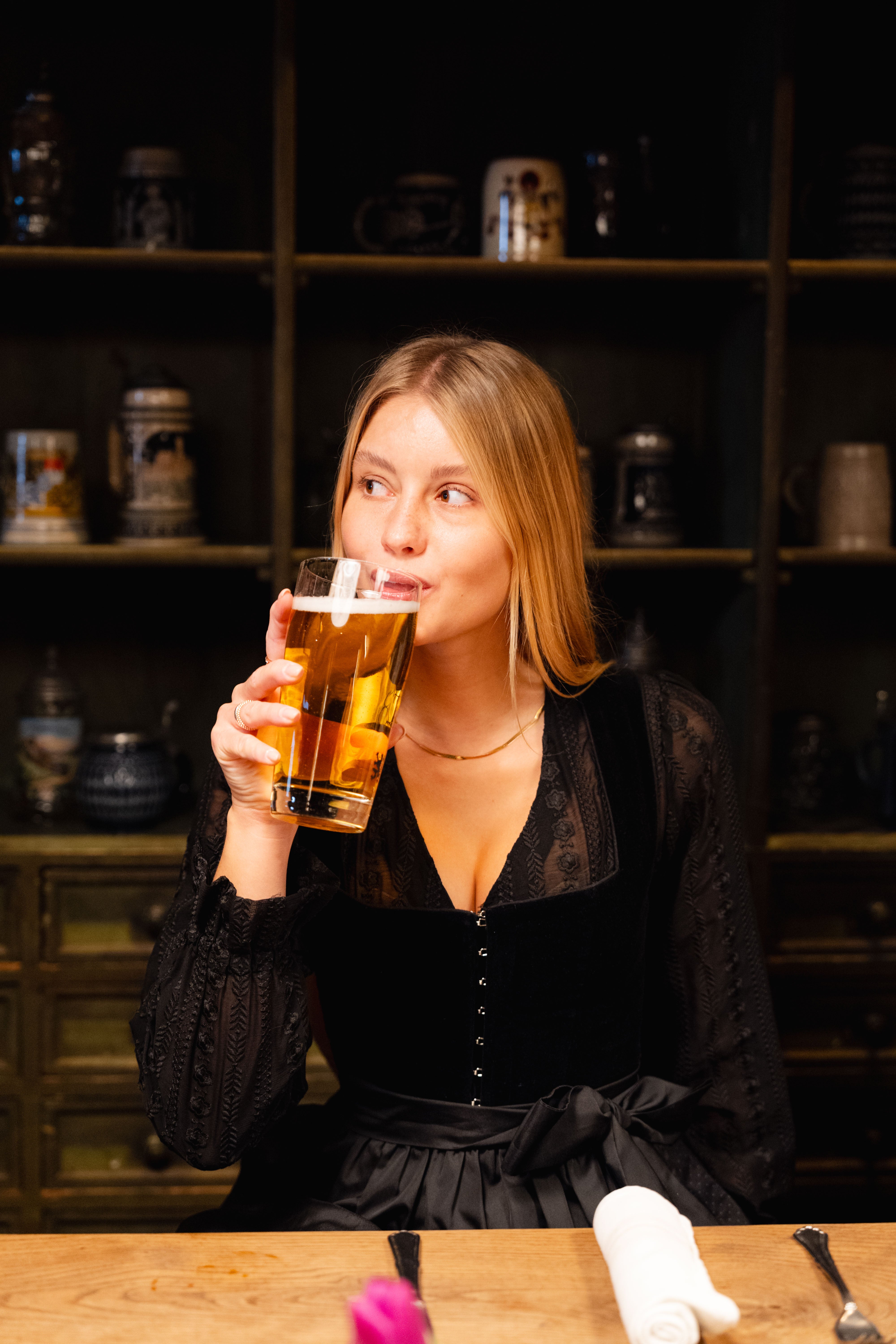
Tracht and Dirndl in vintage style are calm and subtle in muted and classic colors. "Tone-on-tone" combinations are also popular. Traditional Tracht colors like Bordeaux, Dark Green, and Navy Blue are currently experiencing a renaissance.
Typical vintage colors:
Many Dirndl shine uniformly in deep dark red, appearing noble and elegant. The dominance of classic elements is also reflected in the patterns. Particularly fine stripes, polka dots, or floral patterns adorn the vintage Dirndl.
You'll also find high-necked polka dot Dirndl that radiate naturalness through their simple design. Traditional fabrics like cotton are being used again. It should be natural and easy to care for. Synthetic fibers and satin fabrics can't compete.
Due to the often 100 percent cotton composition, the Dirndl can be washed without any problems. More about Washing Linen and caring for natural fabrics can be found in our guide.
Visually, it also impresses with a traditional classic style. The beautiful floral pattern of the aprons is complemented by elegant vintage-style decorative brooches.
Popular Vintage Color Combinations:
These muted colors perfectly emphasize the elegant vintage character.
We often associate all these terms simply with things that were found somewhere at an old flea market or a musty second-hand shop. But a vintage Dirndl or retro Tracht doesn't necessarily have to have had a previous owner.
Vintage, Retro, and more are not just fancy synonyms for old, dusty things!
The differences explained:
The difference between Vintage and Retro:
So, vintage means it's about genuine original pieces from the respective decades. Retro, on the other hand, means the style is imitated, but the production is modern.
Most "vintage Dirndl" sold today are actually retro Dirndl – in the style of the 50s to 70s but newly produced with modern materials and techniques.
So, let's establish that the vintage Dirndl is oriented towards the fashion of the 50s to 70s and tends towards simpler, high-necked models. The most important points summarized briefly:
Vintage Dirndl are inspired by fashion from the 50s to 70s
Each decade had characteristic features
Modern vintage Dirndl combine A-line shapes with high-necked bodices
High-necked cuts appear classic and confident today
Muted, classic colors dominate (burgundy, dark green, navy blue)
If you're looking for your perfect Dirndl for the Wiesn, feel free to check out our store
Secure your dream Dirndl now
Vintage Dirndl are inspired by the trends of the 1920s to the 1970s, with the 50s, 60s, and 70s being particularly popular. Each decade had characteristic features: the 50s were modest with flared skirts, the 60s romantic and floral, and the 70s short and colorful.
Modern vintage Dirndl combine an A-line silhouette (60s) with a high-necked bodice. A subtle neckline, modesty, and restraint are typical. The appeal lies in simplicity and elegance rather than flashy details.
Vintage refers to original pieces from the 1950s, 60s, and 70s. Retro, on the other hand, means the style is imitated but the production is modern. Most "vintage Dirndl" today are actually retro Dirndl in a vintage style.
Vintage Dirndl are a counter-movement to standardized fast fashion. They offer individuality, timeless elegance, high-quality craftsmanship, and traditional values. People long for quality and traditional cuts instead of constantly new trends.
Discover matching Tracht

Stay up to date
Sign up and be the first to find out about new collections, exclusive offers and styling tips for your perfect traditional outfit.


