
Trachtenhemd Men Guide: Types, Combinations and Everyday Tips
|
Time to read 9 min

|
Time to read 9 min
The Trachtenhemd is the difference between a touristy look and a genuine Trachten outfit. It has to work with the Lederhose for men, with the occasion and with the season. This guide shows you which Trachtenhemd is right for which moment, how to combine colours and what to watch for when it comes to quality and care.
Why you can trust us:
✓ We have been experts in traditional Trachten fashion and Dirndl for over 5 years
✓ We have already dressed more than 10,000 Wiesn visitors
✓ We follow the current Trachten trends and know the newest collections
Want to learn more? Visit our store
There are three main types of Trachtenhemd, differing in colour, pattern and occasion. Each has its place, and the choice depends on your personal style, the Lederhose and the event.
The white Trachtenhemd is the timeless classic. It works with any Lederhose, whether dark brown, light brown or black. The white shirt is universally wearable, looks elegant and is the safest choice for formal occasions such as weddings, company parties or church fairs. The advantage: it does not distract from the Lederhose but complements it perfectly. If you only want to own a single Trachtenhemd, choose a white model with a stand-up collar or a classic shirt collar.
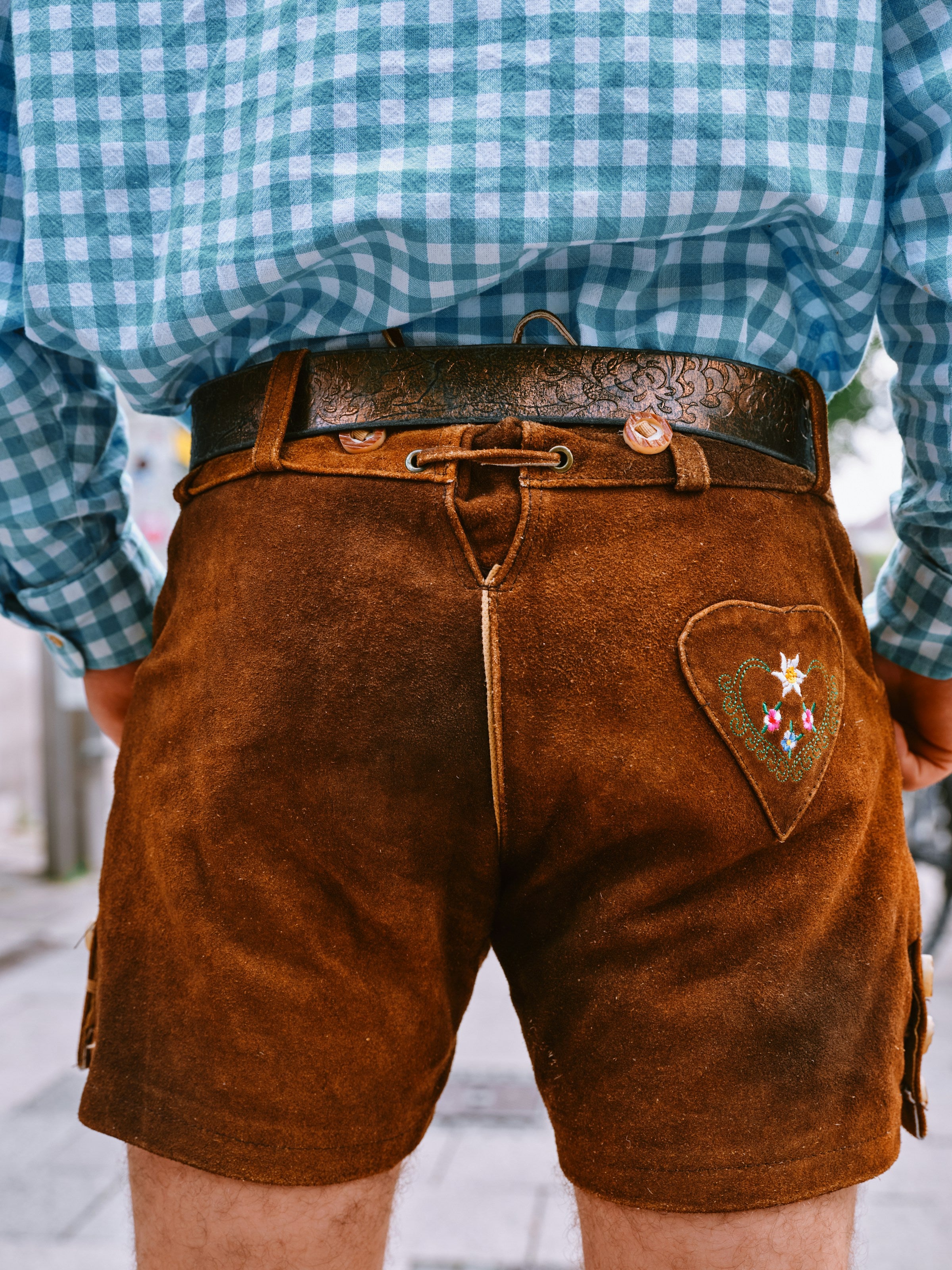
The checked Trachtenhemd is the Bavarian classic par excellence. The most common variants are red and white, blue and white, and green and white check. Red and white is the classic combination for the Oktoberfest, especially with light brown Lederhosen. Blue and white looks a little calmer and goes with dark brown or black Lederhosen. Green and white is rarer, but particularly popular in rural regions. The checked shirt is less formal than the white one, but exactly right for folk festivals, beer gardens and relaxed celebrations.
The linen shirt is the summer option. It is usually natural coloured, beige or light blue and made of breathable linen. Linen shirts are perfect for warm days, summer parties and open-air events. They look more casual than white shirts and feel pleasantly cool on the skin. The downside: linen creases easily, but that is exactly part of the look. A good linen shirt is an investment that pays off at every summer folk festival.

The colour combination between Trachtenhemd and Lederhose decides whether the outfit looks harmonious or not. The basic rule here: the shirt should not overpower the Lederhose but complement it.
A dark brown Lederhose works with almost any shirt. White, blue or blue and white checked shirts work best. Red and white check is also possible, but looks a little stronger. If you want to play it safe, choose a white shirt with blue embroidery on the collar or the sleeves.
A light brown Lederhose is classically combined with red and white checked shirts. This combo is the epitome of the Bavarian look and especially popular at the Oktoberfest. White or natural coloured linen shirts also work well. Avoid dark blue shirts, as the contrast becomes too strong.
A black Lederhose calls for a restrained look. White, light blue or dark blue and white checked shirts are perfect. Red and white can look too loud, unless you wear a black Janker or a waistcoat over it. Black and white combinations look modern and elegant, but are better suited to urban events than to rural folk festivals.
A golden rule: the lighter the Lederhose, the bolder the shirt colour may be. The darker the Lederhose, the more restrained the shirt should be. If you are unsure, always reach for a white Trachtenhemd, that is never stylistically wrong.
You will find more tips on outfit combinations in our Oktoberfest Outfit Men guide.

A Trachtenhemd differs from an ordinary men's shirt through three details: collar, fabric and cut. These features determine the quality and the comfort of wear.
The collar is the most striking feature. Trachtenhemden come with a stand-up collar or a classic shirt collar. The stand-up collar is the most traditional variant, especially in Bavaria and Austria. It is often combined with a small bow or tie and looks formal. The classic shirt collar is more modern and casual, but works just as well with the Lederhose. Make sure the collar does not sit too tightly, especially if you wear the shirt for several hours.
The fabric should be breathable. Cotton is the standard, linen is the premium option for summer. Avoid polyester or synthetic blends, especially if you wear the shirt in warm temperatures or in the beer tent. Polyester shirts feel sticky after a few hours and quickly start to smell unpleasant. A good Trachtenhemd is made of at least 80 percent cotton or 100 percent linen.
The cut should suit your figure. Slim fit looks modern and figure hugging, regular fit is the traditional variant. The shirt must not be too tight, especially not around the chest and shoulders. It should offer freedom of movement but not sit too loosely. One important detail: the Trachtenhemd must ALWAYS be tucked into the Lederhose. A shirt hanging out looks sloppy and is stylistically wrong.
Further details such as double stitching, reinforced button plackets and high quality buttons made of mother of pearl or staghorn are signs of good quality. Staghorn buttons are considered the quality feature par excellence on genuine Trachtenhemden: robust, durable and traditional. These details make the difference between a 30 euro shirt and an 80 euro shirt. Discover our Trachtenhemd collection for quality shirts in every variant.

The question of short sleeve or long sleeve depends on the occasion, the weather and personal preference. Both variants are stylistically correct, but have different areas of use.
Short sleeve Trachtenhemden are perfect for folk festivals, warm days and the beer tent. They are airy, comfortable and ideal for long days outdoors. In everyday daily wear or at relaxed leisure occasions the short sleeve shirt is an uncomplicated choice too. In summer or at temperatures above 20 degrees the short sleeve shirt is the best choice. It looks more casual than the long sleeve variant and is especially popular with younger Trachten wearers.
Long sleeve Trachtenhemden are more versatile. You can roll up the sleeves if needed, but keep the option to let them down when the evening gets cooler. Long sleeve shirts look a little more formal and are the right choice for weddings, church fairs or business events with a Trachten dress code. In autumn and spring long sleeve shirts are more comfortable as well.
A rule of thumb: if you are unsure, choose a long sleeve shirt. You can roll up the sleeves when it gets warm, but you keep the option to let them down. A short sleeve shirt does not offer this flexibility.
A good Trachtenhemd lasts many years with the right care. The most important rules for washing, ironing and storage:
Washing: You can machine wash cotton Trachtenhemden at 40 degrees. Linen shirts should only be washed at 30 degrees, since linen can shrink at temperatures that are too high. Use a mild detergent and avoid fabric softener, which weakens the fibres over time. Turn the shirt inside out before washing to protect embroidery and buttons.
Drying: Hang up the shirt immediately after washing, ideally on a hanger. Avoid the dryer, especially for linen shirts. The heat can shrink the fabric and change its shape. If you iron the shirt while it is slightly damp, it will turn out noticeably smoother.
Ironing: Iron the shirt on a medium setting while it is still slightly damp. With cotton you can use higher temperatures, with linen you should be more careful. Pay particular attention to the collar and cuffs, these areas stand out the most.
Storage: Hang the Trachtenhemd on a hanger, do not fold it. Folded shirts develop creases that are hard to iron out. If you own several Trachtenhemden, separate them by colour so that no discolouration forms.
Quality features: You can recognise a good Trachtenhemd by reinforced buttons, double stitched hems and a clear indication of the cotton or linen content. Cheap shirts often have thin fabrics, loose buttons and poorly finished seams. Rather invest 60 to 80 euros once in a high quality Trachtenhemd that lasts ten years than buy a new 30 euro shirt every year.
The Trachtenhemd is not made only for the Oktoberfest and folk festivals. With the right cut and the fitting combination it is also suitable for everyday life and various other occasions.
Trachtenhemd in everyday life: A plain white Trachtenhemd with a stand-up collar and staghorn buttons works even without a Lederhose. Combined with normal chinos or jeans it creates a casual yet characterful everyday look. The linen shirt is especially well suited to warm summer days in everyday life.
Wiesn and folk festivals: Here checked shirts in red and white or blue and white are the first choice. Always tuck the shirt into the Lederhose. Short sleeve for warm days, long sleeve when the evening gets cooler.
Weddings and festive occasions: The white Trachtenhemd with a stand-up collar and high quality staghorn buttons is the most elegant variant. Add a Trachten Janker and knee breeches for the complete festive look.
We have answered the most important questions about Trachtenhemden in the FAQ section below. In short: a Trachtenhemd must always be tucked into the trousers, should match the colour of the Lederhose and be made of breathable fabric. Good quality starts at around 40 to 60 euros, premium linen models cost between 80 and 150 euros.
If you are unsure which size you need, take a look at our Measure Lederhose size guide, where we also explain how to determine shirt sizes correctly.
If you are looking for a new Dirndl that is easy to care for and high quality, feel free to stop by our store
Discover Trachtenhemden
Yes, always. A Trachtenhemd hanging out looks sloppy and is stylistically wrong.
White is always right. Red and white check is the classic. Blue and white works well too. No orange or neon.
No. A normal business or leisure shirt looks out of place with the Lederhose. Only genuine Trachtenhemden have the right collar shape and the fitting cut.
Good quality starts at 40 to 60 euros. Premium linen models cost 80 to 150 euros. Cheaper than 30 euros usually means inferior fabric.
Cotton at 40 degrees, linen at 30 degrees. Do not dry too hot. Iron slightly damp for the best results.
Staghorn buttons are buttons made of real or simulated staghorn and are considered the traditional quality feature on Trachtenhemden and Trachten fashion. They are robust, durable and have a natural pattern that looks slightly different on each button. Trachtenhemden with staghorn buttons are of higher quality than those with plastic buttons.
Yes, the white Trachtenhemd and the linen shirt in particular are well suited to everyday life. Combined with normal trousers or chinos it makes an uncomplicated, characterful look. The linen shirt is especially pleasant to wear in summer. Checked Trachtenhemden look a little stronger in everyday life, but go with casual outfits.
Discover matching Trachten

Stay up to date
Sign up and be the first to find out about new collections, exclusive offers and styling tips for your perfect traditional outfit.


