
Oktoberfest Outfit for Men: The Complete Traditional Tracht Setup
|
Time to read 6 min

|
Time to read 6 min
Oktoberfest 2026 runs from September 19 to October 4. If you want to look great as a man, you don't need an expensive costume or elaborate styling. All you need is a solid Lederhose, the right shirt, and a good pair of shoes. Everything else falls into place.
Why you can trust us:
✓ We are experts in traditional Tracht fashion and Dirndl with over 5 years of experience
✓ We have already dressed over 10,000 Oktoberfest visitors
✓ We follow the latest Tracht trends and know the newest collections
Want to learn more? Visit our store
A complete Oktoberfest outfit for men consists of five pieces: Lederhose, traditional shirt, belt, socks, and shoes. Get all five right and coordinate them properly, and you'll look like a local — not a tourist.
First things first: no plastic, no polyester, no Amazon costume. Anyone showing up at the Wiesn in a cheap €30 Oktoberfest set will look exactly like it. Authentic Tracht fashion isn't a costume — it's clothing.
The good news: a respectable outfit doesn't have to break the bank. A decent Lederhose in a leather look starts at €80 to €100. Add a solid shirt for €30 to €50, and you're set. Those with a bigger budget can invest in genuine cowhide leather that will last for years.

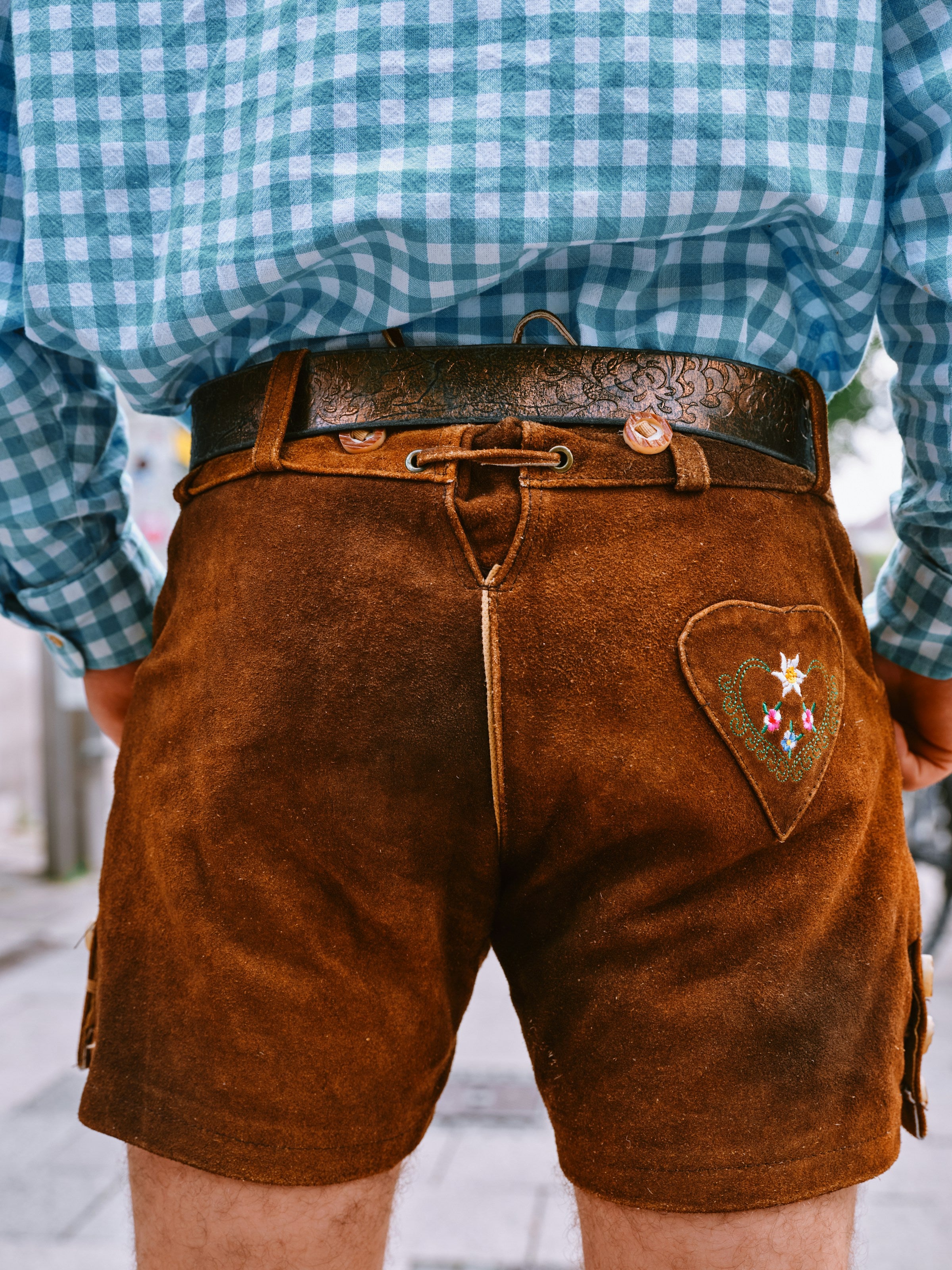
The key decision in a men's outfit is choosing between short Lederhosen (Krachleder) and knee-length Lederhosen (Kniebundhose). Both are perfectly appropriate at the Wiesn, but they give the outfit a different character.
Short Lederhose (Krachleder): Ends at the thigh, roughly 10 to 15 centimetres above the knee. The most classic Oktoberfest style, practical in warm weather and great for celebrating in the tent. Has a more casual, youthful feel.
Kniebundhose: Ends just below the knee, with a leather knee closure or buttons. More traditional and formal than the short version. Great for cooler days and more festive occasions.
Colour: Brown and dark brown are classic and work with everything. Black looks more refined. Light brown and natural leather are modern choices. The rule of thumb: the more neutral the colour, the more versatile the outfit.

Lederhosen are worn with suspenders (Hosenträger). On traditional leather trousers, they are functional — not just decorative. The trousers sit low on the hips, and the suspenders keep them in place. Without suspenders, they'll slide down when you're out celebrating.
The traditional shirt is the second key element. There are three styles, all of which pair well with Lederhosen:
White linen shirt: The ultimate classic. Timeless, works with every Lederhose, and never goes wrong. Collar options: standing collar (traditional), mandarin collar with buttons, or a regular shirt collar.
Checked traditional shirt: Red-and-white, blue-and-white, or green-and-white check. Typically Bavarian, with a relaxed feel. Important: the check should complement the Lederhose. With dark leather trousers, almost any check pattern works.
Plain-coloured traditional shirt: In green, blue, or burgundy. More refined than checked, ideal for more formal occasions. Pairs well with embroidered Lederhosen.
Fabric: Linen and cotton are the right choices. Linen breathes well and is perfect for warm tent days. Polyester shirts look cheap and become uncomfortable quickly when you start to sweat.
The shoes complete the outfit. Showing up at the Wiesn in trainers or sneakers will ruin the overall look — no matter how good the Lederhose and shirt are.
Haferlschuhe: The classic traditional shoe. A low-cut leather lace-up with side lacing. Works with both short Lederhosen and Kniebundhosen. Colours: brown (classic), black (formal), natural leather (modern).
Traditional ankle boots: Ankle-high leather boots, typically worn with Kniebundhosen. Warmer than Haferlschuhe, great for cooler autumn evenings.
With short Lederhosen, the traditional choice is Loferl — traditional calf socks that reach just below the knee and are then folded down. They visually close the gap between knee height and shoe, and are an essential part of the authentic look.
The right accessories round off the outfit. None of them are strictly essential, but with them the overall look feels much more complete.
Traditional belt: A wide leather belt with a traditional buckle or embroidery. Worn over the shirt and under the suspenders. Should match the colour of the Lederhose.
Traditional hat: Optional, but a lovely finishing touch. The classic choice is a green Tyrolean hat or a felt hat with a chamois beard (Gamsbart). Not for everyone, but those who can pull it off wear it with conviction.
Loferl / traditional socks: Essential with short Lederhosen. White with embroidery is the classic look. For a more modern feel: plain Loferl in grey or dark green.
Trachtenjanker: A short wool waistcoat or jacket for cooler evenings and mornings. Green, grey, or dark blue are the classic Bavarian choices.

The complete outfit doesn't have to cost a fortune. Here's a realistic price overview:
| Item | Budget | Good | Premium |
|---|---|---|---|
| Lederhose | €80–120 | €120–200 | €200–400 |
| Traditional shirt | €25–40 | €40–70 | €70–120 |
| Haferlschuhe | €50–80 | €80–150 | €150–300 |
| Loferl / socks | €10–20 | €20–35 | €35–60 |
| Belt | €20–35 | €35–60 | €60–120 |
| Total | €185–295 | €295–515 | €515–1,000 |
Budget tip: Invest in a good Lederhose and save on the shirt. A cheap Lederhose shows immediately — a budget linen shirt, not so much.
Avoid these mistakes and you'll stand out from the crowd — in the best possible way.
Cheap costume instead of authentic Tracht: The biggest mistake of all. Synthetic Oktoberfest sets look like fancy dress. Better to spend less, but stick to genuine cotton or leather.
Wrong fit: A Lederhose that's too tight will feel uncomfortable after an hour. One that's too loose will keep slipping. Measure your waist size correctly and, if in doubt, go up a size.
Sneakers with Lederhosen: A classic blunder. Even nice trainers don't belong with traditional Tracht. Haferlschuhe or traditional ankle boots are a must.
Shirt not tucked in: The traditional shirt should always be tucked into the Lederhose. Wearing it untucked looks sloppy and takes away the structure of the outfit.
No Loferl with short Lederhosen: Without Loferl, that final detail is missing. White sports socks with Lederhosen are a definite no-go.
If you're looking for a new Dirndl that's easy to care for and high quality, feel free to browse our store
Lederhosen for the Wiesn
The classic men's outfit consists of Lederhosen (short or knee-length), a white or checked traditional shirt, Haferlschuhe, and Loferl. Optional additions include a belt, suspenders, and a traditional hat. No costume — genuine Tracht made from leather or cotton.
No, there is no dress code. But anyone turning up in regular clothes will stand out. Most visitors — especially locals — wear traditional Tracht. With a decent pair of Lederhosen, you'll fit right in and feel part of the occasion.
A solid outfit from €200 to €300 is achievable: Lederhose €80 to €120, shirt €30 to €50, Haferlschuhe €50 to €80, Loferl €15 to €25. Spend more and you'll get genuine leather that lasts for years.
Both are perfectly fine. Krachleder (short Lederhose) is the more common sight at Oktoberfest and is more practical in warm weather. Kniebundhosen look more formal and are better suited to cooler days. If you're unsure, the short version is always a safe bet.
Haferlschuhe are the classic choice — a low-cut leather lace-up in brown or black that works with any Lederhose. Traditional ankle boots also pair well with Kniebundhosen. Sneakers and sports shoes have no place in a traditional Tracht outfit.
Discover Matching Traditional Fashion

Stay up to date
Sign up and be the first to find out about new collections, exclusive offers and styling tips for your perfect traditional outfit.


