

How to Tie a Dirndl Bow: Meaning, Positions and Guide
|
Time to read 7 min

|
Time to read 7 min
The Dirndl bow is far more than a decorative detail. Its position on the Dirndl sends a clear message: married, taken, single or widowed. This tradition has its roots in Bavarian and Austrian folk culture and is still practised today at Oktoberfest, at folk festivals and at traditional Trachten weddings.
This guide explains the meaning of all four bow positions, shows you step by step how to tie the bow correctly, and gives you practical tips for the perfect fit.
Why you can trust us:
✓ We have been experts in Trachten fashion and Dirndl for over 5 years
✓ We have already dressed more than 10,000 Wiesn visitors
✓ We track the latest Trachten trends and know the newest collections
Want to learn more? Visit our store
The position of the bow on the Dirndl follows a clear code that has been passed down through generations in Bavarian Trachten culture. If you know it, you can read at a glance what a wearer is communicating about herself.
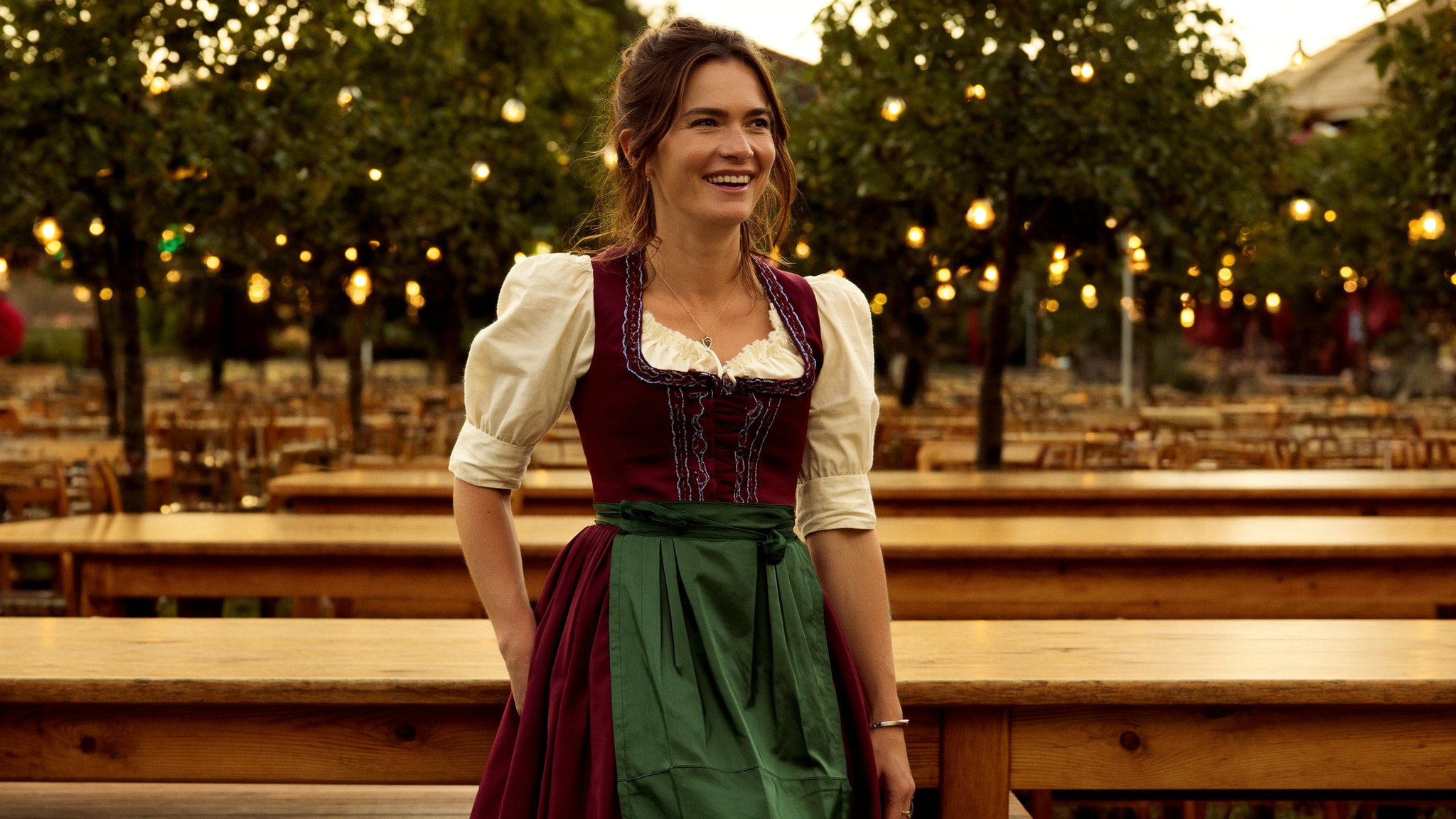
The bow on the left side (from the wearer's point of view) signals: this woman is unmarried, single and open to flirting. The left side is traditionally seen as the heart side, which reinforces the romantic hint. Anyone who wants to be approached at the folk festival wears the bow on the left and thereby reveals her relationship status.
If the bow sits on the right side, the wearer is taken, engaged or married. At Oktoberfest this is the most common position among women who want to communicate their relationship status clearly and do not wish to be approached. Tied on the right, it is the clearest statement in the Dirndl bow code.
A bow sitting at the front centre of the Dirndl has two meanings: either the wearer is still a virgin, or she is not yet sure about her choice of partner. This position is rather rare and is interpreted in different ways.
A bow at the back traditionally stands for widowhood. Widowed women signal that they are alone but not necessarily looking. In the hospitality sector, waitresses also wear the Dirndl apron with the bow at the back so that it does not get in the way while serving. Children sometimes wear the bow at the back too, since there is no meaning rule that applies to them.
The Dirndl bow code is one of the best known traditions in Bavarian Trachten culture. The idea is simple: the position of the bow on the Dirndl apron reveals the relationship status of the wearer. Left means single, right means taken. One glance is enough and everyone knows.
Whether this custom is really centuries old or only emerged in the 20th century as a social convention is disputed among historians. What is certain: today almost all women who wear a Dirndl know it, and most of them follow it. Especially at Oktoberfest in Munich and at folk festivals throughout Bavaria, the code is a firm part of Trachten culture.
Important: the bow always sits on the Dirndl apron, never on the skirt itself. And the side is always determined from the wearer's point of view. So left means your left side, not the viewer's. This is one of the most common mistakes when wearing a Dirndl for the first time.

Looking for the perfect Dirndl to match your bow? Browse our current collection.
Our Dirndl collection, with which you can showcase the right bow perfectly:
An even, symmetrical bow is the goal. With a little practice you can do it in less than a minute. Here is how to tie it correctly:
If you want a particularly full bow, you can gently pull the loops apart while shaping them. For a flatter, more modern look, pull the loops closer together. Some Trachten enthusiasts also tie a small decorative rosette above the bow. That is a creative variation, but not traditional.

More Dirndl from our collection:
Besides the right tying technique, there are a few factors that make the difference between an average and a truly beautiful bow.
The apron ribbon should be long enough that the finished loop ends still hang down 10 to 15 centimetres. Ends that are too short make the bow look flat and unfinished. Ends that are too long can get in the way when walking.
Silk and smooth synthetic ribbons slip more easily and hold the bow less reliably. Cotton and lightly textured fabrics hold the knot better. With slippery materials, a small knot underneath the bow helps to secure it.
Before you tie the bow, briefly iron the apron ribbon or smooth it out with your hands. Creases in the loops look untidy and are hard to correct afterwards.
After a few hours at the festival the bow can come loose. A quick re-tie is enough. If you know you will be dancing a lot, you can fix the bow with a small safety pin on the inside.
The Dirndl bow is a small detail with great meaning. Left for single, right for taken, front for undecided, back for widows or waitresses: if you know the positions, you communicate at the folk festival without saying a word.
Even more important than the position is that the bow is neatly tied and does not fall apart over the course of the evening. With the right technique this succeeds reliably.
If you are looking for a new Dirndl that is easy to care for and high quality, feel free to stop by our store
Our Dirndl collection
A bow on the left side (from the wearer's point of view) means single. The left side is considered the heart side and signals that the wearer is still available.
A bow on the right side shows that the wearer is taken or married. At Oktoberfest this is the most common position.
A bow at the front centre traditionally stands for virginity or indecision in the choice of partner. This position is rarer and is interpreted in different ways.
A bow at the back stands for widowhood. Waitresses in the hospitality sector also wear the bow at the back, for practical reasons.
Cross the apron ends once, then form two loops and pull one through the other, just like tying a shoelace bow. Shape the loops symmetrically and pull both sides tight evenly.
The hanging ends of the finished bow should be 10 to 15 centimetres long. Ends that are too short make the bow look flat, ends that are too long can get in the way when walking.
Yes, at Oktoberfest and many Bavarian folk festivals the tradition is still practised. Especially among young women, the meaning of the bow position is well known and used deliberately.
A Dirndl bow on the left means: the wearer is single and open to contact. It is the classic signal in the Dirndl bow code for unmarried, single women. At Oktoberfest and at folk festivals in Bavaria, the bow on the left is the clearest sign that the wearer may be approached.
The Dirndl bow code describes the meaning of the bow position on the Dirndl apron: left means unmarried and single, right means taken or married, front centre means virgin or undecided, back means widow or waitress. The code is a Bavarian Trachten tradition that is especially well known today at Oktoberfest in Munich.
In principle yes, but only if the wearer wants it that way. The Dirndl bow code is a convention, not an obligation. Many women tie the bow where it sits most beautifully, without communicating their relationship status. Anyone who wants to use the code deliberately should tie it on the left (single) or on the right (taken). Engaged also falls under right.
Discover matching Trachten

Stay up to date
Sign up and be the first to find out about new collections, exclusive offers and styling tips for your perfect traditional outfit.
