
Trachtenweste for Men: Which Waistcoat Suits the Lederhose and the Outfit
|
Time to read 9 min

|
Time to read 9 min
The Trachtenweste is the most elegant upper garment for men in traditional Trachten dress. Positioned between the Trachten shirt and the Janker, it turns an ordinary outfit into a complete look without the effort of a full jacket. Which waistcoat suits which Lederhose, what sets the waistcoat, Janker and cardigan apart, and what to look out for when buying, you will find out in this guide.
Why you can trust us:
✓ We have been experts in Trachten fashion and Dirndl for over 5 years
✓ We have already dressed more than 10,000 Wiesn visitors
✓ We follow the current Trachten trends and know the newest collections
Want to learn more? Visit our store
The Trachtenweste is a sleeveless upper garment worn over the Trachten shirt. It is cut more closely than a Janker or a cardigan and closes at the front with buttons. Traditionally it is made of Loden (a fulled wool fabric), leather or fine woollen cloth.
When do you wear a waistcoat? The waistcoat serves several purposes:
When do you wear a waistcoat? At the Oktoberfest, marksmen's fairs, Trachten balls and weddings. At relaxed summer parties or in the beer garden the waistcoat is optional. The more festive the occasion, the more a good waistcoat matters. For all occasion questions there is more in our folk festival Trachten guide.
A short history: The Trachtenweste has its roots in the rural working clothes of the 18th and 19th centuries. Originally a practical garment for fieldwork, it developed into a fixed component of the Bavarian festive Tracht. Today it is the link between traditional craftsmanship and contemporary Trachten fashion.
Many beginners confuse the three main forms of Trachten outerwear for men. Here is a clear distinction:
| Garment | Sleeves | Material | Occasion |
|---|---|---|---|
| Trachtenweste | None | Loden, leather, wool | Festive, folk festival |
| Trachtenjanker | Short sleeves (traditional) | Loden, wool, linen | Formal, balls |
| Trachten cardigan | Long sleeves | Knitted wool, cotton | Casual, transitional season |
| Trachten jacket | Long sleeves | Loden, tweed | Formal, cool weather |
Rule of thumb: The warmer and more relaxed the occasion, the more sleeves. The cardigan is the most casual option. The waistcoat is the most versatile, because you can put it on and take it off without changing the outfit. The Janker is the most formal and most traditional.
Combinability: Waistcoat and Janker are not mutually exclusive. At Trachten balls or formal weddings you can wear a waistcoat under the Janker for a layered, elegant look. Inside the tent the waistcoat alone is enough, while the Janker waits in the cloakroom.

Combining waistcoat and Lederhose is not an exact science, but there are clear guidelines:
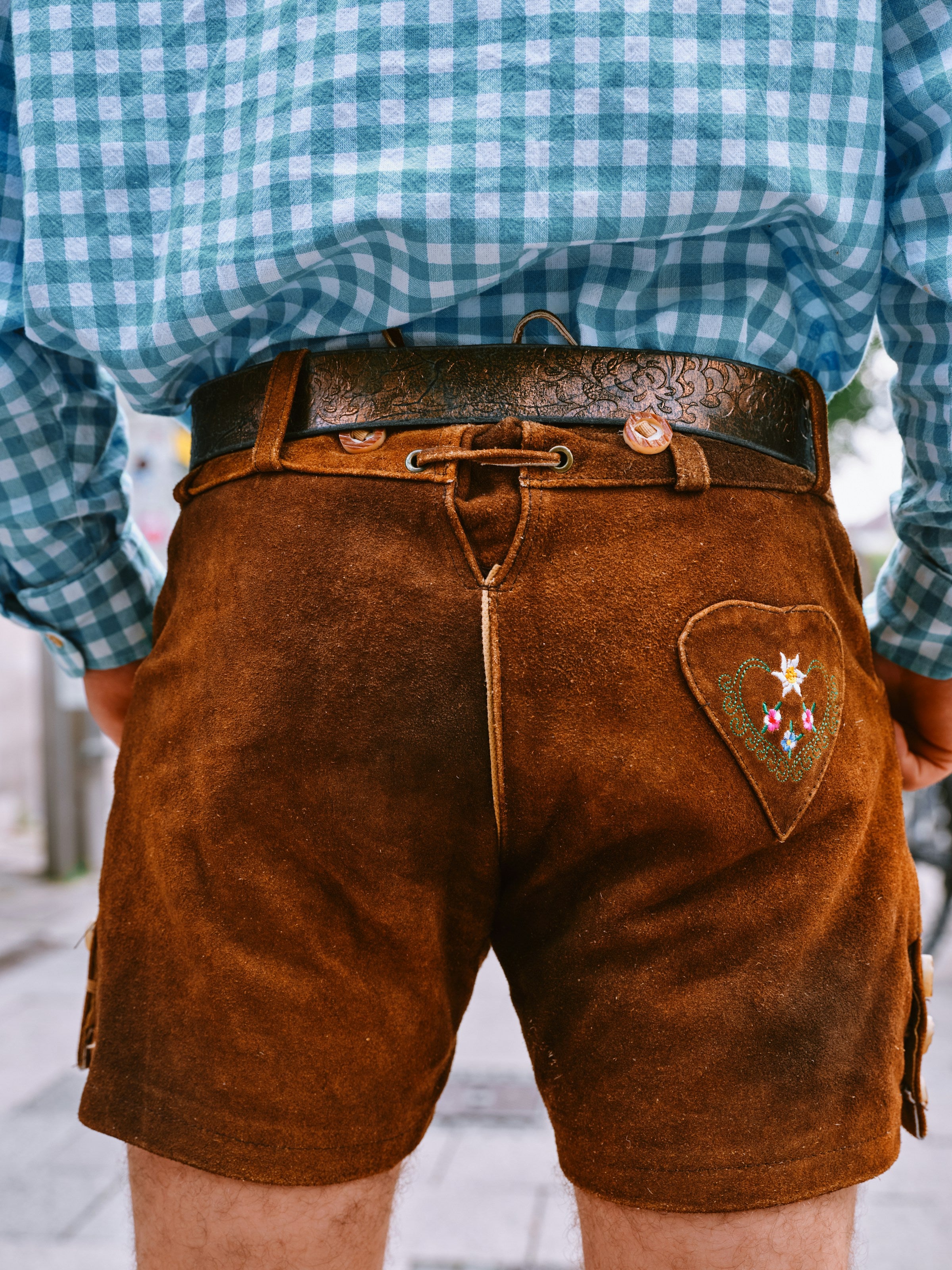
With the short Lederhose: A medium-brown or dark-brown Lederhose goes with almost any waistcoat. A green Loden waistcoat is the classic and always works. Grey or anthracite waistcoats are more modern and suit light-brown Lederhosen particularly well. Dark blue as a waistcoat colour looks elegant and contrasts nicely with light brown. Choose a waistcoat that shares at least one colour with your Trachten shirt or the checked pattern.
With the Kniebundhose: With the Kniebundhose for weddings or balls the rule is: fine materials. A leather or velvet waistcoat in dark brown, burgundy or dark green is the first choice. A plain Loden waistcoat works too, but looks less festive. Coordinating with the Trachtenjanker is important if you wear both.
Colour combination rules:
What to avoid: Waistcoat and Lederhose in the same brown, that looks monotonous. Too many colours at once also look busy. The basic rule for the complete Trachten outfit: at most three colours (shirt, waistcoat, Lederhose), one of them neutral (brown, grey, black). You will find the matching Lederhose in our shop.
Since many Trachten shops today carry more Janker than waistcoats in their range, it is worth knowing the alternatives. Janker and cardigans essentially serve the same function as a waistcoat, but thanks to their sleeves they offer more warmth and a different look.
The Trachtenjanker is the most formal upper garment in men's Tracht. Classically made of Loden, with short sleeves and staghorn buttons. It is the first choice for Trachten balls, marksmen's galas and the finer wedding company. A good Janker is a lasting investment that looks better with every year.
The Trachten cardigan is more modern, warmer and more practical. With long sleeves and a soft knitted structure it is especially suited to cooler autumn folk festivals and relaxed leisure occasions. It is more accessible to style and also fits the general everyday Trachten look.
Purchase criteria for both:
For the complete men's Trachten look with outfit recommendations, read our Oktoberfest Outfit Men guide.

Loden waistcoats and Trachtenjanker are robust garments that, with the right care, last for many decades. A few basic rules:
Cleaning Loden: Loden should not be washed regularly. After wearing, let it air out well, ideally overnight on a coat hanger outdoors or in a well-ventilated room. Light stains can often be dabbed off with a damp cloth (do not rub). More stubborn stains: a professional. Never in the washing machine, unless the label expressly allows it.
Cardigans: Turn wool cardigans inside out and wash them at 30 degrees on the wool programme, or by hand. Never spin them. To dry, lay them out flat, do not hang them, since wool sags under its own weight while drying and stretches.
Storing: Store folded, do not hang on a hanger. Woollen clothing on a coat hanger loses its shape at the shoulders over time. For the off-season store it in a fabric box with lavender sachets or cedar wood, which keeps moths away without chemical agents. More tips for the entire Trachten wardrobe: storing Dirndl and Tracht.
Buttons: Staghorn buttons are robust but sensitive to moisture. After wearing in the rain, briefly rub them down with a dry cloth. Have loose buttons sewn back on immediately before they fall off completely. A tailor sews them back on in a few minutes.
The Trachtenweste is only one part of the Trachten outfit. Only the interplay of all components decides the overall impression. The right style connects waistcoat, shirt and Lederhose into a coherent look.
Classic Trachten outfit: Dark-brown Lederhose, white or blue-white checked Trachten shirt, green Loden waistcoat with staghorn buttons. This is the timeless Bavarian style that always works. Classic Trachten hats or Haferl shoes round off the Trachten outfit.
Modern Trachten outfit: Light-brown Lederhose, checked shirt in strong colours, anthracite or dark-grey waistcoat made of wool or Loden. This style looks young and fresh without losing the traditional character.
Festive Trachten outfit: Kniebundhose, white Trachten shirt, velvet waistcoat or leather waistcoat in burgundy or dark green, Trachtenjanker on top. This style is suited to weddings, Trachten balls and marksmen's galas.
Rule for every Trachten outfit: always tuck the shirt into the trousers, combine at most three colours, and the style of the waistcoat should suit the occasion. The rest is a matter of taste.
The Trachtenweste is the underrated heart of the men's Trachten outfit. Anyone who owns a good waistcoat or a quality Janker lifts their entire Trachten outfit to a completely different level. The right style matters just as much as the colour here: a Loden waistcoat for classic style, a velvet waistcoat for elegant style, a cardigan for modern style. Invest in quality materials, pay attention to a snug fit, and choose colours that suit your Lederhose. Once bought, a good Janker or a good waistcoat will accompany you for many seasons.
If you are looking for a new Dirndl that is easy to care for and high quality, feel free to drop by our store
Discover Trachten outerwear
A Trachtenweste is a sleeveless upper garment from Bavarian men's Tracht, worn over the Trachten shirt and under the Janker. It is traditionally made of Loden (fulled wool), leather or fine woollen cloth and closes at the front with buttons.
With a brown Lederhose, green, grey, dark blue and anthracite work well as waistcoat colours. The classic is the green Loden waistcoat, while anthracite or dark blue looks modern. Avoid waistcoat and Lederhose in the same shade of brown, as this looks monotonous.
The waistcoat is sleeveless, the Janker has short sleeves. The Janker is more formal and more traditional, the waistcoat is more versatile and more practical (easier to put on and take off). Both can be combined: waistcoat under the Janker for especially festive occasions.
Yes. A Trachtenjanker serves the same function as a waistcoat, but thanks to the sleeves it offers more warmth and looks more formal. It is the first choice for balls and weddings, while a waistcoat is more practical at the folk festival and inside the tent.
After wearing, let it air out well, ideally overnight outdoors. Dab light stains with a damp cloth, do not rub. Take stubborn stains to a professional. Normally not in the washing machine, unless the label expressly allows it.
Always a Trachten shirt, classically checked in blue-white, red-white or green-white. The shirt should be tucked into the Lederhose. The waistcoat should sit closely over the shirt, but not constrict. No loose casual shirt or T-shirt under a Trachtenweste.
For a classic Trachten outfit the rule is: tuck the Trachten shirt into the Lederhose, put the waistcoat over it and close it at the front. The waistcoat should sit closely but not constrict. In terms of colour, combine at most three tones, one of them neutral (brown, grey, white). Classic style: dark-brown Lederhose with green Loden waistcoat. Modern style: light-brown Lederhose with anthracite waistcoat.
At the Oktoberfest the classic Bavarian style is in demand: Lederhose in brown or black, checked Trachten shirt in red-white or blue-white, Loden waistcoat or velvet waistcoat in muted colours. The style should look authentic, so no polyester, no overly garish colours. A Loden waistcoat with staghorn buttons is the safest choice.
Discover matching Trachten

Stay up to date
Sign up and be the first to find out about new collections, exclusive offers and styling tips for your perfect traditional outfit.


