
Men's Lederhosen Guide: Short, Knee-Length & Buying Advice
|
Time to read 7 min

|
Time to read 7 min
Lederhosen are the symbol of Bavarian men's traditional dress. No other garment is so closely associated with Oktoberfest and Bavarian identity. Whether short Lederhosen for the festival tent or classic knee-length breeches for formal occasions — this guide covers the differences, the right sizing, care, styling tips, and what really matters when buying.
Why you can trust us:
✓ We are experts in traditional Bavarian fashion and Dirndl with over 5 years of experience
✓ We have already dressed more than 10,000 Oktoberfest visitors
✓ We track the latest Tracht trends and know the newest collections
Want to learn more? Visit our store
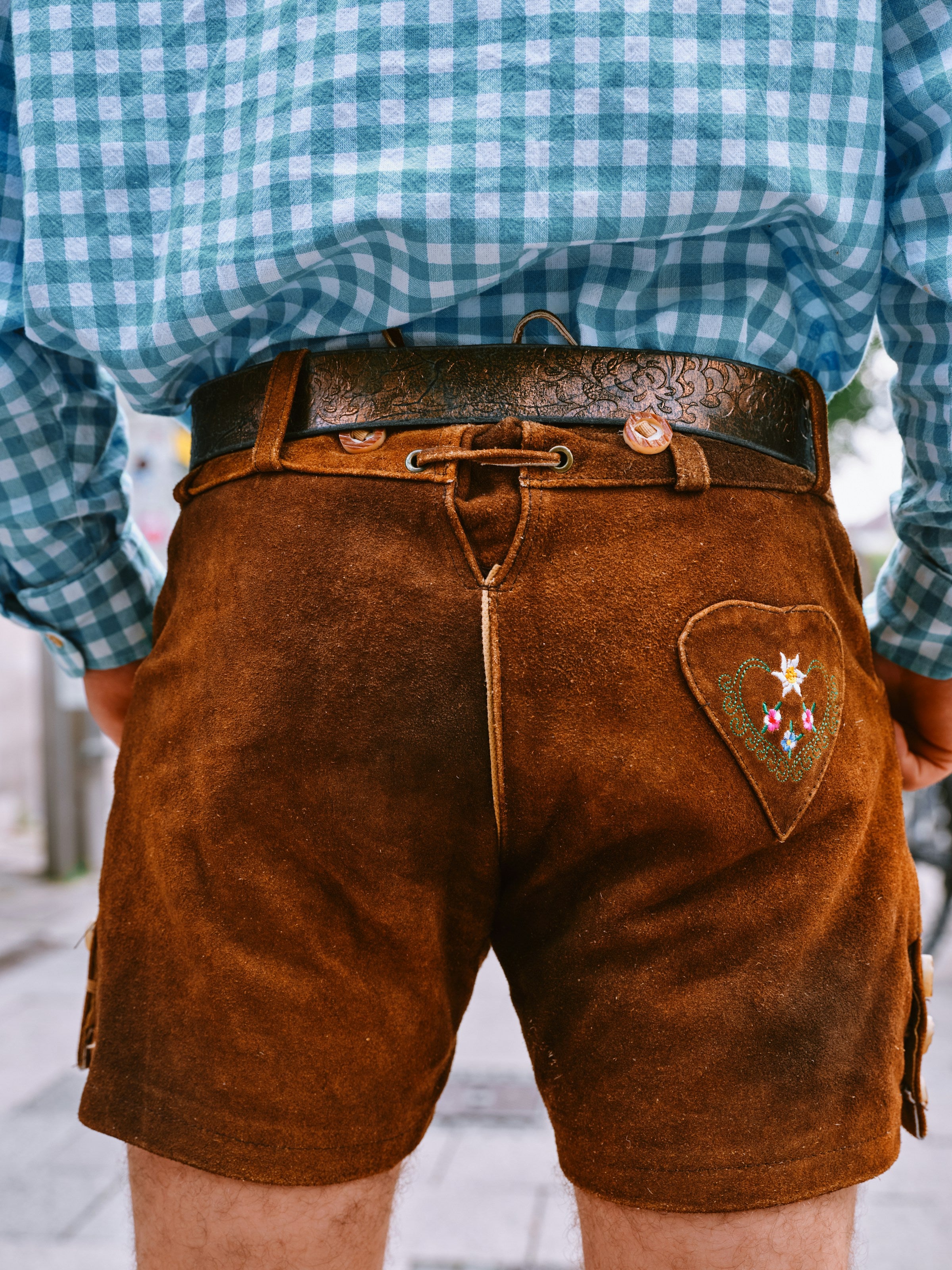
Short Lederhosen end just above or at knee height. They are the most widely worn style at Oktoberfest and folk festivals — practical, breezy, and quintessentially Bavarian.
Material: Cowhide or Chamois? Cowhide is the more affordable and hardwearing option. Chamois leather is softer, lighter, and molds to the body more quickly. True Tracht connoisseurs swear by chamois, as it shapes itself to the wearer over time and only gets better with age. Always look for genuine leather — avoid faux-leather versions that stretch out after just one Wiesn.
Length: Short Lederhosen fall between mid-thigh and just above the knee. For long stretches on beer-hall benches, a slightly longer cut is more comfortable — you show less skin while seated and won't constantly be pulling them down.
Suspenders: Suspenders are not an optional accessory — they are an essential part of the look. Lederhosen without suspenders look unfinished. The suspenders are worn over the Trachtenhemd or Janker. Plain leather suspenders in brown or black are the classic choice; embroidered suspenders add more character to the outfit.
Embroidery: The embroidery on the front bib is a mark of quality and authenticity. Oak leaves, stags, Alpine flora — the more elaborate the embroidery, the higher the quality and the more traditional the style. Budget Lederhosen often feature only printed or stamped patterns rather than genuine hand-stitching.

Our best short Lederhosen for men — from chamois to cowhide, from classic to modern:
The knee-length Lederhosen (Kniebundhose) is the most traditional style of men's Tracht. It ends just below the knee and is fastened with a lace or button. More formal than the short version, the Kniebundhose was historically the standard trousers of Bavarian men.
When to wear knee-length? For weddings, Tracht parades, marksmen's festivals, and more formal traditional occasions, the Kniebundhose is the first choice. At Oktoberfest it conveys a traditional, festive air — particularly suited to daytime events or family meals in the festival tent. Wearing a Kniebundhose signals a genuine knowledge of Bavarian Tracht tradition.
With Loferl: The Kniebundhose is traditionally worn with Loferl — short woollen leg warmers that cover the calf and shin. Loferl and Kniebundhose are a classic pairing. Knee socks are also an option. Wearing the Kniebundhose with short socks or bare legs looks too short and mismatched.
Long vs. Knee-length vs. Short: True Tracht purists distinguish three lengths: short (above the knee), knee-length (just below the knee), and long (to the ankle). Full-length Lederhosen are rarely worn today and tend to be reserved for stage performances or special traditional events. Knee-length and short dominate everyday wear.
Quality pays off: A good pair of Lederhosen can last 20 to 30 years. Properly tanned leather develops a patina over time that budget Lederhosen will never achieve. Buying from a specialist Tracht retailer or a verified online shop guarantees genuine leather and clean craftsmanship.

All men's Lederhosen from our shop — short styles, knee-length, and classic cuts:
Even the finest Lederhosen won't look their best if the rest of the outfit is off. Here are the key styling rules and care tips:
Trachtenhemd (traditional shirt): A classic white linen shirt is the safe choice. Checked shirts in blue-and-white, red-and-white, or green-and-white are typically Bavarian. The shirt is tucked into the Lederhosen. The collar can be worn open or fastened with a traditional Tracht button.
Trachtenjanker or waistcoat: For cooler weather or more formal occasions, a Janker or a Tracht waistcoat is the finishing touch. Wear the waistcoat inside the tent, the Janker for outdoors. Find out more in our Trachtenjanker Guide.
Shoes: Haferlschuhe (traditional leather shoes) are the classic choice. Brown with brown Lederhosen, black with black or dark Lederhosen. Trainers or sneakers with Lederhosen are not a Tracht look. Suede Tracht shoes also work for a more contemporary style. More tips in our Haferlschuhe Guide.
Belt: Short Lederhosen call for a leather Tracht belt. Some styles have a built-in belt integrated into the bib — in that case no separate belt is needed. The belt should match the color of the Lederhosen.
Caring for Lederhosen: Lederhosen are not washed. For light stains, wipe with a damp cloth. Treat greasy stains with a leather conditioner. After wearing, air them out and hang them up. Once a year, rub in leather grease to keep the leather supple. Well-maintained Lederhosen will last a lifetime.

There are a few important things to consider when buying Lederhosen. This checklist will help you make the right decision:
Size: Lederhosen are sized by waist measurement in centimetres, not in standard clothing sizes. How to measure: take your waist circumference and add 2 to 3 cm of ease. Lederhosen should fit snugly but not dig in — they stretch slightly with wear. When in doubt, go one size smaller.
Trying them on: When trying them on, squat down and sit down. In the tent you'll be seated for long stretches, so the trousers must not cut in when sitting. The waistband should sit firmly without pinching. The suspenders should hold the trousers in place without pulling.
Budget: Budget Lederhosen start from around €80–150, often in cowhide with simpler craftsmanship. Mid-range €150–300: chamois leather, genuine embroidery, better workmanship. Premium from €300: hand-stitched embroidery, professionally tanned leather, heirloom quality. For occasional Wiesn visits, the mid-range is perfectly adequate. If you go to Oktoberfest every year, investing in a high-quality pair pays off in the long run.
Online vs. specialist retailer: In a specialist shop you can feel the quality first-hand and try the trousers on. Online is cheaper, but sizing varies considerably between manufacturers. When buying online, look for a generous returns policy and order several sizes.
Lederhosen are an investment for decades. Anyone who invests in a truly great pair, chooses the right size, and takes proper care of them will own a Tracht garment that only gets better with time. Short Lederhosen for Oktoberfest, knee-length for more formal occasions — both have their place and complement each other perfectly. With the right shirt, a good Janker, and Haferlschuhe, the men's Tracht outfit is complete.
If you're looking for new Lederhosen that are easy to care for and of outstanding quality, feel free to browse our store
Men's Lederhosen
Short Lederhosen end above the knee and are the most common style for folk festivals and Oktoberfest. Knee-length Lederhosen (Kniebundhose) end just below the knee and are the more traditional form, preferred for formal occasions such as weddings and Tracht parades.
Lederhosen are not washed. Wipe light stains with a damp cloth; treat greasy stains with a leather conditioner. Air them out after wearing and hang them up. Rub in leather grease once a year. Well-maintained Lederhosen last for decades.
Lederhosen are sized by waist circumference in centimetres. Measure your waist and add 2 to 3 cm. When trying them on, sit down and squat to make sure they don't cut in. If in doubt, go one size smaller — leather stretches with wear.
The classic combination: a white Trachtenhemd or a checked shirt in red-and-white, blue-and-white, or green-and-white, suspenders, Haferlschuhe, and optionally a Janker or waistcoat. Pair knee-length Lederhosen with Loferl and Haferlschuhe.
Cowhide is more affordable, more hardwearing, and slightly stiffer. Chamois leather is softer, lighter, and molds to the body. Chamois improves with age and develops a beautiful patina. For everyday use cowhide is more practical; for premium quality chamois is the better choice.
Entry-level models in cowhide start from around €80. The mid-range runs from €150 to €300, with chamois leather and genuine embroidery. Premium from €300: handcrafted quality built to last a lifetime. For occasional wear, the mid-range is perfectly sufficient.
Discover Matching Tracht

Stay up to date
Sign up and be the first to find out about new collections, exclusive offers and styling tips for your perfect traditional outfit.