

How to Lace a Dirndl: Guide for the Perfect Fit
|
Time to read 10 min

|
Time to read 10 min
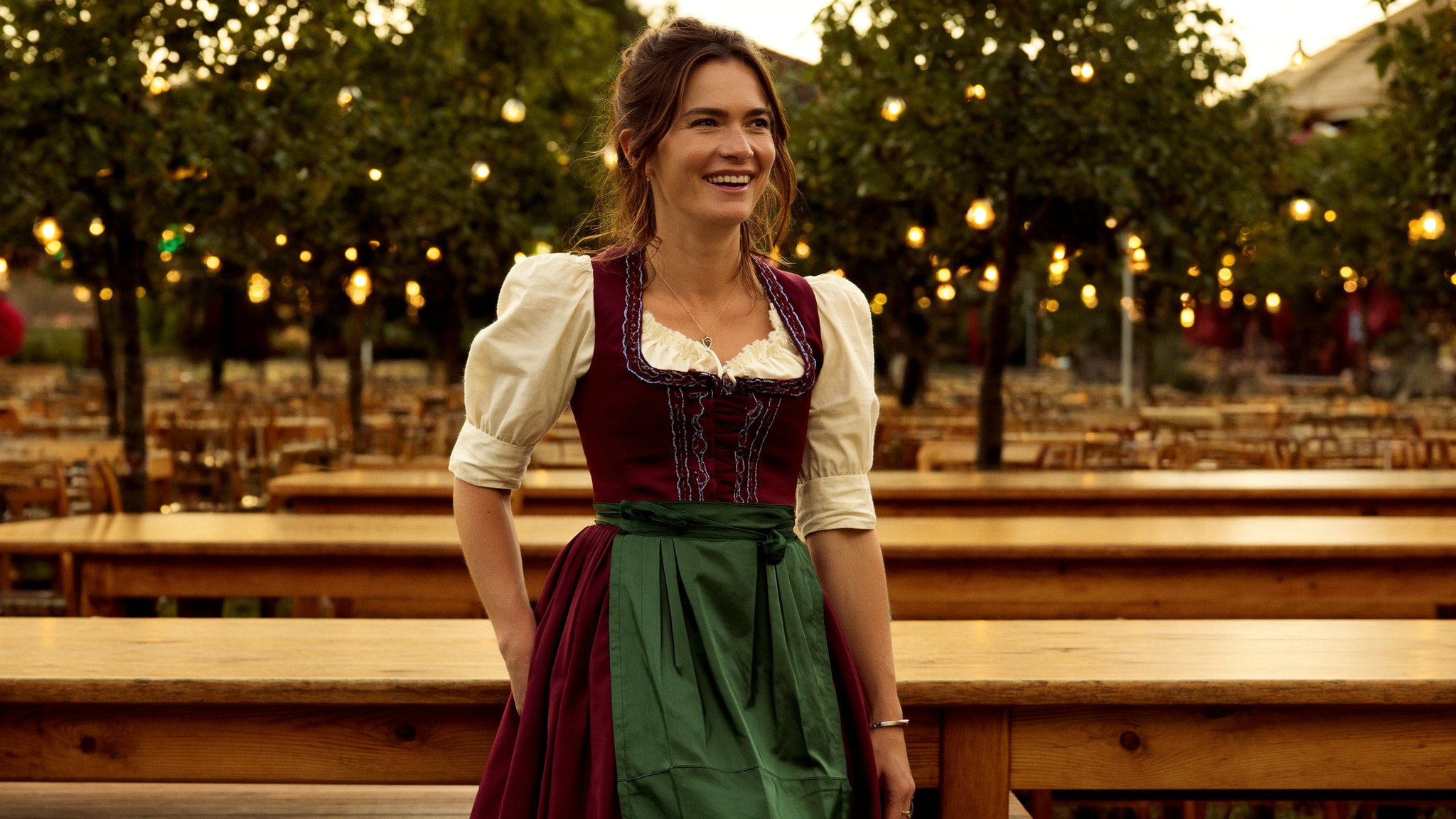
Your Dirndl is laid out in front of you and you are wondering how to lace it up properly? The right lacing technique decides whether your Dirndl fits perfectly, feels comfortable and flatters your figure beautifully. We show you step by step how to lace your Dirndl the right way.
Why you can trust us:
✓ We have been experts in Trachten fashion and Dirndl for over 5 years
✓ We have already dressed more than 10,000 Oktoberfest visitors
✓ We follow the latest Trachten trends and know the newest collections
Want to learn more? Visit our store
Table of contents:
The lacing is the heart of every Dirndl. It holds the bodice, shapes the waist and determines the entire fit. Lacing pulled correctly can make a whole dress size of difference, because it accentuates the silhouette without constricting.
Many wearers make the mistake of pulling the lacing evenly from top to bottom. The result is a bodice that either pinches in the wrong place or sits too loosely where it should hold. A correctly laced Dirndl is tightest at the bottom, accentuating at the waist and a little looser at the top, around the chest, so the blouse has room and you can breathe.
A well laced Dirndl gives support, holds the back and makes sure the blouse does not slip. It stays comfortable all day, whether you dance, sit or spend hours at the fair. If you are lacing a Dirndl for the first time, or yours never quite fits right, the cause is usually the technique, not the Dirndl itself.
The lacing is also a visual element. The cleaner and more even it runs, the more elegant the whole outfit looks. Make sure the ribbons are not twisted and that the lacing runs symmetrically. You will find more about the perfect fit of your Dirndl in our Fit Guide.
Before you start lacing, you need to put the Dirndl on correctly. That sounds obvious, but it is the foundation for a perfect fit. First put on the Dirndlbluse and arrange it so that it lies smoothly under the bodice, without creasing.
The blouse should not peek out too far from the neckline, but it should not sit so low that it disappears under the bodice either. The neckline of the blouse should complement the neckline of the bodice harmoniously. If the blouse is too tight or pulls, lacing the bodice becomes uncomfortable. Better to choose a size up so the blouse sits loosely.
Now comes the Dirndl itself. Step into the skirt and pull the bodice up. Make sure the bodice sits centred and the straps are the same length on both sides. Before you start lacing, close any hooks or the zip on the skirt. That way the whole Dirndl is already sitting in the right place.
The apron comes only after lacing. Many wearers put the apron on beforehand, but that makes lacing awkward and the apron slips. Lace the bodice perfectly first, then tie the apron over it. You will find a step by step guide to the whole dressing process in our article how to put on a Dirndl.
If your Dirndl has a Trachten bodice that is worn separately over the blouse, the same applies. Put the bodice on, align it, then lace. The preparation decides the result.
Now it is time to lace. The technique is simple once you have understood it. Always start at the bottom, at the lowest eyelet, and work your way slowly upwards. This makes sure the tension is distributed evenly and the bodice does not warp.
Step 1: Thread the cord through the lowest row of eyelets. Pull the cord evenly taut on both sides so the bodice sits firmly at the bottom. This area wraps around the waist and should give the most support. Pull tight, but not so tight that it hurts or cuts in.
Step 2: Work your way up eyelet by eyelet. At each eyelet pull the cord evenly tight, always alternating left and right so the tension stays symmetrical. The lacing should be tightest at the waist and ease off slightly towards the top.

Step 3: In the upper area, just below the chest, keep the tension a little looser. Here the blouse needs room and you do not want the bodice to press against the chest. The bodice should support, not constrict. Breathe in deeply while you lace the upper eyelets, that way you make sure enough room is left.
Step 4: When you reach the top, tie the cord. A simple double knot is enough. Make sure the ends do not hang down too long. You can either tuck them inside or fix them with a small bow that is not visible.
Lacing should take about two to three minutes in total once you are practised. At the start, feel free to take your time. The important thing is to keep checking the tension as you lace. If the bodice creases or warps in one spot, loosen the lacing there and pull again.
The most common question about lacing is: how tight should it be? The answer is simple, but individual. The bodice should sit tight enough to shape the silhouette and give support, but loose enough that you can comfortably breathe, sit and move.
A good test: breathe in deeply. If the bodice noticeably pinches or you feel you cannot breathe properly, it is too tight. Loosen the lacing by one or two eyelets. If you stand and the bodice creases or slips, it is too loose. Then you need to re-lace.
A correctly laced bodice gives the waist contour without constricting the body. You should feel comfortable in it, be able to eat and wear it for several hours without it becoming unpleasant. Especially the first time you wear it, the bodice can still feel unfamiliar, but that passes quickly.
If you are out all day at Oktoberfest or another event, you may loosen the lacing slightly in between. That is completely normal and no sign that the Dirndl does not fit. Especially after eating or after sitting for a long time, it can be pleasant to reduce the tension a little.
The size of the Dirndl also plays a role. If you are unsure which size you need, our Dirndl size guide will help you further. A Dirndl in the right size is much easier to lace and fits better from the start.
Once the bodice is laced, the apron comes next. The apron bow is not just decoration, it also carries a traditional meaning. Depending on where you tie the bow, you send a signal that everyone in Bavaria knows.
Bow on the left: You are taken. The bow sits on the left side of your waist. This is the most common position and signals that you are in a relationship or married.
Bow on the right: You are single. The bow on the right side shows that you are free and open to flirting. At Oktoberfest, that is a clear statement.

Bow at the front (centre): You are a virgin or very young. This position is hardly worn today, except by children or very young girls. Some wear the bow at the front simply for visual reasons, without knowing the meaning.
Bow at the back: You are widowed or wearing a waitress Tracht. The bow at the back is traditionally a sign that you are working or in mourning. Here too: some wearers do not know it and tie the bow at the back simply because they like it.
If you are looking for the exact meaning and a guide to tying the bow, take a look at our guide tying the Dirndl bow. There you will also learn how to form the perfect bow that holds all day.
Lacing has its classic mistakes too, ones that ruin the fit of the Dirndl. The most common: the lacing is pulled from top to bottom. This makes the bodice sit too loosely at the bottom and the waist is not accentuated. Always lace from bottom to top.
Another mistake is pulling the lacing too fast and too tight without checking the tension. This leads to uneven distribution, the bodice warps and creases. Take your time and pull eyelet by eyelet evenly tight.
Many wearers forget to smooth the blouse before lacing. If the blouse creases under the bodice, the bodice presses in the wrong places and sits uncomfortably. Arrange the blouse carefully before lacing.
Another classic: the cord is twisted or the eyelets are threaded unevenly. This not only looks unattractive, it also affects the hold. Make sure the cord lies flat and is not twisted. If you notice something is off, loosen the lacing and start again.
Last of all: some Dirndl have a hidden row of hooks in addition to the lacing. If you do not close these hooks, the lacing alone will not be able to hold the bodice. Before lacing, check whether all hooks are closed. You will find more about the right fit in our Dirndl figure guide.
Every figure is different, and the lacing technique should adapt to it. With a curvy figure and a fuller bust, it is especially important that the upper lacing stays loose enough so the blouse does not pull and the décolleté has room.
If you have a very slim waist, you can pull the lacing especially tight in the middle to accentuate the hourglass silhouette. With a straight figure, an evenly tight lacing helps to visually create a waist.
For plus size Dirndl the rule is: the lacing should support without cutting in. Especially in larger sizes it is important that the bodice is reinforced and the lacing offers enough room. A Dirndl in the right size is far more pleasant to lace.
The length of the Dirndl also plays a role. Midi Dirndl and long Dirndl often have a longer bodice that gives more support and accentuates the waist more strongly. With short Dirndl the bodice sits shorter and the lacing has to sit more precisely for the look to work.
If you are unsure which cut suits your figure, take a look at our Dirndl figure guide. There you will learn which cuts, lengths and lacings suit which figure type.
The lacing and the bodice are the most heavily stressed parts of your Dirndl. After every wear you should loosen the lacing and let the bodice air out. Never leave the Dirndl hanging laced in the wardrobe, that warps the material and weakens the shape.
If the cord is worn out or twisted, replace it. Many Dirndl come with spare cords, otherwise you can get matching ribbons at the Trachten shop or online. A fresh, clean cord not only looks better, it also holds better.
The bodice itself should only be washed rarely. If it is dirty, wipe it gently with a damp cloth or take it to the dry cleaner. Washing machine and dryer are poison for the bodice, because they destroy the reinforcements and the shape.
Store your Dirndl hanging, ideally on a padded hanger. That way the bodice keeps its shape and the lacing does not warp. If you are not wearing the Dirndl for a while, store it in a dry, cool place, protected from direct sunlight.
With the right care, a high quality Dirndl lasts for many years. The lacing is a small but decisive detail in this. Treat it carefully and your Dirndl will give you joy for a long time. You will find more care tips for your Tracht in our guides.
If you are looking for a new Dirndl that is easy to care for and high quality, feel free to drop by our store
Dirndl and Dirndl sets for the perfect fit
Always start at the bottom and work your way up eyelet by eyelet. Pull the cord evenly tight, tightest at the waist, a little looser around the chest. Make sure the blouse lies smoothly under the bodice and the cord is not twisted.
The bodice should sit tight enough to shape the waist and give support, but loose enough that you can comfortably breathe and move. A good test: breathe in deeply. If the bodice pinches, it is too tight.
Left means taken, right means single, front (centre) means virgin or very young, back means widowed or waitress. The bow is a traditional message that is well known in Bavaria.
Creases usually come from uneven tension or a blouse that was not laid smoothly. Loosen the lacing at the affected spot and pull again. Make sure you lace from bottom to top and distribute the tension evenly.
Yes, if the cord is worn out or damaged, you can replace it easily. Many Dirndl come with spare cords, otherwise you can get matching ribbons at the Trachten shop or online.
Discover matching Trachten

Stay up to date
Sign up and be the first to find out about new collections, exclusive offers and styling tips for your perfect traditional outfit.


