
Folk Festival Tracht: What You Really Wear at Schützenfest, Funfairs & More
|
Time to read 7 min

|
Time to read 7 min
Folk festivals take place all across Germany — from the Cannstatter Wasen in Stuttgart to Schützenfeste in Hanover and Düsseldorf to the countless regional parish fairs. And everywhere the same question comes up: what do I wear? Dirndl or regular clothes? Lederhosen or jeans? This guide gives you clear answers so you'll never be out of place at a folk festival.
Why you can trust us:
✓ We've been experts in traditional Tracht and Dirndl fashion for over 5 years
✓ We've already dressed more than 10,000 Wiesn visitors
✓ We track the latest Tracht trends and know the newest collections
Want to learn more? Visit our store
Short answer: optional. Not a single event in Germany requires Tracht as a condition of entry. You'll get into the Oktoberfest in jeans and a T-shirt, just as you would at any other folk festival.
The longer answer: wearing Tracht at a folk festival is a choice to be part of the atmosphere. Arrive in a Dirndl or Lederhosen and you become part of the picture. Arrive in everyday clothes and you're a spectator. Both are perfectly fine — but the experience feels different.
At which festivals do people wear Tracht?
Bottom line: The further south the festival, the stronger the Tracht tradition. The further north you go, the more you'll stand out in a Dirndl. One thing holds everywhere: you don't have to wear Tracht — but if you do, you'll almost always be glad you did. For the complete etiquette guide on wearing Tracht at events, also read our Tracht Wedding Guide.
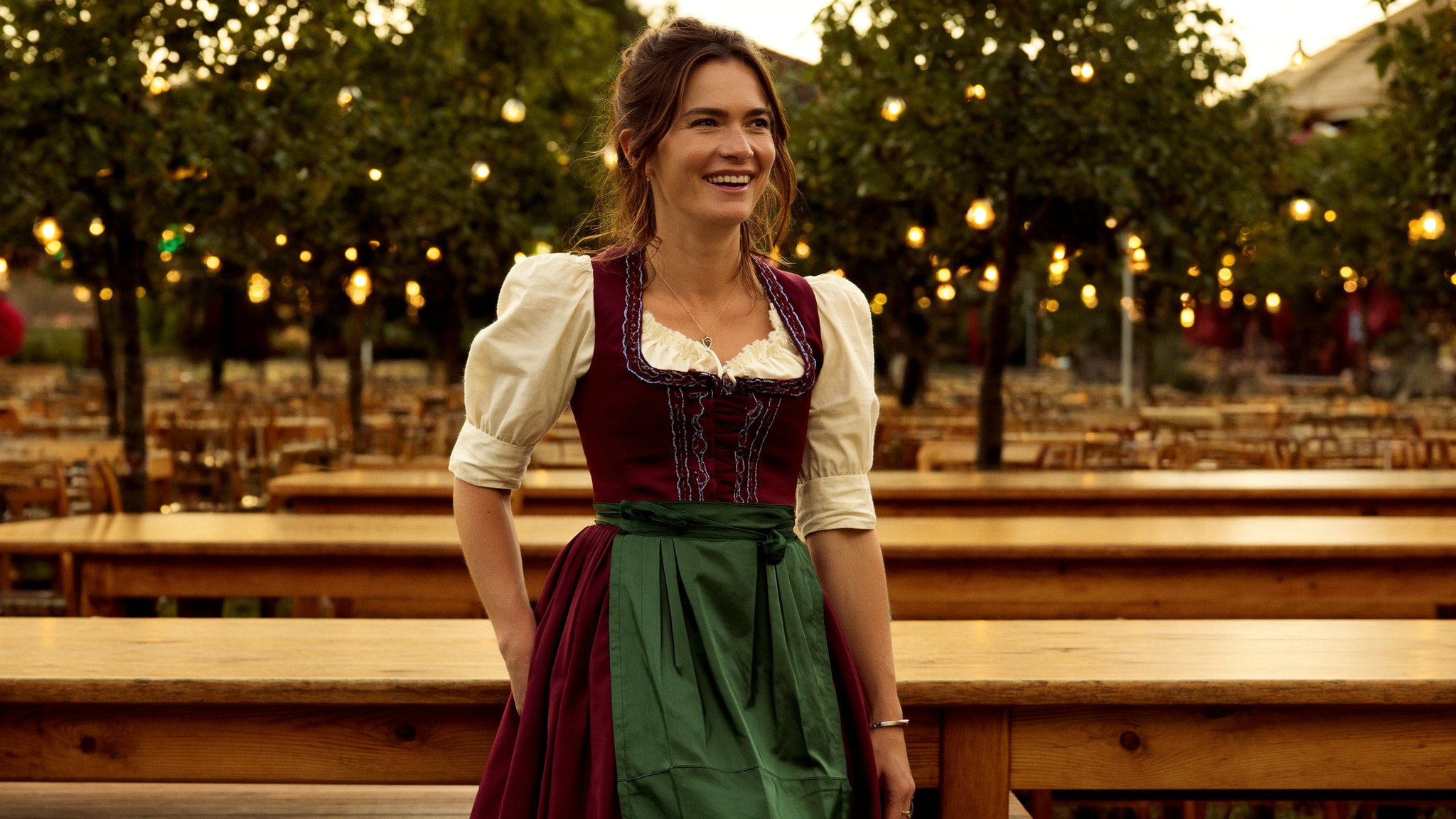
The Dirndl is the easiest and most beautiful solution for women at a folk festival. There are three main lengths, and the right choice depends on the event and your personal style.
Mini Dirndl (up to 60 cm): Shows plenty of leg, feels lighter and more sporty. Perfect for hot summer days and more relaxed folk festivals. A great option at the Oktoberfest if you prefer a younger, more casual look. Not suitable for more formal occasions such as Tracht balls or weddings. Learn more in our Dirndl Length Guide.
Midi Dirndl (65 to 85 cm): The classic. A knee-length Dirndl that strikes the perfect balance between dressy and everyday-wearable. Suits every folk festival, every figure, and almost every occasion. If you're unsure, go Midi.
Maxi Dirndl (90 cm and longer): Elegant and traditional. Better suited to more formal folk festivals or Schützenfeste. In the crowded atmosphere of the Oktoberfest, a long Dirndl can become impractical.
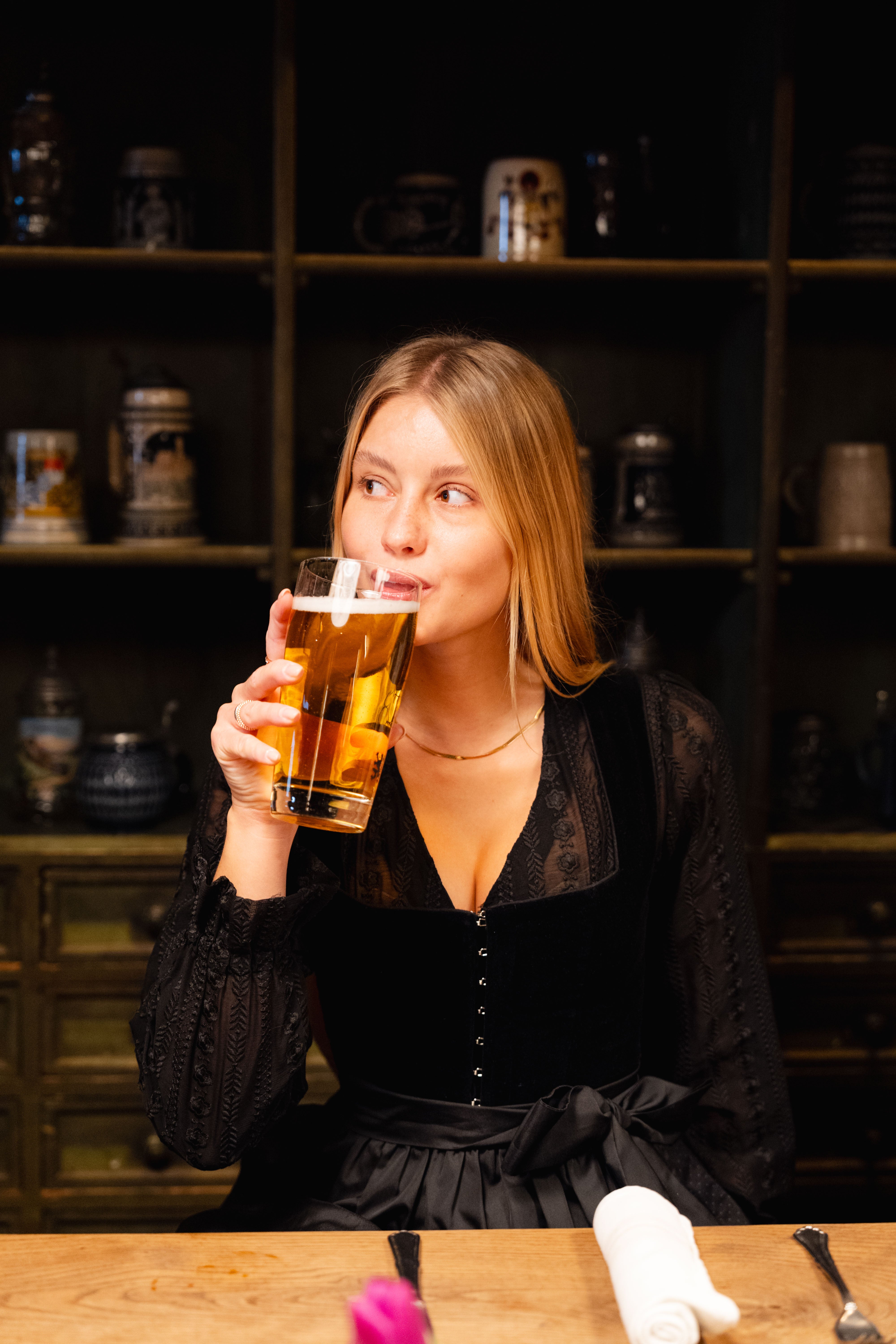
Colour and pattern: Colour wins at folk festivals. Bold Dirndl, floral prints, and strong tones such as red, green, blue, and burgundy are pure festival mood. Plain dark Dirndl are more elegant and work well at more formal events like shooting galas. White Dirndl look innocent and romantic, but are more prone to stains at packed festivals.
What else completes the Dirndl look: A matching Dirndl blouse, an apron (coordinated to the apron colour), and at least one subtle piece of jewellery. Add matching shoes — classic ballet flats or Haferlschuhe — and avoid trainers or heels over 5 cm if you'll be on your feet for a long time.

For men, putting together a folk festival outfit is simpler than for women. The core components are always the same: Lederhosen, Trachtenhemd, socks, shoes.
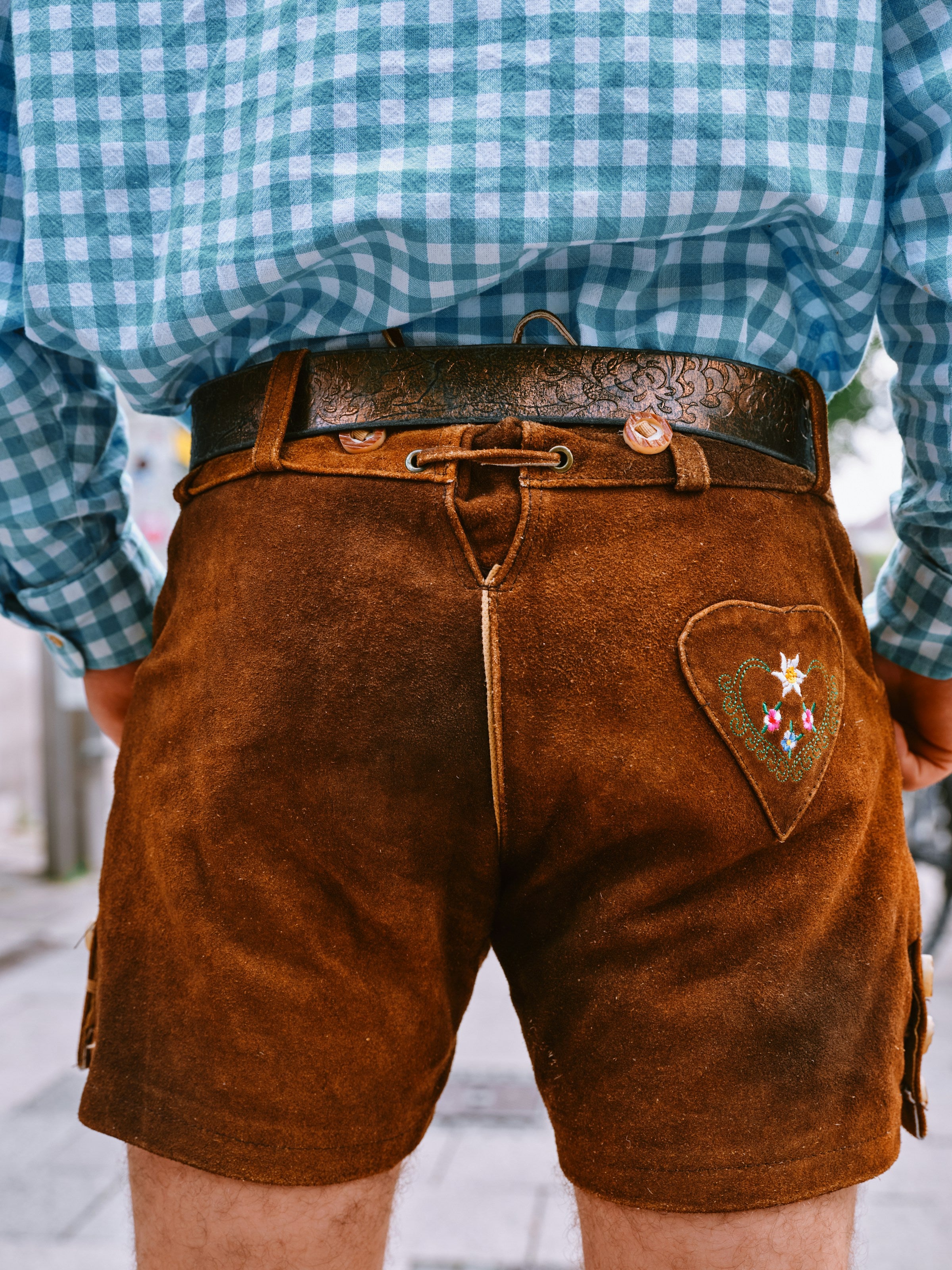
The Lederhosen: Short Lederhosen are right for any folk festival. A quality pair of Lederhosen made from genuine cowhide or buckskin is a long-term investment. Cheap faux leather or synthetic material looks worn out after a single evening. For Schützenfeste and more formal occasions, knee-length Kniebundhose are the more elegant choice; for relaxed folk festivals, the short version is perfectly sufficient. More details in our Lederhosen Buying Guide.
The Trachtenhemd: Classic checked in blue-white, red-white, or green-white. Whether with or without a collar, check or stripe — that's a matter of taste. Important: the shirt should be tucked into the Lederhosen, not left hanging loose. It looks more considered than it sounds.
Socks: Tracht socks are a must. Either short socks or calf-length socks that stop below the knee. No plain white sports socks.
Shoes: Haferlschuhe are the classic choice with Lederhosen — leather-soled, sturdy, and they only get better with age. Alternatives: dark leather shoes without an overly prominent sole. No trainers.
Accessories: A Charivari is optional but a lovely finishing touch. A Trachtenjanker or wool jacket is a smart addition for the evening when temperatures drop. A belt with a Tracht buckle rounds off the outfit perfectly.
For the complete men's setup, find all the details in our Men's Oktoberfest Outfit Guide.

Germany is not a monolithic Tracht country. What is taken for granted in Bavaria can seem exotic in Hamburg. Here's a quick overview:
| Region / Festival | Tracht Prevalence | Recommendation |
|---|---|---|
| Oktoberfest Munich | Very high (60–70%) | Tracht clearly recommended |
| Cannstatter Wasen Stuttgart | Medium and growing | Tracht very welcome |
| Schützenfest Bavaria/Austria | High | Kniebundhose preferred |
| Schützenfest Hanover / Northwest | Low | Optional, not the norm |
| Rheinkirmes Düsseldorf | Low | Entirely your choice |
| DOM Hamburg | Rare | Unusual but perfectly fine |
| Kirchweih Franconia/Bavaria | High | Tracht recommended |
A rule for all cases: Check in advance what is customary at the specific festival. A quick look at the festival website or photos from the previous year is usually all you need. When in doubt: a neat midi Dirndl or Lederhosen with a Trachtenhemd will always look better than plain everyday clothes.
Tracht doesn't have to be expensive, but quality pays off. Here's a realistic cost breakdown:
Entry-level budget women (€150–€250): A solid Dirndl in a polyester blend or affordable cotton, complete with apron. Add a simple blouse and subtle jewellery. Perfectly adequate for one or two folk festivals a year. Not intended for regular use or more formal occasions.
Mid-range budget women (€250–€500): Dirndl in high-quality cotton or linen, better construction, greater shape retention. Will last several seasons. Recommended for anyone who goes to folk festivals regularly or wants one outfit for a variety of occasions.
Premium women (€500+): Hand-stitched pieces, natural materials, individual tailoring. Buy once, enjoy for decades.
Entry-level budget men (€200–€350): Simple cowhide Lederhosen, Trachtenhemd, basic socks. The minimum for an authentic outfit. Faux-leather Lederhosen are immediately recognised by Tracht connoisseurs and are not a worthwhile investment.
Mid-range budget men (€350–€600): Buckskin or deerskin, better craftsmanship, possibly with embroidery. Lederhosen in this price range will last 10 to 20 years with proper care.
Where to buy: Shopping at a local Tracht store gives you the advantage of trying things on. Buying online is more affordable and offers a wider range. Important: with Lederhosen, always measure carefully as sizing varies considerably. Find sizing details in our Lederhosen Buying Guide.
Storing your Tracht: Whether Dirndl or Lederhosen, storing them properly after the season significantly extends their lifespan. Find tips in our Dirndl Storage Guide.
Wearing Tracht at a folk festival isn't compulsory — but it does enrich the experience. The right Dirndl or the perfect pair of Lederhosen makes the difference between being a spectator and being part of the celebration. Whether you're in Bavaria or the north, whether you want to spend a little or a lot, with the right foundations you'll be well dressed at any folk festival. Invest once, enjoy for many years.
If you're looking for a new Dirndl that's easy to care for and high quality, feel free to browse our store
Discover Folk Festival Outfits
No. Not a single folk festival in Germany requires Tracht for entry. But at many festivals — especially in the south and above all at the Oktoberfest — the majority of visitors do wear Tracht. Anyone who wants to feel part of the crowd will be better off in a Dirndl or Lederhosen.
A midi Dirndl (65–85 cm) is the most versatile choice and suits any folk festival. A mini Dirndl works well for more relaxed, hot summer events. A maxi Dirndl looks more elegant and is better suited to formal occasions such as shooting galas.
Yes, you can. At northern German folk festivals, Tracht is less common, but by no means forbidden or out of place. You will stand out — which, depending on your perspective, can be a plus. Nobody will give you a second disapproving glance.
For women, €250–€400 is a good mid-range budget for a complete outfit including Dirndl, blouse, apron, and simple jewellery. For men, plan on €300–€500 for Lederhosen, Trachtenhemd, socks, and shoes. Quality pieces last for many years.
The classic choice is Haferlschuhe — traditional lace-up leather shoes. Dark leather shoes without an eye-catching sole are a good alternative. No trainers or sports shoes, as they break the traditional look.
In principle, nothing. The same Dirndl you wear to the Oktoberfest is equally correct at the Cannstatter Wasen, a Schützenfest, or a Kirchweih. There are no festival-specific dress codes. Simply choose the length and formality to match the occasion.
Discover Matching Tracht

Stay up to date
Sign up and be the first to find out about new collections, exclusive offers and styling tips for your perfect traditional outfit.


