
Dirndl Fabrics Explained: Cotton, Linen, Silk, Velvet and Brocade
|
Time to read 12 min

|
Time to read 12 min
Standing in front of a Dirndl and wondering how each fabric feels, which occasion it suits and how it should be cared for? The material determines the comfort, the look and the longevity of your Dirndl. We show you which fabrics exist and how to make the right choice.
Why you can trust us:
✓ We have been experts in traditional Trachten fashion and Dirndl for over 5 years
✓ We have already dressed more than 10,000 Wiesn visitors
✓ We follow the latest Trachten trends and know the newest collections
Want to learn more? Visit our store
Table of contents:
The fabric defines the first impression and the way your Dirndl feels to wear. Not only the look, but also the breathability, the texture and the ease of care depend on the material. An airy linen Dirndl is ideal for a hot summer day at the fair, while an elegant silk Dirndl suits festive occasions in the cooler months.
The fabric gives the Dirndl its character. A firm cotton fabric looks down to earth and traditional, a flowing silk fabric elegant and festive. Care also varies depending on the material: cotton is robust and washable, silk needs more attention.
Modern Dirndl often combine different fabrics: cotton for the bodice, linen for the skirt, lace for the apron. These fabric mixes create interesting contrasts and bring together the strengths of several materials. Which material is right for you depends on the occasion, the season and your personal style.
Many people first think of the cut when it comes to a Dirndl, yet the fabric is at least as important. A beautifully cut Dirndl in a low quality fabric quickly loses its shape. A high quality material, on the other hand, fits better, drapes more beautifully and lasts longer. Our Dirndl collection offers a wide choice of materials and qualities.
When you are looking for your perfect Dirndl, you should first consider for which occasions and which season you want to wear it. A versatile all rounder is a cotton Dirndl, while for special moments an elegant piece in silk or brocade is well worth it.
Cotton is the classic among Dirndl fabrics. It is robust, breathable, easy to care for and tolerates frequent washing. A Dirndl made of high quality cotton is just as suitable for everyday wear as for the fair. It is the best choice for anyone looking for a versatile, uncomplicated Dirndl.
Cotton feels pleasant on the skin and is especially suited to warm days, as the material absorbs moisture and lets the skin breathe. A cotton Dirndl has a natural, matte surface and looks traditional and down to earth. It works for any occasion, from a garden party to the Oktoberfest.
Cotton is also uncomplicated to care for. Most Dirndl made of pure cotton can be machine washed without the fabric shrinking or the colour fading. This makes cotton the ideal choice for anyone who wants to wear their Dirndl often.
In terms of look, cotton is versatile: there are smooth, fine cotton fabrics, sturdy poplin or rustic cotton blends. Many classic Dirndl are made of cotton because the material is so durable and does not warp over time.
A good sign of quality is the thread count and the fabric weight. High quality cotton feels firm and substantial, not thin or flimsy. If you are unsure which size is right for a cotton Dirndl, our Dirndl sizing guide will help you.
Linen is the perfect material for hot days. It is light, airy, temperature regulating and absorbs moisture faster than cotton. A linen Dirndl feels pleasantly cool on the skin and is the best choice for summer Dirndl in high temperatures.
Linen has a natural, slightly irregular surface with a characteristic feel. The material looks casual and modern while keeping its traditional charm. Linen does not cling to the body but drapes loosely and airily, which provides good ventilation.
The downside of linen: it creases quickly. That is part of the character of the fabric and many people find it authentic and charming. If you love linen Dirndl but want to avoid the creased look, there are now linen and cotton blends that crease less.

When it comes to care, linen needs a little more attention than cotton. It should be washed at low temperatures and ironed while still slightly damp to minimise creasing. You can learn how to care for your linen Dirndl properly in our guide washing linen: tips and tricks for your linen Dirndl.
Linen comes in various qualities, from very fine to coarsely woven. Finer linen feels softer and creases a little less, while coarser linen has more texture and character. For a summer Dirndl, a medium fine linen is the best choice.
Silk and satin stand for elegance and festivity. An exclusive Dirndl made of silk looks refined, lustrous and high quality. The flowing drape of the fabric flatters the figure and creates a feminine silhouette. Silk is the material for special occasions: weddings, balls, festive evenings.
Silk feels cool and smooth on the skin and has a natural, gentle sheen. It is temperature regulating and breathable, so it is also pleasant to wear in summer. A silk Dirndl is a luxury piece that lasts for years when cared for properly.
Satin is often a blend of silk, cotton or synthetic fibre in a special weave that creates a glossy front and a matte back. Satin Dirndl look festive and have an elegant shimmer. They are often a little more hard wearing than pure silk, yet keep the refined impression.
Silk is demanding to care for. It should only be washed by hand or on a gentle cycle, never spun. Many silk Dirndl are only suitable for dry cleaning. But that should not put you off, because the unique feel and look are worth it.
In our Exclusive Dirndl collection you will find high quality Dirndl made of silk and satin. Which cut and length suit your figure best is shown in our Dirndl figure guide.
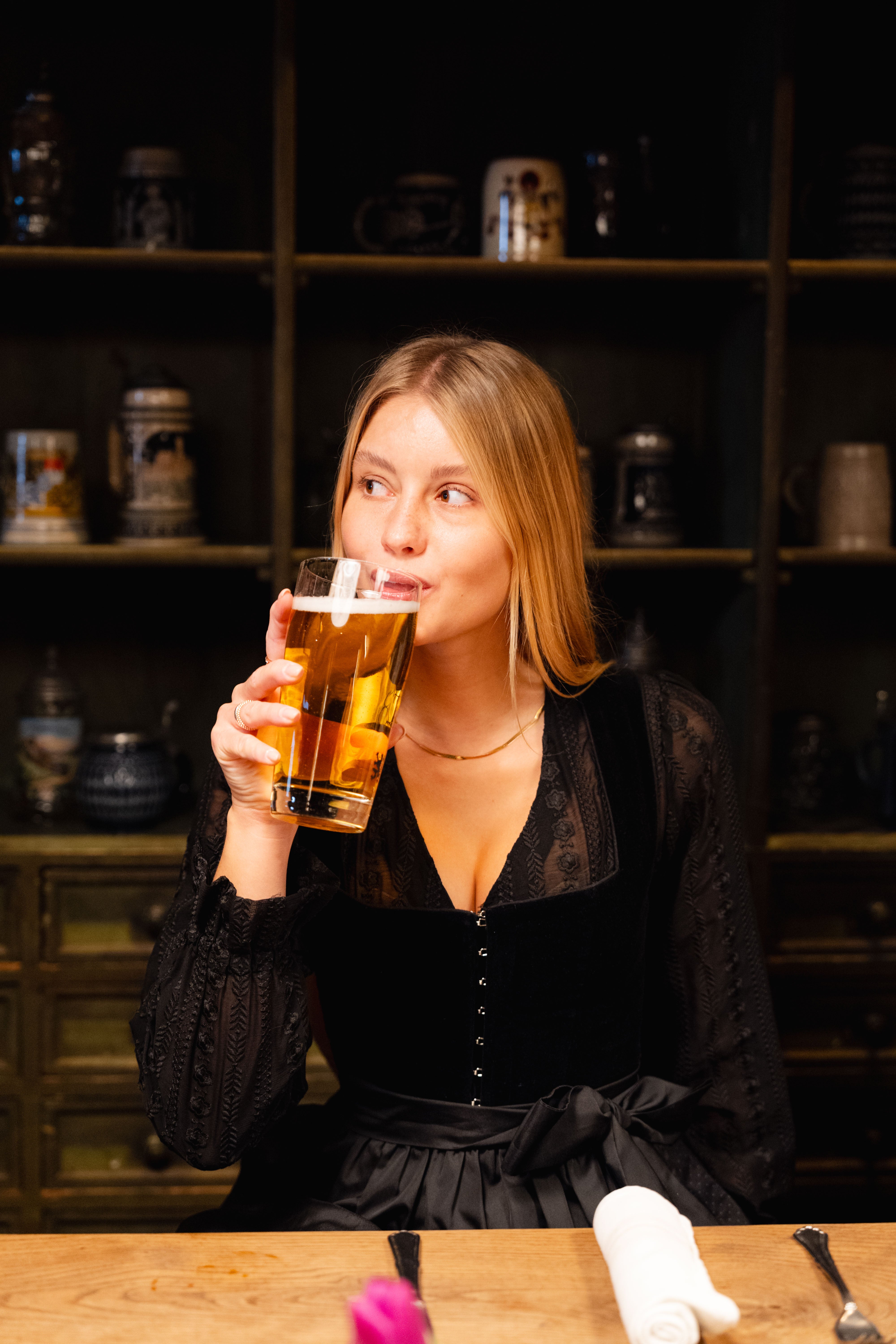
Velvet and velour are the perfect materials for the colder season. They have a soft, cosy surface and a refined sheen that shifts with the light. A velvet Dirndl looks festive, warming and especially high quality. It is the ideal choice for autumn and winter, for Christmas markets or festive evening events.
Velvet is a pile fabric with short, upright fibres that form its characteristic soft surface. Velour is technically similar, usually a little denser and more robust. Both fabrics look luxurious and create a special feel that no other material offers.
In terms of colour, velvet and velour come into their own especially in dark, rich tones: burgundy, fir green, midnight blue or black. In these colours the sheen of the material shows at its strongest. A velvet Dirndl pairs wonderfully with gold or silver accessories.

Velvet and velour are delicate to care for. The fibres can become flattened through pressure and friction and lose their pile. That is why a velvet Dirndl should only be cleaned carefully, ideally by dry cleaning. When ironing, never press directly onto the velvet, but work only from the back or with a steamer.
Velvet and velour add a little volume, so they suit slim to average figures particularly well. On curvier figures the velvet should be used selectively, for example only in the bodice or the apron. You will find more on choosing the right fabric for your figure in our plus size Dirndl guide.
Jacquard and brocade are patterned fabrics in which the pattern is woven directly into the fabric. The result is a refined, three dimensional fabric with a relief like pattern that looks especially festive. A Dirndl made of brocade or jacquard is a true statement piece.
Jacquard fabrics can be made of different materials, often cotton, silk or blended fabric. What makes them special is the elaborate weaving technique that allows complex patterns such as flowers, ornaments or geometric designs to be woven directly into the fabric. Brocade is a particularly refined variant, often shot through with metal threads that add gold or silver accents.
These fabrics are ideal for exclusive Dirndl for special occasions: weddings, opera balls, festive receptions. They are heavy, drape elegantly and have a strong presence. Brocade and jacquard Dirndl look refined and traditional at the same time.
Because the fabric already carries a strong pattern, brocade fabrics should be kept free of additional embellishments. The fabric itself is the statement. A subtle apron in a solid colour that picks up a tone from the pattern looks harmonious and elegant.
Jacquard and brocade are demanding to care for. They should only be washed gently or, ideally, dry cleaned. When ironing, the temperature should be low so as not to damage the pattern. In return, these fabrics last for years and lose nothing of their effect.
Lace is not a standalone Dirndl fabric but is mostly used as a trim or as the fabric for the apron. Lace Dirndl look delicate, feminine and romantic. The lace can frame the neckline, decorate the bodice or lie as a full apron over an opaque underskirt.
High quality lace is a real eye catcher. It is made of delicate, mostly floral patterns and creates a light, airy look. Lace suits festive occasions particularly well, but also playful summer Dirndl. A lace Dirndl in white or cream looks romantic and elegant, while black lace looks refined and modern.
Many modern Dirndl combine lace with a firm base fabric such as cotton or silk. This creates an exciting contrast between the robust base and the delicate details. The lace can be used purely as an accent or form the apron across a large area.
Lace is delicate to care for. It should only be washed on a gentle cycle or by hand, never spun. When ironing lace, only iron from the back or with a cloth in between so as not to damage the fine structures.
In our Lace Dirndl collection you will find a selection of Dirndl with lace elements in various styles. Which Dirndlbluse goes with them is explained in our Dirndlbluse guide.
Not every fabric suits every occasion. A light linen Dirndl is perfect for a summery garden party, but looks out of place at a festive ball in winter. A heavy velvet Dirndl, on the other hand, would be far too warm at the Oktoberfest in August. The right choice of fabric is guided by season, occasion and comfort.
Spring and summer: Cotton and linen are the best materials. They are breathable, light and easy to care for. For special summer celebrations a light silk Dirndl also works well. Lace elements look especially airy and romantic in summer.
Autumn and winter: Velvet, velour, brocade and heavy silk are ideal for the cooler season. They keep you warm, look festive and have the right sheen for evening events. A jacquard or brocade Dirndl is perfect for festive occasions such as Christmas parties or New Year's balls.
Fair and Wiesn: Cotton is the robust all rounder that still sits well even after a long day at the fair. Linen is the light alternative for hot days. Silk and velvet are often too delicate for the classic Oktoberfest, unless you prefer the more festive evening events.
Weddings and festive occasions: Silk, satin, brocade and lace are the first choice for festive occasions. They look refined, high quality and appropriate. The colour choice should suit the occasion, light tones for spring and summer, dark tones for autumn and winter. Which length is right is explained in our Dirndl length guide.
Caring for your Dirndl depends greatly on the material. A cotton Dirndl can often be washed without much fuss, while a silk Dirndl needs more care. The right care decides how long your Dirndl stays beautiful. Here are the most important rules.
Cotton: Usually machine washable at 30 to 40 degrees, turn inside out, choose a gentle cycle. Do not spin, hang up dripping wet instead. Iron at a medium temperature. You can find our detailed guide under washing your Dirndl: how to clean your Dirndl.
Linen: Wash at 30 degrees on a gentle cycle, iron while still slightly damp to minimise creasing. Never tumble dry. Linen needs a little more attention but is very durable. You will find the details in our article washing linen.
Silk and satin: Hand wash or gentle cycle in cold water only, never spin. Best given to dry cleaning. Do not hang directly in the sun. Iron only from the back at a low temperature.
Velvet and velour: Only dry cleaning is recommended. Never wash them yourself, as the pile can be damaged. Dab stains carefully, do not rub. Store on a hanger, not folded.
Jacquard and brocade: Dry cleaning preferred. If hand washing, then only cold and without rubbing. Never wring out. Iron only from the back at a low temperature so as not to damage the pattern.
Lace: Hand wash or gentle cycle in a laundry bag only. Do not spin, press out gently. Iron only from the back or with a cloth in between. Lace is delicate and needs gentle handling.
If you are looking for a new Dirndl that is easy to care for and high quality, feel free to drop by our store
Dirndl in different materials
Linen and cotton are the best fabrics for hot days. Linen is particularly breathable and cooling, but creases easily. Cotton is easy to care for, robust and also airy. For festive summer occasions, light silk also works well.
Silk, satin, brocade and velvet are the most festive materials. They look refined, have a beautiful sheen and drape elegantly. Brocade and jacquard are especially sumptuous thanks to their woven in patterns. Lace Dirndl look romantic and feminine.
Silk Dirndl should only be washed by hand or on a gentle cycle in cold water. Never spin. It is best to give silk to dry cleaning. Iron only from the back at a low temperature and do not hang directly in the sun.
Both have advantages. Cotton is more robust, easier to care for and creases less. Linen is even more breathable, feels cooler and has a special, casual look. For everyday wear cotton is more practical, while for hot summer days linen is more pleasant.
Velvet, velour, heavy silk and brocade are ideal for the cooler season. They keep you warm, look festive and have the right sheen for evening events. Velvet and velour feel cosy and are perfect for Christmas markets and winter celebrations.
Discover matching Trachten

Stay up to date
Sign up and be the first to find out about new collections, exclusive offers and styling tips for your perfect traditional outfit.


